


The Waikato Regional Council says generally the region is doing well across a range of economic, social and environmental indicators.
But the thrust of a new report presented to the council's strategy and policy committee this week says the region could do significantly better on a number of fronts.
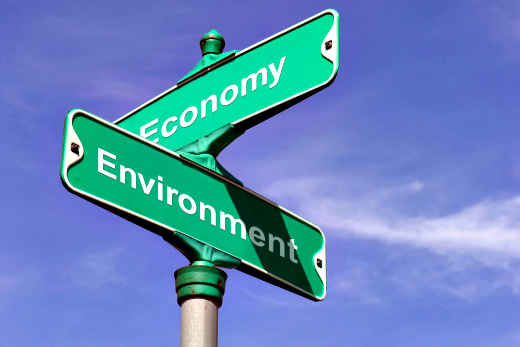
According to the Waikato Progress Indicators – Tupuranga Waikato report released this week, the region could do significantly better in terms of road safety, recycling and crime. Photo: Thinkstock
The Waikato Progress Indicators – Tupuranga Waikato report is part of a regular council series which takes the region's pulse across a wide variety of issues.
WPI measures 32 key economic, social and environmental indicators which are regularly up-dated and analysed to identify changes and trends over time.
The report's author and council sustainable projects advisor Beat Huser says generally the Waikato region is similar to the national average on many of the measured indicators.
'However, despite significant improvements in recent years, road safety is still worse than the national average.
'Recycling remains considerably below the national average and, despite reduced offending recently, crime rates are higher than the national average.”
While increasing since 2007, the regional GDP per capita is still slightly lower than the national average, adds Beat.
The committee's deputy chair Theresa Stark says the data would contribute to debate about priorities for action by various parties across the region.
'The results show that over recent years we have experienced modest economic growth, but social and environmental progress has been limited.
'A key for our future in the Waikato will be how we can develop economically while also addressing social issues and maintain the natural resources we need for continued growth.”
MOST RECENT POSITIVE AND NEGATIVE TRENDS:
Income equality:
in line with trends nationally, there's been an increase in income equality since 2012, likely due to the gradual recovery in household incomes following the global financial crisis This can contribute to greater social cohesion, with flow-on benefits to the community.
Income inequality for households in the Waikato peaked in 2011 but was still slightly better in this region than for New Zealand as a whole for the period between 2001 and 2013.
Housing affordability:
The ratio of the Waikato region's housing costs to household income has worsened by about 10 per cent from 2013 to 2014.
The Waikato region tends to have about the same housing affordability as the national average, although there are differences within the region.
For example housing in Hamilton is less affordable than in other parts of the region but living in Hamilton is still more affordable than in Tauranga, Queenstown and certainly Auckland.
Generally, housing costs in New Zealand are less affordable than in many other developed countries.
Other positive trends:
Growing use of public transport, lower per capita costs associated with road accidents, reduced criminal offending, and better educational outcomes.
Other negative trends:
A major slump in annual building activity since 2007, with the start of a recovery over the last two years (although activity is still significantly lower than the peak in 2007).
An ongoing steady increase in the percentage of rural land being subdivided each year, with the greatest amount of subdivision occurring on land classed as having a high productive capability.
An increasing amount of coastal estuarine area covered with invasive pest plant species on both the east coast of Coromandel and in west coast harbours.
For more information about the report visit: www.waikatoregion.govt.nz/Community/Waikato-Progress-Indicators-Tupuranga-Waikato/

0 comments
Leave a Comment
You must be logged in to make a comment.