


A report prepared for the Waikato Regional Council uses lessons from the past to help prepare Whitianga for the future.
The report on the effects of the 1960 Chilean tsunami on Whitianga provides a good indication of where the town would likely be inundated if it were to experience a similar distant tsunami today.
View of the wharf at the bottom of the tidal range taken on the morning of May 24, 1960. Photo: Courtesy Ted Ramsbotham/TCDC
The report combines the experiences of local eyewitnesses with historical verbal and written accounts, recent survey information and computer-generated tsunami modelling information.
It was prepared for the regional council by Eastern Coromandel Tsunami Strategy's Brendan Morris and Jose Borrero.
'We had the opportunity to talk with five local eyewitnesses who were there on the night, and conduct onsite visits all around the town and harbour," says Brendan, the strategy's project manager.
'The report gives us further verification of recent tsunami modelling work, which will help to better identify likely tsunami inundation areas for other areas around the Coromandel.”
Thames Valley Emergency Operating Area manager Gary Talbot says the report will raise community awareness about tsunami hazards and the importance of understanding the source of the tsunami.
Gary explains that distant source tsunami, such as those coming from South America, take more than 12 hours to reach Whitianga, and do not present a significant risk to land.
'The main effects of distant tsunami are strong currents in the marine environment, especially within the harbour and around stream entrances.
'Our biggest tsunami risks are from local sources such as the Tonga-Kermadec Trench that reach Whitianga in about one hour.'
Gary adds this is why it is important to move quickly to higher ground or inland if locals feel a long or strong earthquake.
'The recent Chilean earthquake highlighted the need for our coastal communities to understand the difference between distant and local source quakes and the effects they have on our environment.”
To read the full Waikato Regional Council Technical Report, including transcripts of eyewitness accounts, click here
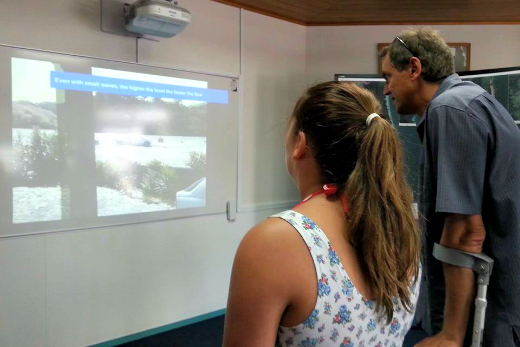 Eastern Coromandel Tsunami Strategy project manager Brendan Morris (right) during a Tsunami Information Open Day in Whangamata earlier this year. Photo: TCDC
THE EASTERN COROMANDEL TSUNAMI STRATEGY
The Waikato Regional Council and the Thames-Coromandel District Council jointly manage the East Coast Tsunami Strategy.
The strategy has been in progress since initial scientific work to identify tsunami hazards was undertaken between 2002 and 2006.
The Eastern Coromandel Tsunami Strategy is an ongoing, multi-year project that works with communities on the eastern Coromandel coastline to identify and reduce the risks from tsunami events.
Projects within each of the east coast communities have two strands: the development of emergency plans in collaboration with communities, and the development of long-term strategies to ensure critical building and infrastructural assets are located away from high-risk tsunami zones.
Projects within each of the communities use on-going public education and engagement as an important part of the project.
To learn more visit the Thames-Coromandel District Council's website at: www.tcdc.govt.nz/tsunami
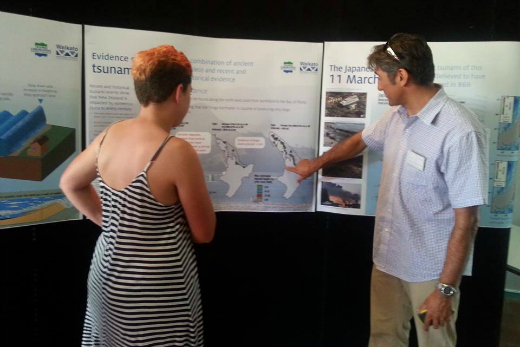 Eastern Coromandel Tsunami Strategy's Jose Borrero during a Tsunami Information Open Day in Whangamata earlier this year. Photo: TCDC

0 comments
Leave a Comment
You must be logged in to make a comment.