


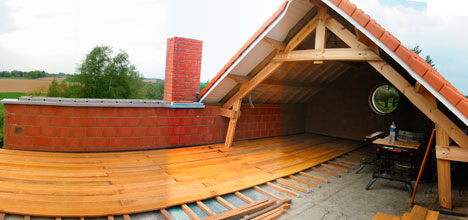
Building a new home in Tauranga just got several thousand dollars cheaper with Tauranga City Council's new development contributions policy coming into effect.
The policy governing who builds what and when will mean the cost of building a new home in the city will be reduced with a three bedroom home.
The immediate effect of the new policy is on new home builders. In the city building a new three bedroom plus home will be $5,131 cheaper, $5,900 cheaper including GST.
The cost of development contributions has been lowered from $12,642 to $7,511.
Two bedroom houses are more than $3,000 cheaper to get passed the council, dropping from$8,217 to $4,882.
The new policy is the result of a series of workshop meetings with the city's developers, who blamed the city's previous rules and the global financial crisis for helping bring the city's growth to a stuttering halt.
The amounts developers pay for putting house lots on the market have also been reduced across the city, surrounding suburbs and for new developments.
In west Bethlehem the per-lot contribution is reduced by $12,122 and the per hectare development contribution has been dropped by $290,335, from $481,965 to $229,500 excluding GST.
Building in developed suburbs will also be cheaper, by $3535 in Welcome Bay and Ohauiti and by almost $4000 in Pyes Pa.
Development contributions are assessed by the amount each property is expected to tax the city in services; in water supply, wastewater and stormwater, transportation, community infrastructure and reserves.
Subdivision developers are required to pay upon lodgement of the sub division consent, reflecting the general requirement for infrastructure pipework to be in place before development can occur. Developers can also be charged on building consents or service connections for multi-unit apartments.
Tauranga's population grew from 66,738 in 1991 to 103,566 in 2006. The city is now expected to house 200,000 people by 2051, down from the 286,000 that was estimated in 2009.
Building statistics show things began reducing from a peak in 2005.
Entire sub divisions failed to sell, causing developers to complain the previous policy was putting them out of business, and making sections too expensive to sell.
The council's former policy of requiring at least 15 lots per hectare was also considered unsustainable.
The growth rate in the new policy is about 1 per cent for the first three years and 1.7 per cent for the remaining seven years of the Ten Year Plan period from 2012 – 2022.
The growth rate is the figure on which all Ten Year Plan figures are based. It affects when development contribution funded projects are planned to be built, as well as when and how much development revenue will be received, which in turn affects the inflation and cost of capital component of the development contribution charges.
'I want to acknowledge the enormous amount of work that has gone into this particularly from the development community themselves, this has not just been us determining something,” says Mayor Stuart Crosby when it was passed in council.
'This has been a very long series of engagements with that development community and also quite a determination to address this issue which is a component in stifling our growth.”
He also acknowledged the work of councillor Larry Baldock who pushed for the issue, and council staff who had put a lot of work into producing the 250 page policy.
'It is a fluid policy, it's always changing as levels of service change as contracts change as we change, so a lot of work has gone into this.
'It's comparable to the whole ten year plan, just a massive exercise. Hopefully it will achieve some stimulation in the development and building area.”
Larry says the council has learned a lot from having the developers in the room while they have been going through the workshops.
'We are one of the only councils in the country that have reduced development contributions in economically difficult times, and hopefully we will see the advantage of that with stimulation of the growth here and development.”
Larry says next year the city council should consider something simpler like getting some agreement on a flat development contribution rate, and letting the rest go to rates.
Councillor Rick Curach says since development contributions were introduced under the Local Government Act 2002 rates have gone up even faster than they did when ratepayers were paying for development.
He shares Larry hopes for a simpler system saying the cost of administering the present regime are huge.
'If you compared the revenues to the cost of administration it would be quite frightening,” says Rick.
Councillor Bill Faulkner says no matter how bad it is now things are not as bad as they were before the introduction of development contributions.
Rick was complaining about rates going up 45 per cent in four years, when before development contributions they went up 45 per cent in a single year.
'Be careful about rushing head long back to where we came from.”
David Stewart also wants to continue the search for a simpler system.
'There must be a better way, we are trying to make a science out of an art, trying to make these things fit and we keep coming unstuck.”
The council also agreed to refunds for consents granted between February 20 2012 and June 30, 2012.

2 comments
UNSTUCK AINT THE HALF OF IT
Posted on 06-07-2012 16:20 | By PLONKER
The effect of the discounted fees is that the ratepayers will have to pick up the tab, for sure section prices will not drop as extra profits are taken per section to try and recover the lost ground of the last few years. The real problem with it all is that TCC has spent so much money "planning" (NOT) of development where it was not going to happen, end result used infrastructure and shortages where it is really needed. What a circus it all is, that is what you get for Smart growth thinking patterns.
HOW CHEAPER?
Posted on 10-07-2012 16:07 | By TERMITE
The fees are still heaps more than anywhere else in NZ, so how does that make it "cheaper", it is nothing less than a misused play on words, it is less than before as a result however the bottom line is that the cost to build a house in Tauranga will still remain more than anywhere else becasue the fees charged are more than anywhere else. Simple as folks!
Leave a Comment
You must be logged in to make a comment.