


Every year ACC accepts more than 21,000 soft-tissue injury claims from the construction sector.
In 2024, ACC accepted 1930 construction related injuries in the Bay of Plenty region, which came at a cost of $3.6 million to help people recover.
But the Work Should Not Hurt programme led by CHASNZ (Construction Health and Safety New Zealand) aims to change the idea that pain and injury is just part of a career in construction.
The two men behind the programme are an unlikely pair. Chris Polaczuk, the ergonomics programme manager, is extroverted, a people person and hands-on, and his teammate Dr Stephven Kolose is quietly spoken, and academic.
“We’re a unique partnership,” said Polaczuk. “Steve is the brains. He brings the academic lens, and I try to use my social skills to meet more tradies and interact with them and get relationships going.”
Dr Kolose added: “Chris is a natural with people, especially gruff Kiwi tradies, whereas I’m from the research world and more reserved. I love finding solutions. We work well together.
“We are a bit of a one-two punch, practical and evidence based.”
Solving the problem
In 2023, ACC accepted 21,085 soft-tissue injury claims from the trades sector, which CHASNZ estimates resulted in a total of 562,405 days off work, at an average of 27 days per claim.
Polaczuk said the number of ACC new claims were trending downwards slightly, but time off work was accelerating.
The past year in the construction industry has been the worst for injuries. In the trades the average days off work for an injured worker have increased from 27 days on average to 36 days.
“On average that is around 10 weeks off work from injuring themselves.”
In 2024, the average days off work per claim for construction-related injuries in the Bay of Plenty region was 39, and the average cost per claim was $1858.

Chris Polaczuk, left, and Dr Stephven Kolose (middle, both in black) are trying to change the culture in the New Zealand construction industry.
Polaczuk said their work is important to fixing the problem and it’s vital they work closely with ACC because of the significant cost on the scheme.
He said there is a need to also raise the awareness on non-work injuries in construction, because non-work injuries are twice as many as work injuries.
“We’ve identified that we’ve got a point of difference. We’re going to be sharing a lot with our partners overseas and it’s great to see it making an impact.”
The science of success
Work Should Not Hurt is a participative ergonomics programme. Polaczuk said this means actively taking ergonomic research and theory and making it practical for tradespeople. It is also taking the research and applying it to the New Zealand context.
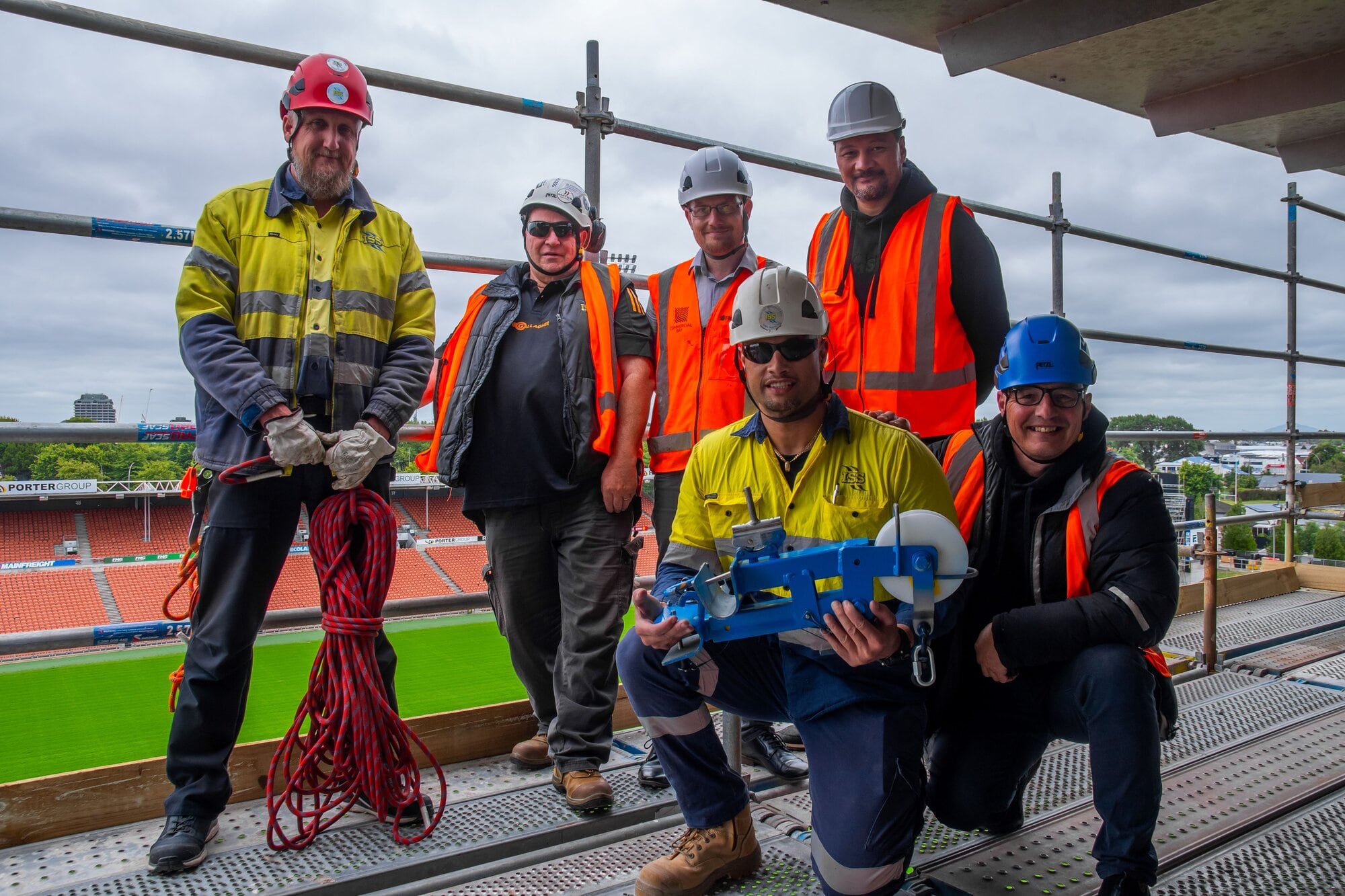
Dr Kolose offered the example of working with a scaffolder who came to CHASNZ with a portable winch that he wanted to make to reduce strenuous handling on the worksite.
The CHASNZ team was able to work with him in the design and testing phase to refine his idea and support him to take the idea to the industry.
“We help provide that lens that they might not have thought about and offer ideas to reduce harm.”
Other ideas are simpler. The team put up a big chart of a human body shape called the ‘Wall of Pain’, and asked tradies to identify where they are hurting with stickers.
“We noticed that a lot of tradies put their stickers around their hips, and so we asked them, ‘What is that pain from?’ From these discussions we started to suspect it was in part from their tool belt.”
Builders, roofers and other tradies hang all their tools off their waist and the result of carrying all that weight all day, some belts weighing well over 15kg, is hip pain.
“One builder said to me, I don’t wear those stupid things anymore. I’ve been building for 40 years, and it was time to change.”
Now he brings a 20-litre bucket with a lid on it. He carries his tools around in it and it has taken away the aching in his hips.
Polaczuk offered another simple example of having a table or two on each building site, to save the pain on the legs and back of bending over all the time to pick things up.
“You’d be amazed at how many things you can store on the table instead of putting it on the ground,” said Polaczuk.
“We’re constantly having conversations with tradies about how we can make practical, everyday changes to reduce the impact of the work on their bodies.”
Breaking the macho mould
Polaczuk said Kiwi culture plays a part. The ‘she’ll be right, tough it out’ mentality is so common in our trades.
He said people who have been a tradie for most of their life have injuries and think that is just part of it.
“They see pain from work as everything from a badge of honour to inevitability,” said Polaczuk.
“It is accepted and normalised in fact. We all need to push the point that work shouldn’t hurt. It doesn’t need to.”
Polaczuk and Dr Kolose say the next generation of Kiwi tradies are playing a leading role in changing that culture.
“One thing we always get asked is how do you break a macho culture in an industry that is traditionally male dominated, and very hard to change attitudes,” said Dr Kolose.
“This next generation of tradespeople are the key as they are not accepting that getting hurt at work is just part of their week.”

0 comments
Leave a Comment
You must be logged in to make a comment.