


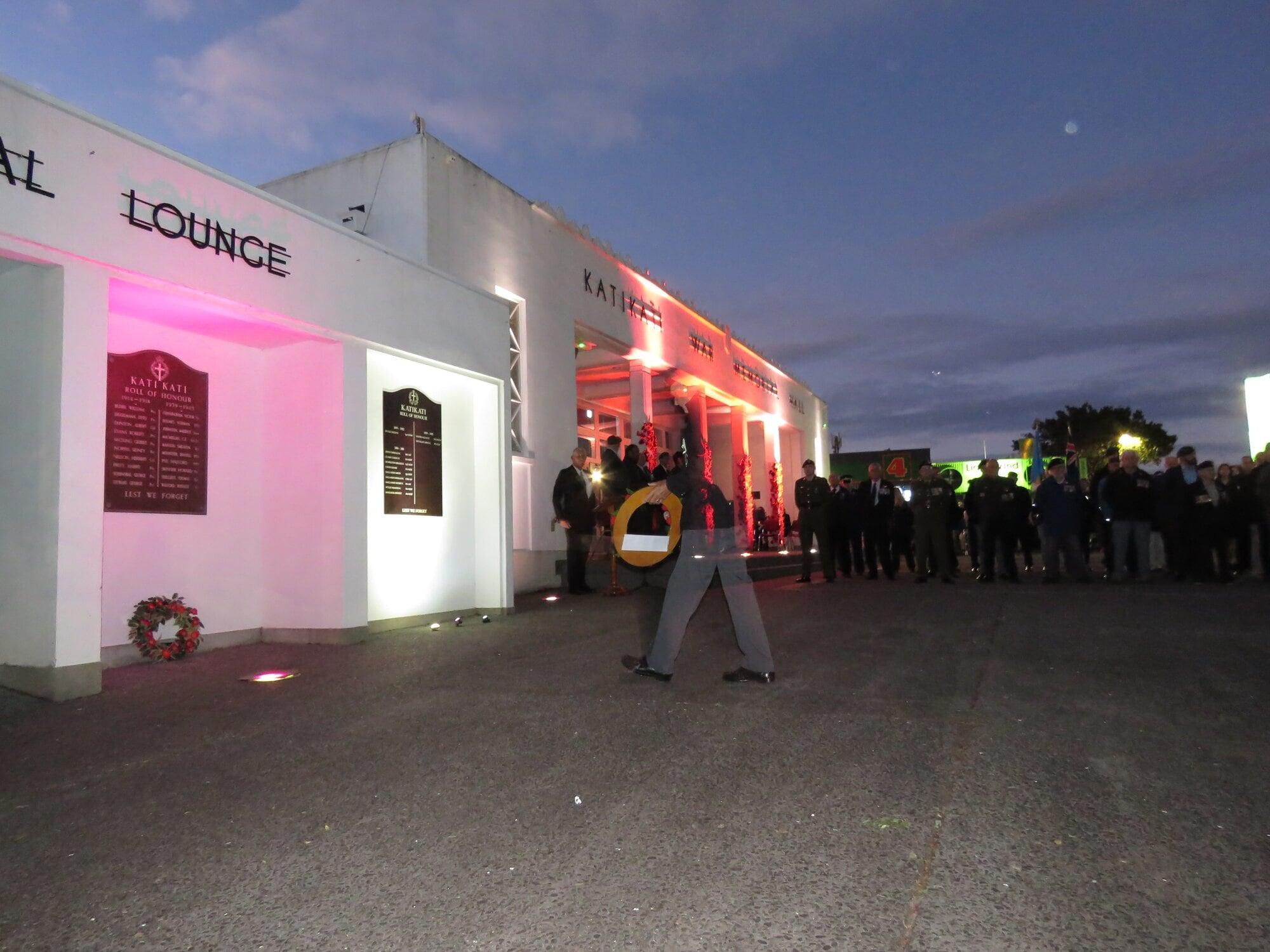
As hundreds gathered around the Katikati War Memorial Hall at dawn on Anzac Day, a tiny slice of moon and one lone star shone down.
The community were honouring Kiwi servicemen and women of all eras who’ve risked their lives for our freedom.
Returned and current servicemen and women lined up beside representatives from the police, Fire and Emergency New Zealand and a number of other service organisations outside Katikati Library at 5.55am.
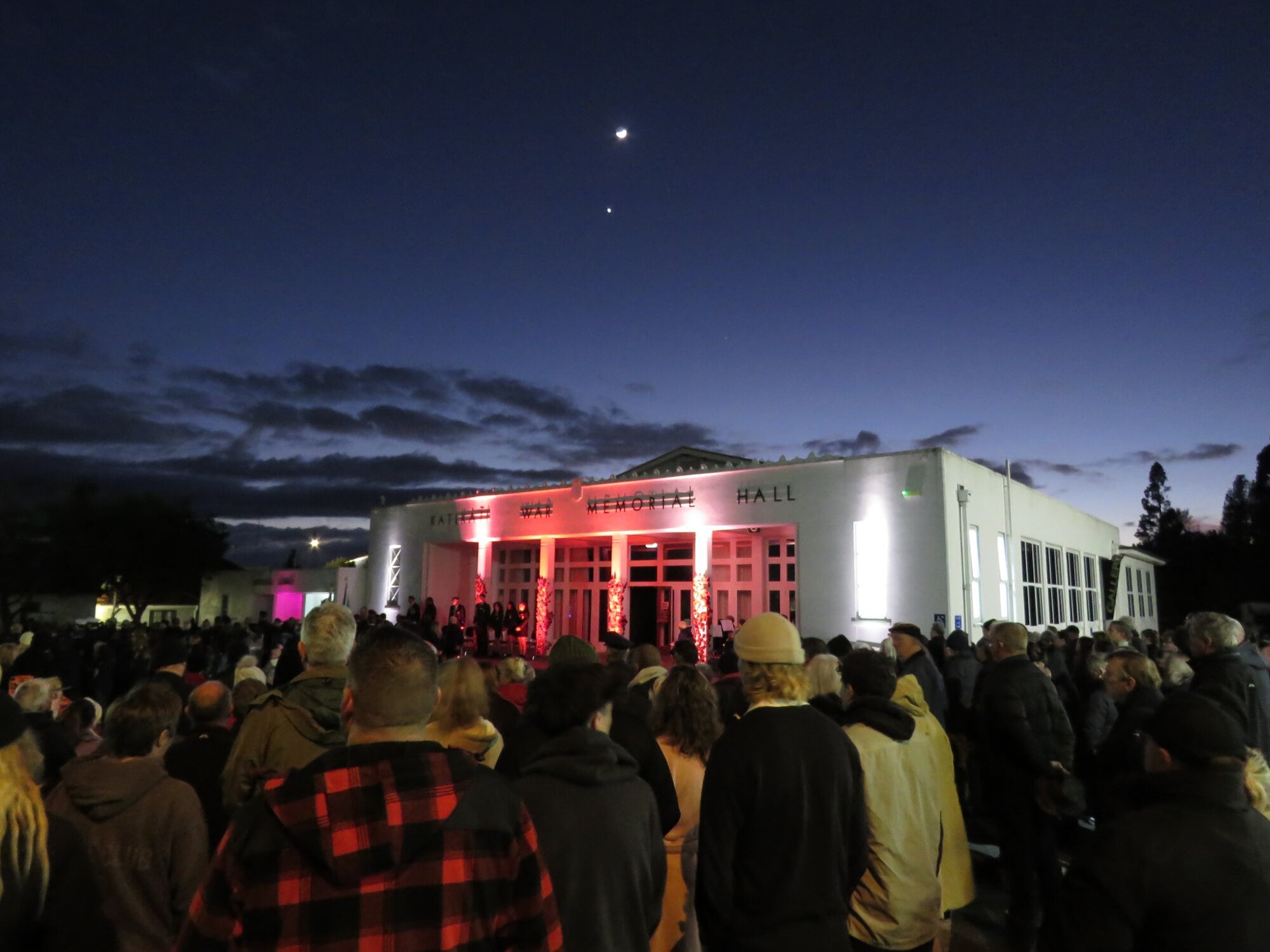
The crowd watches Katikati’s Anzac Day dawn at the War Memorial Hall service underneath a tiny moon and lone star in the sky. Photo / Merle Cave
They marched to the front of the war memorial hall – to the sound of a drum beat from the Katikati Band – to stand at attention for the 6am dawn service.
After an opening prayer, Katikati RSA president Trevor Gilbert said this year’s Anzac Day was particularly poignant as it had been 110 years since the Gallipoli landing, 80 years since the end of World War II, and 50 years since the Vietnam War concluded.
The late Clive Kenyon
“In Katikati [here at Anzac Day] we also pay tribute to our last World War II veteran who passed away recently.”
Clive Wilson Kenyon died peacefully at home surrounded by his loving family on March 15, 2025, in his 101st year.
“We will now create a Clive Kenyon Memorial Scholarship. This will be awarded annually to a direct descendant of servicepeople, to enable them to continue their studies or vocation,” Gilbert said.
Followed by a moment’s silence, Gilbert said: “We should now embrace those veterans that have served this country since the time of war in Malaya and Borneo, Vietnam, Bosnia, East Timor, Iraq, and Palestine and many peacekeeping operations that they have been involved in”.
“We should also remember that there are those who are still serving who deserve our support and appreciation. And the wounds that are the result of war and conflict are not always visible.”
After an address by Colonel Selwyn Heaton RNZE, Katikati College head students Jack Harray and Hannah Gourlay, accompanied by deputy head students Rajveer Sania Kaur and Charlotte Tanner, took the stand.
Student connection to Māori Battalion
Gourlay talked of her family connection to World War II. “This is about my great uncle Andrew, who my dad is named after.”
Andrew, better known as ‘Andy’, volunteered for the army shortly after the outbreak of WWII, said Gourlay.
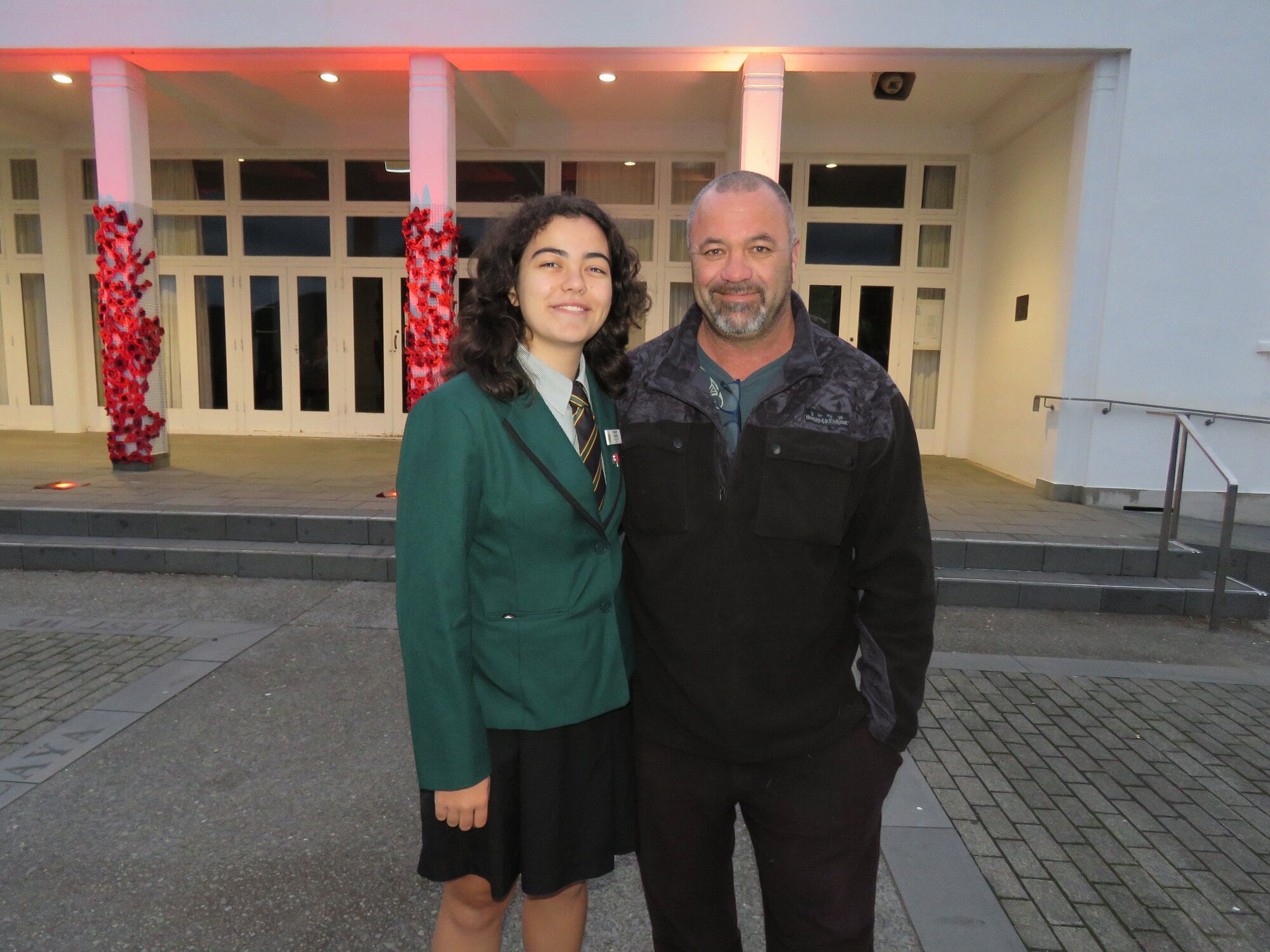
Katikati College head Student Hannah Gourlay with her father Andrew Gourlay, who was named after her Great Uncle who fought in World Ward II as part of the Māori Battalion. Photo / Merle Cave
“He enlisted but was discharged as medically unfit because he had tuberculosis as a child. Not to be outdone, he re-enlisted several months later under his brother Robert’s name and arranged someone else to sit the medical.”
Andy was posted to the 28th Māori Battalion in 1941 and saw action in the western desert for two years, Gourlay said.
“In 1943, when the battalion reached Tripoli, Andy was suffering tuberculosis. He was sent back to New Zealand on a hospital ship. He spent over a year in hospital and was discharged in 1944.
“He returned home to Maketū but remained unwell until he passed from a combination of tuberculosis and sand in his lungs on July 31, 1946, at 27 years old. Just 17 days later his nephew, my grandfather, was born.”
Gourley told the Katikati News after the service that for as long as she could remember she’d run through her grandmother’s house, past a photograph of her great uncle and his medals.
“Every time we always asked who he was, and recently I [learned more by] looked him up on Auckland Museum’s Online Cenotaph.”
“He was very, very determined to go [to war],” said Gourlay, who is of Ngāti Whakaue and Ngāi Tahu descent of the Maketū-Rotorua area – as was her great uncle.
“It’s very special and cool to be able to talk about him at an Anzac parade, and while being head girl, and being able to share his story.”
Head student Jack Harray said in his speech that it’s a weird thing, trying to understand the scale of something like Gallipoli.
“Over 2700 New Zealanders lost their lives there. That’s like our entire school, times three, gone in just a few months. And that was only the beginning of a much longer war.”
About all personnel
Harray also echoed the sentiment that Anzac Day isn’t just about Gallipoli.
“It’s about every New Zealander and Australian who’s served since – through world wars, in peacekeeping missions, in disaster relief. It’s about sacrifice, service, and courage that carries on even today.”
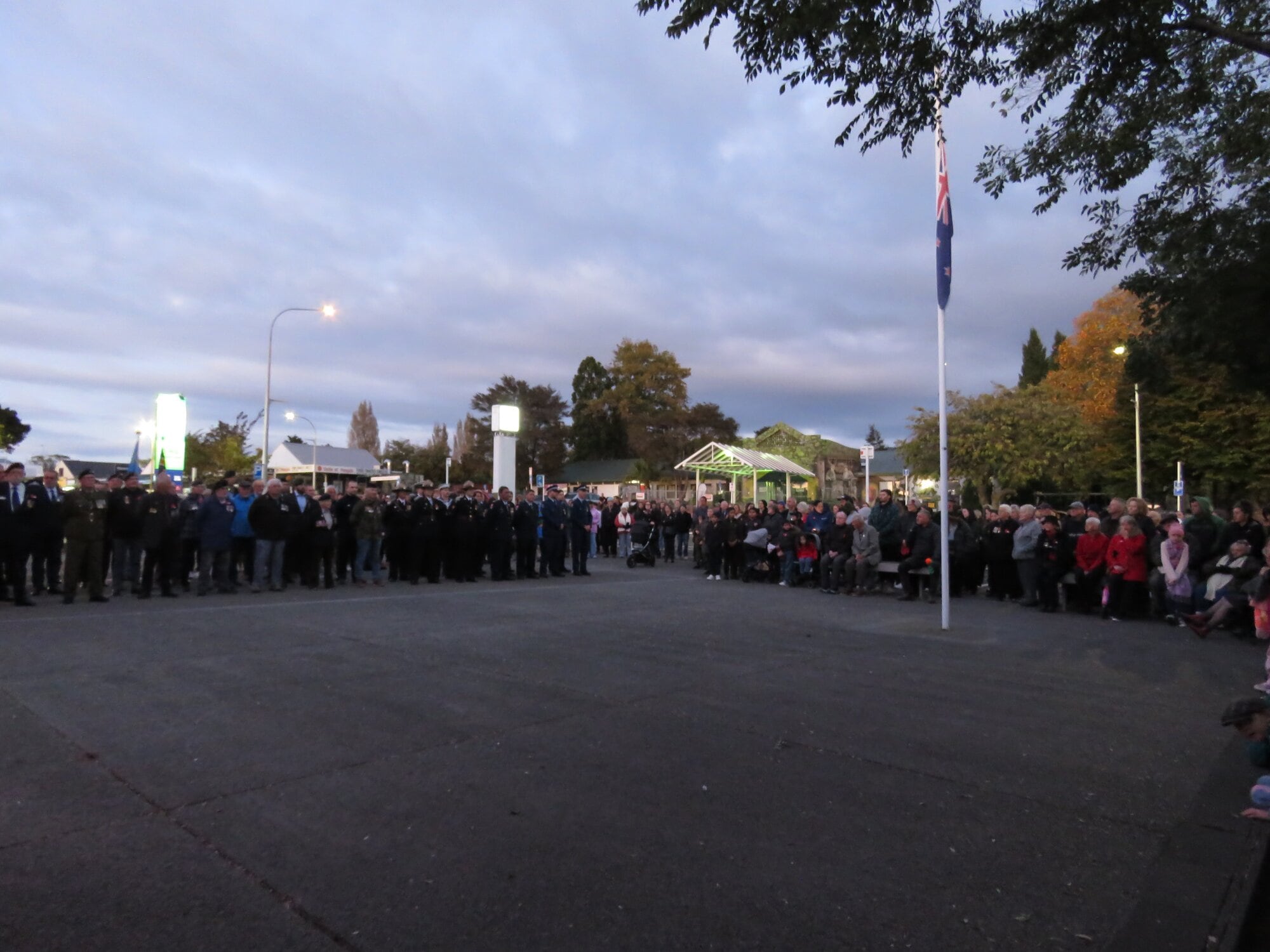
Returned servicemen stand to attention with representatives from police, fire and a number of other service organisations. Photo / Merle Cave
He asked the crowd, in the cold and quiet of the morning, to take a second to really feel “the weight of history, the silence of respect, and the hope that we, the next generation, will carry these stories forward – not just today, but every day we stand up for what’s right”.
“To all those who served, and those still serving – thank you. We remember you. We honour you. Lest we forget.”
Then Gourlay read The Ode of Remembrance in te reo Māori , followed by Charlotte Tanner reading it in English.
The dawn service concluded with Katikati RSA deputy president Ross Vaile lowering the New Zealand flag, then a closing prayer and the parade being dismissed.

0 comments
Leave a Comment
You must be logged in to make a comment.