


Kiwi students returning for Term 2 will see major education reforms rolled out to boost achievement and close equity gaps.
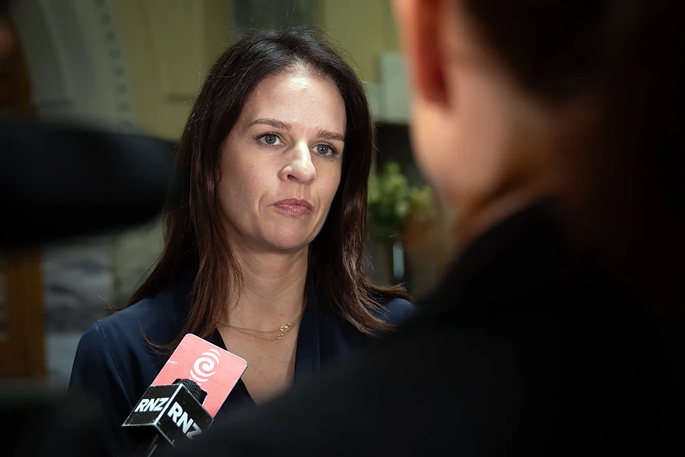
Education Minister Erica Stanford has unveiled a series of sweeping education reforms aimed at lifting student achievement and reducing inequities across the country.
As students return to school for Term 2, schools are introducing structured daily literacy and numeracy lessons, a national ban on cell phones during school hours, and a new knowledge-rich curriculum in English and maths from Year 1 to Year 13.
“We are restoring ambition and achievement to the heart of our education system,” Education Minister Erica Stanford said. “Every Kiwi child deserves the skills and support to reach their full potential.”
The Government’s new measures include daily reading, writing and maths for all primary and intermediate students, mandatory phonics instruction, and early reading checks at 20 and 40 weeks to track progress.
“We’ve introduced phonics checks to catch issues early and provided over 836,000 maths resources to support our new curriculum,” Stanford said.
The Ministry of Education is rolling out $3.2 million in funding for tier 2 literacy support across 962 schools, and $3 million for tutoring support for 3,000 Year 7-8 students struggling with maths.
Stanford said over 20,000 teachers have received professional development in structured literacy, while 15,000 have been trained in structured maths.
The Education Review Office (ERO) has begun monitoring implementation, with early results showing strong uptake and engagement.
“ERO has found nearly two-thirds of teachers have significantly changed their teaching with structured literacy, and three-quarters are seeing improved student literacy,” Stanford said. “This shows that our teachers are doing an incredible job delivering these changes.”
Schools are also seeing the benefit of improved property delivery. Standardised classroom designs have increased by 35 percent, allowing for a 28 percent reduction in price per classroom and 137 more classrooms built in 2024 than in 2023.
“Through greater efficiency, we’ve freed up $100 million to invest in new schools and classrooms in areas with growing populations,” Stanford said.
She added that all changes in English-medium schools are also available in te reo Māori, so every student, regardless of location or language, benefits.
“I want to thank our hardworking principals, teachers and staff for embracing this transformation. Together, we are setting every child up for success,” Stanford said.

1 comment
At last.......
Posted on 05-05-2025 21:36 | By groutby
.....a structured approach that does sound like common sense. Surely it is much needed as a 'standardised and structured' approach so every student has the opportunity to learn can only be a good thing...?
I guess it is yet another direction for teaching staff to adapt to, but we can only hope it leads to a noticeable increase in nationwide standards and should offer much more personal reward for the staff concerned to see the students succeed....
Leave a Comment
You must be logged in to make a comment.