


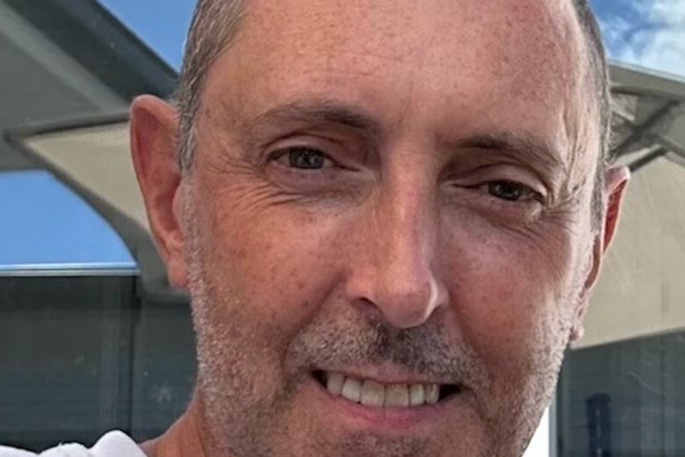
Blair Harrison thought he was “just getting old” when he stopped jogging due to back pain.
Instead, he discovered the pain was from fractures in his lower back caused by multiple myeloma - a type of blood cancer.
Harrison was 53 when he was diagnosed in May last year.
Following an “extremely good response” to treatment, Harrison is in “partial remission” and has returned to fulltime work - albeit 5cm shorter in height.
Harrison is participating in the Dry July campaign this year – an annual challenge where participants give up alcohol for a month while raising funds for non-medical services for Kiwi cancer patients, including physiotherapy rehabilitation service Pinc and Steel, which Harrison has used.
Dry July raised more than $900,000 last year for cancer patients. Registrations are open for this year’s initiative.
Eighteen months before his diagnosis, Harrison said he started avoiding things that were “jarring” his back, such as jogging.
Harrison said he kept seeing his GP who kept prescribing “harder pain relief”.
A physiotherapist saw he was in “so much pain” and referred Harrison for an X-ray.
“The X-ray revealed that I had a couple of fractures in my lower back.”
Blood tests at Tauranga Hospital showed his kidneys were about to fail, and further tests revealed the “completely unexpected” multiple myeloma.
“I remember … taking a taxi home from the hospital and thinking, well that’s quite big news.”
He thought of his four children and the impact the diagnosis could have on them.
 Blair Harrison was diagnosed with multiple myeloma in May 2024 and is participating in Dry July this year. Photo / Supplied
“It was a very odd time …”
He understood the fractures were linked to cancerous cells building up and weakening his bones.
He initially had three fractures in his vertebrae in his lower back. Now he had five.
As a result, Harrison said he had “an odd curvature” in his spine and was 5cm shorter.
After his diagnosis, he immediately started chemotherapy and an unfunded immunotherapy drug called daratumumab, which his health insurance covered.
The first relief for his back pain came with radiation therapy in October.
“It got very bad - I could hardly walk. I couldn’t really get out of bed.”
Harrison had a stem cell transplant in November. Subsequent blood tests showed there were still “traces” of myeloma “but they were too small to measure”.
He continued with chemotherapy and daratumumab and had an “extremely good response” to treatment.
“Whether I would have had that had it not been for daratumumab, it’s too hard to say ... ”
Harrison said he took a maintenance drug “because the chances of it coming back are 100%”.
His recovery also involved getting back into a regular routine, including walking and playing with his children.
He returned to work fulltime in February, working from home.
 Blair Harrison said doing rehabilitation - including paddleboarding - with Pinc and Steel Cancer Rehabilitation Foundation has helped with his recovery. Photo / Supplied
Harrison was referred to Pinc and Steel Cancer Rehabilitation Foundation, where he did stand-up paddleboarding.
Due to fatigue and being “a strange shape”, he said the last place he wanted to be was in the gym with “much fitter” people.
“It was quite comforting being able to go to a group with other cancer patients where no explanation was really required.”
It also helped him meet new people as he had been stuck in hospital and at home.
He said charitable support was “enormously helpful” and “crucial” to his recovery, and he encouraged people to do Dry July and support organisations that helped cancer patients.
A Dry July press release said funds raised would go towards Look Good Feel Better, Prostate Cancer Foundation New Zealand, and Pinc and Steel Cancer Rehabilitation Foundation.
The organisations provided free personal care sessions, rehabilitation classes, counselling, and community support that helped people rebuild their confidence after a diagnosis.
Dry July campaign director Veronica Shale said the emotional and mental toll of cancer often went unseen, “despite most New Zealanders being directly or indirectly impacted”.
Shale said prizes were up for grabs for participants. People can register on the Dry July website.

0 comments
Leave a Comment
You must be logged in to make a comment.