


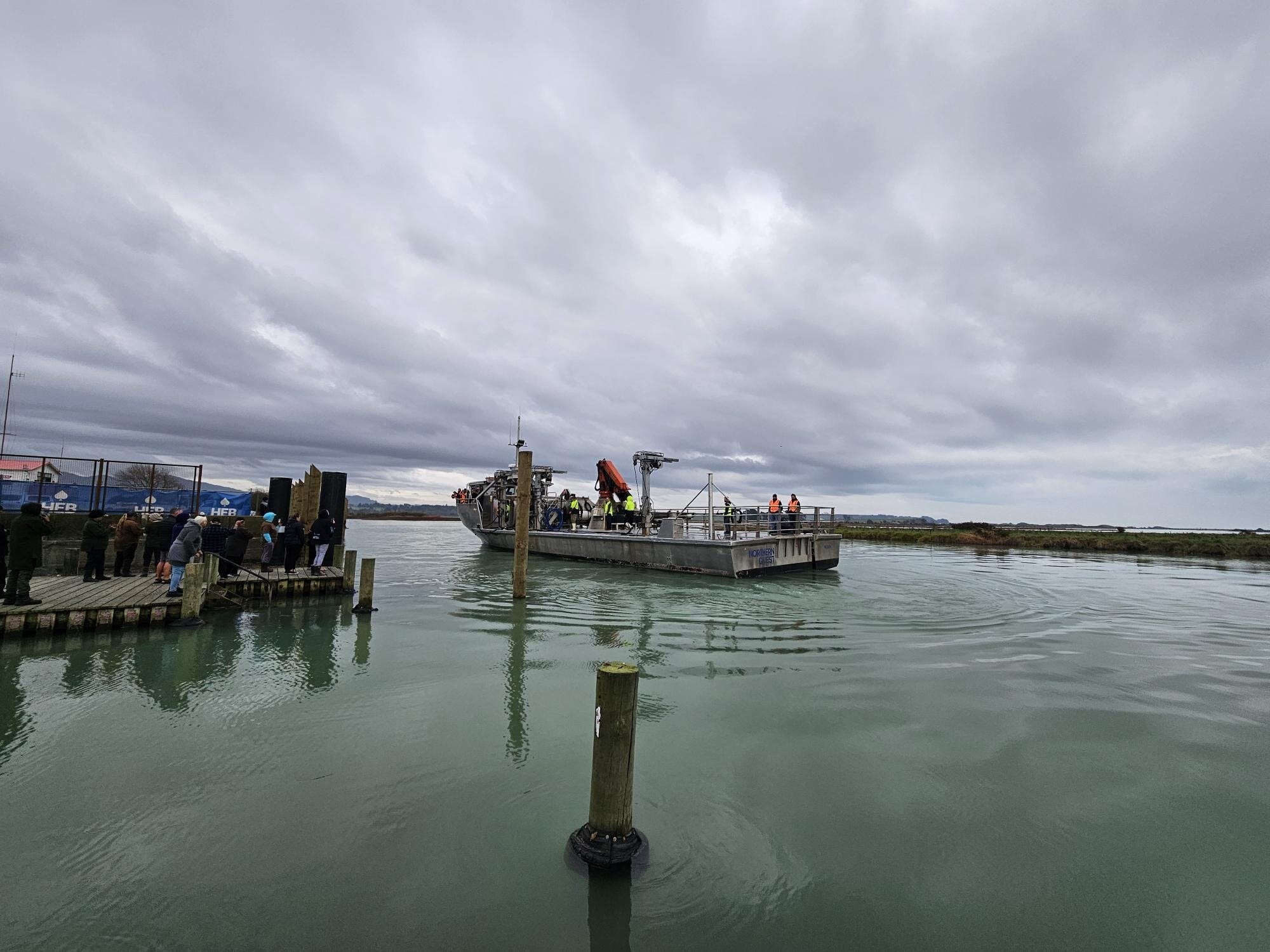
A major milestone in Bay of Plenty’s aquaculture journey has arrived, with mussel boats now docking regularly at the newly accessible Ōpōtiki wharf.
After two decades of community ambition and planning, the arrival of three specialist vessels—Northern Quest, Kukutai and Pakihi Kura—marks a significant step forward in the region’s transformation into a marine farming hub.
Whakatōhea Mussels Ōpōtiki Ltd Chief Executive Peter Vitasovich said seeing the boats tied up at the wharf offered a moment to reflect on just how far the district had come.
“This is a significant milestone for the growth of the district and the new industry,” Vitasovich said.
“It’s about more than just boats and infrastructure—it’s the realisation of a vision backed by community support and investment.”
The vessels are harvesting from mussel lines off the coast of Ōpōtiki, with the catch processed at a purpose-built facility that already employs more than 230 people.
The development follows major infrastructure investment, including the construction of twin seawalls and extensive dredging to create a navigable harbour channel—enabling larger commercial vessels to access the wharf.
While currently operating from both Whakatāne and Ōpōtiki, the mussel fleet is gradually shifting operations to its new home base.
The Ōpōtiki Wharf will serve as an interim port until a private marina and commercial wharf are completed on the western side of Pākihikura.
Ōpōtiki District Council has long championed the aquaculture project and oversees the current wharf area.
Ōpōtiki District Council Group Manager Service Delivery Nathan Hughes said the moment deserved recognition.
“We’re very pleased to see the boats using the upgraded wharf,” Hughes said.
“The project has been a large-scale collaborative effort across all levels of government, iwi, and the community. It’s important to pause and appreciate how far we’ve come.”
The wharf upgrade received support from Kānoa, the Regional Economic Development and Investment Unit, with funding and leadership on the works.
For locals, it’s more than infrastructure—it’s a symbol of opportunity, resilience, and the community’s stake in building a sustainable future from the sea.

0 comments
Leave a Comment
You must be logged in to make a comment.