


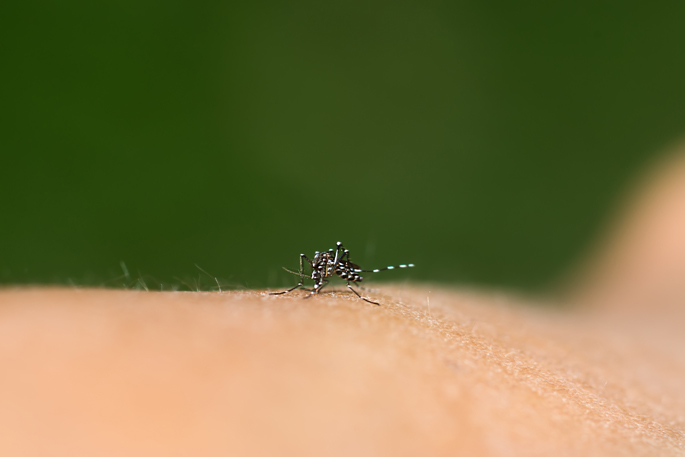
Doctors are being warned to be on alert for people with symptoms of dengue fever as the number of cases in New Zealand surges.
National Public Health Service physician Dr Sharon Sime told Midday Report public health teams are seeing an increase in cases among people returning home after picking up the illness overseas.
Dengue cases in the Pacific are at their highest level in almost a decade, with Samoa particularly affected with more than 2000 cases reported and multiple deaths since an outbreak was declared in April.
You cannot catch dengue from another person. You can get dengue if you are bitten by an infected mosquito in an area that has dengue, according to Health New Zealand Te Whatu Ora.
In New Zealand, there have been 208 cases of dengue nationally in the year to date. Of those, 103 cases were recorded in Auckland this year, double the number recorded for all of 2024. Around a third of the cases so far this year have ended up being hospitalised.
“What’s different with dengue fever is many people with dengue don’t have symptoms,” Sime said. “So, the ones that we diagnose are likely an under-representation of the number of cases.”
New Zealand does not have mosquitoes able to transmit dengue, so you can’t get the disease in New Zealand, Sime said. While you cannot catch dengue fever from another person, you can get it from infected mosquitoes in an area or region that has dengue and there is no available vaccine in New Zealand.
“At the moment, our climate wouldn’t work for the particular type of mosquito that carries dengue. We do also have a monitoring programme at our airports and our ports where we are constantly monitoring for any imported mosquito, just so that we would get an early warning of any chance of these mosquitoes surviving in New Zealand,” Sime said.
Symptoms of dengue fever include a sudden high fever, intense headache, pain behind the eyes, muscle and joint pain, tiredness, nausea, vomiting and a fine rash, which may be itchy and usually begins on the extremities, but spares the palms and soles of the feet.
Many people infected with dengue will only have mild symptoms but a small number of people may get severe dengue and require hospital care.
National Public Health Service national clinical director Dr Susan Jack said people over 60 years old and children aged 10 and under are at greater risk of severe illness from dengue.
Jack said if you’re travelling outside Aotearoa New Zealand to an area with dengue, protect yourself by:
- Staying or sleeping in well-screened locations, or under mosquito nets
- Keeping screens on doors and windows closed when indoors
- Wearing light-coloured protective clothing, including, hats, long sleeves and trousers when outdoors
- Wearing a repellent cream or spray containing less than 35% diethyltoluamide (Deet) when outdoors
- Avoiding places where mosquitoes are most active, such as swampy areas or places with standing water.
– RNZ

2 comments
Less than 35% Deet ?
Posted on 08-08-2025 08:22 | By Equality
"Wearing a repellent cream or spray containing LESS than 35% diethyltoluamide (Deet) when outdoors" ? Surely the more 'Deet' in the formula the better the protection? Can someone please explain why - less is better'?
In answer to use of Deet ‘’By Equality “
Posted on 08-08-2025 16:39 | By Leprechaun
Courtesy of Google
Having less DEET in mosquito repellent is not more effective; rather, it determines the duration of protection. Higher concentrations of DEET provide longer protection, but concentrations above 50% don't offer significantly longer protection. The effectiveness of DEET in repelling mosquitoes is directly related to the concentration applied.
Here's a more detailed explanation:
Duration of protection:
DEET concentration affects how long the repellent will work. For example, 10% DEET might protect for about 2 hours, while 30% DEET could protect for around 5 hours.
No increased effectiveness with higher concentrations:
While higher concentrations of DEET offer longer protection, concentrations above 50% don't provide a significant increase in effectiveness.
Potential for skin reactions:
Higher concentrations of DEET can increase the risk of skin rashes, although these reactions are generally rare.
Cheers David
Leave a Comment
You must be logged in to make a comment.