


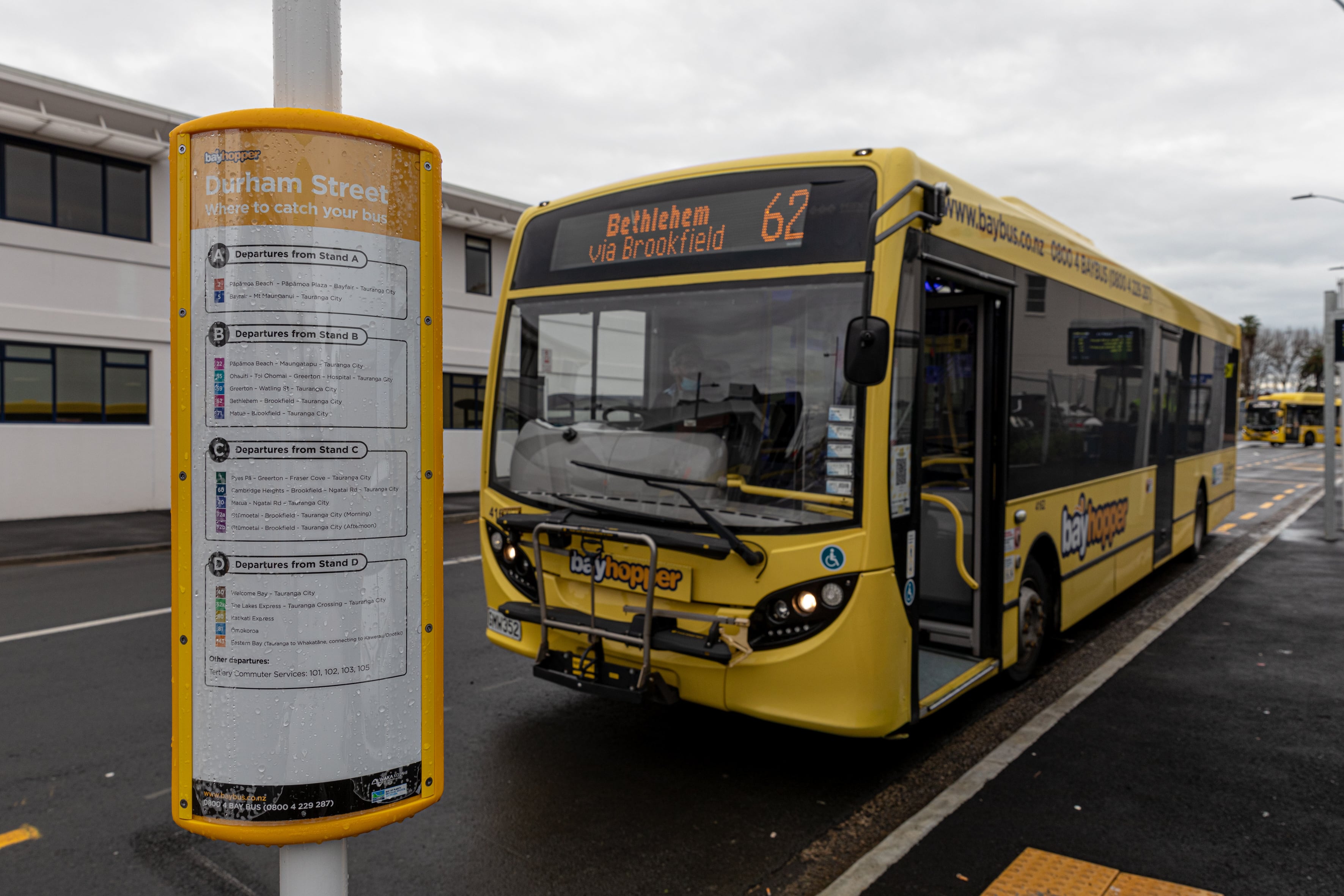
Public transport funding has been cut in a fast-growing region where traffic congestion is a common complaint.
Bay of Plenty Regional Council sliced $3.87 million out of its public transport budget as part of its 2025/26 Annual Plan, with the Tauranga and Western Bay areas most affected.
The council made savings by cutting projects such as a Pāpāmoa park and ride trial, deferring plans to expand the bus network and removing or amalgamating some routes.
The cuts helped the council bring its general rates rise down to 3% from a forecast 8.2%, with targeted rates for transport services down 2%.
The public transport spend would be $56.6m.
Regional council public transport director Oliver Haycock said this was achieved by reviewing budgets, considering affordability concerns and adapting to changing economic conditions.
A reduction in the subsidy received from the NZ Transport Agency (NZTA) for public transport meant the council had to reassess its plans, he said.
The council requested $128m for public transport services from NZTA for 2024-27 but had $111.9m approved, leaving a $16.1m shortfall.
For 2025/26, the council would receive about $3.9m less in government subsidy for proposed improvement projects, Haycock said.
He said without the full subsidy, ratepayers would have had to pay for the projects, but the councillors decided this was not appropriate.
The council saved $1.4m by cancelling three key projects. These were:
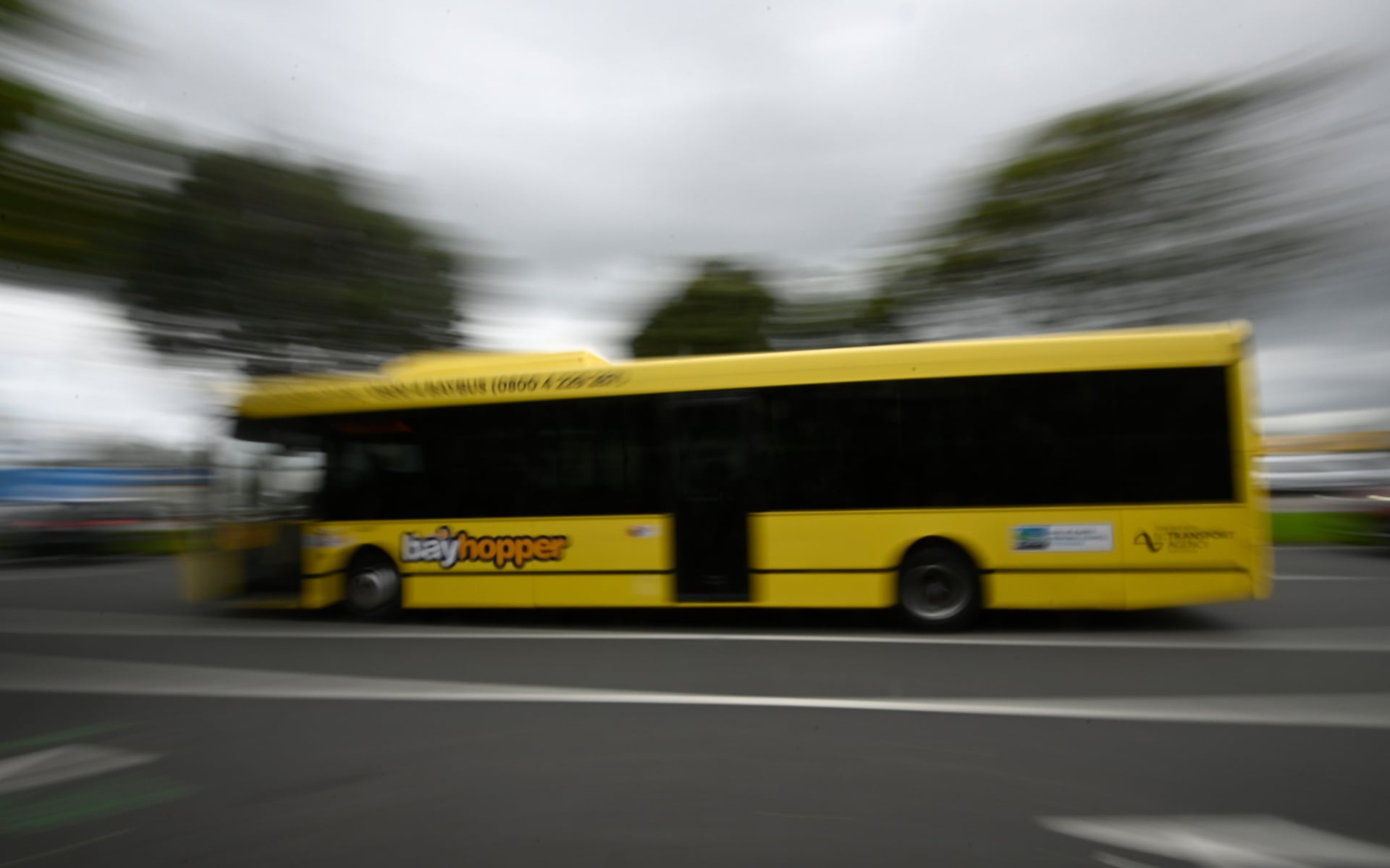
A Pāpāmoa park and ride trial was cancelled saving $900,000. Photo / George Novak
The Pāpāmoa park and ride trial – a joint initiative with Tauranga City Council for an express peak bus service between a temporary parking facility in Pāpāmoa East and the city centre – saving $900,000.
Another $200,000 was saved by cancelling tertiary commuter services between Bay of Plenty urban centres because patronage was low and the NZTA funding was declined.
A feasibility study into the previous Government’s bus decarbonisation targets was no longer needed, which saved $300,000.
The council’s biggest savings of $3.7m came from moderating its approach to growth and finding efficiencies in the current network, Haycock said.
In April, bus routes 71 and 70 were amalgamated to create Route 7 and the outbound Route 52x in the morning was removed, due to “very low patronage”.
Councillors also approved funding to extend the On Demand bus trial in Tauranga South.
This meant the council achieved $3.87m in public transport savings, Haycock said.
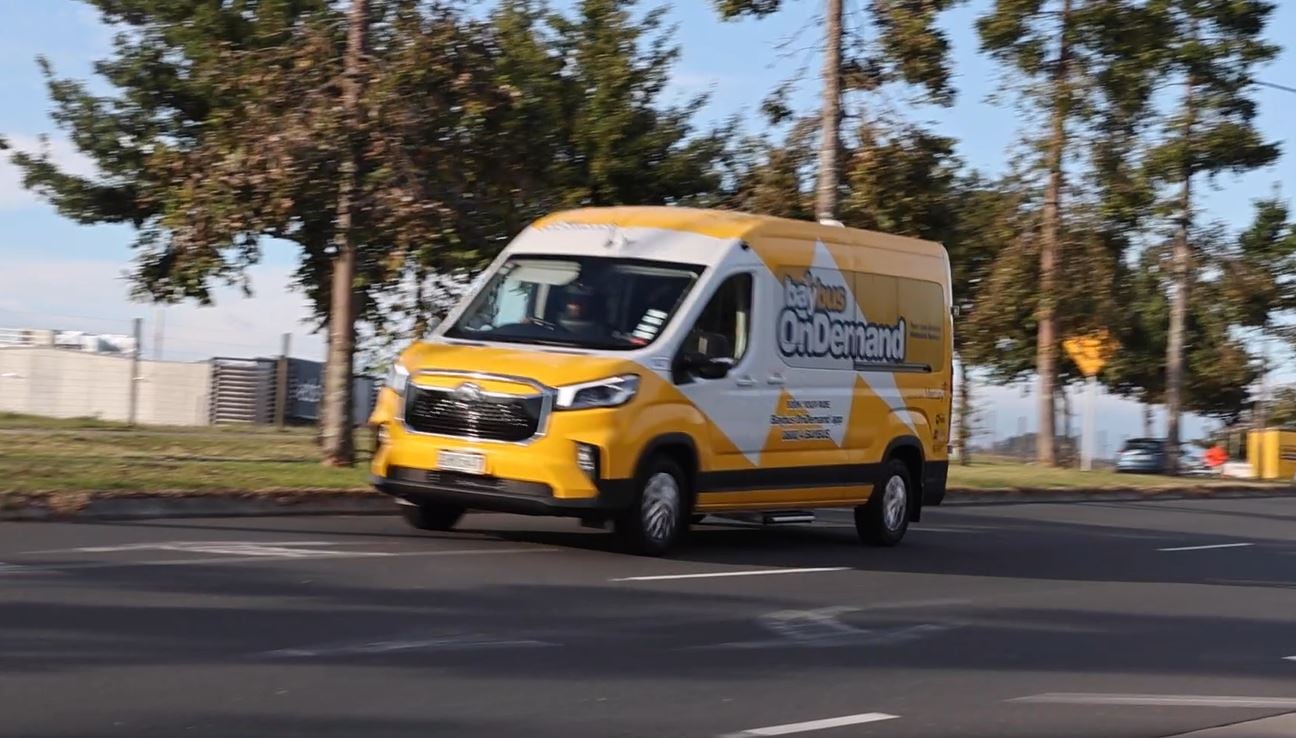
The on-demand bus trial in Tauranga South was extended. Photo / Alex Cairns
The council’s long-term plan included funding to expand the bus network to support the “significant growth” in Tauranga and Western Bay, but the councillors decided general growth in the network could be deferred, he said.
Tauranga’s population growth averaged 2.0% a year over the five years to 2024, according to Infometrics data.
For the Western Bay of Plenty it was 2.4% a year over the same period, compared with 1.2% a year for New Zealand.
Haycock said there were no specific growth projects planned but the funding was earmarked to support the Connected Centres model set out in the Urban Form and Transport Initiative report.
The initiative focused on supporting liveable community outcomes and finding answers for housing capacity, intensification and multi-modal transport.
“At the heart of our transport network are the buses, routes and services that people in our region rely on every day. That isn’t going to change.
“Last year was a record-breaking year, with almost 3.4 million trips made on our networks across the Bay of Plenty.”
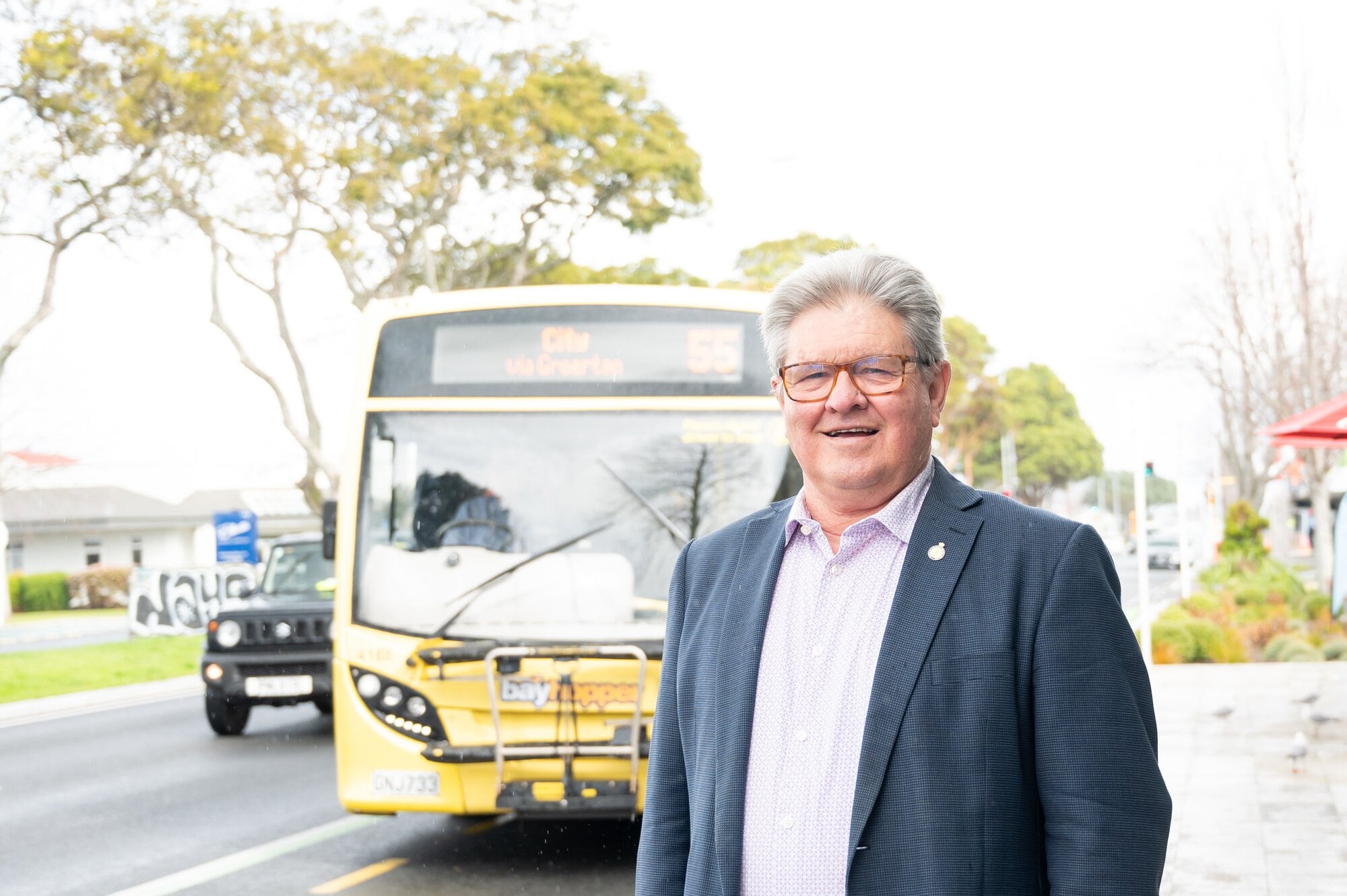
Bay of Plenty Regional Council Public Transport Committee chairman Andrew von Dadelszen said current bus services wouldn't be affected by the budget cut. Photo / Brydie Thompson
Regional council Public Transport Committee chairman Andrew von Dadelszen said the council did not reduce current services.
“It’s not that we are doing less, it’s that we’re not doing more.”
The goal was to grow bus patronage and get “smarter” with how the council delivered services, he said.
He had a vision for an orbiter service that ran a central route through Greerton, Cameron Rd, the city centre and Mount Maunganui, with smaller buses servicing the suburbs from this route.
There would be costs involved because interchanges would be needed for people to transfer buses, but von Dadelszen believed it would be more efficient than running big buses on routes with low patronage.
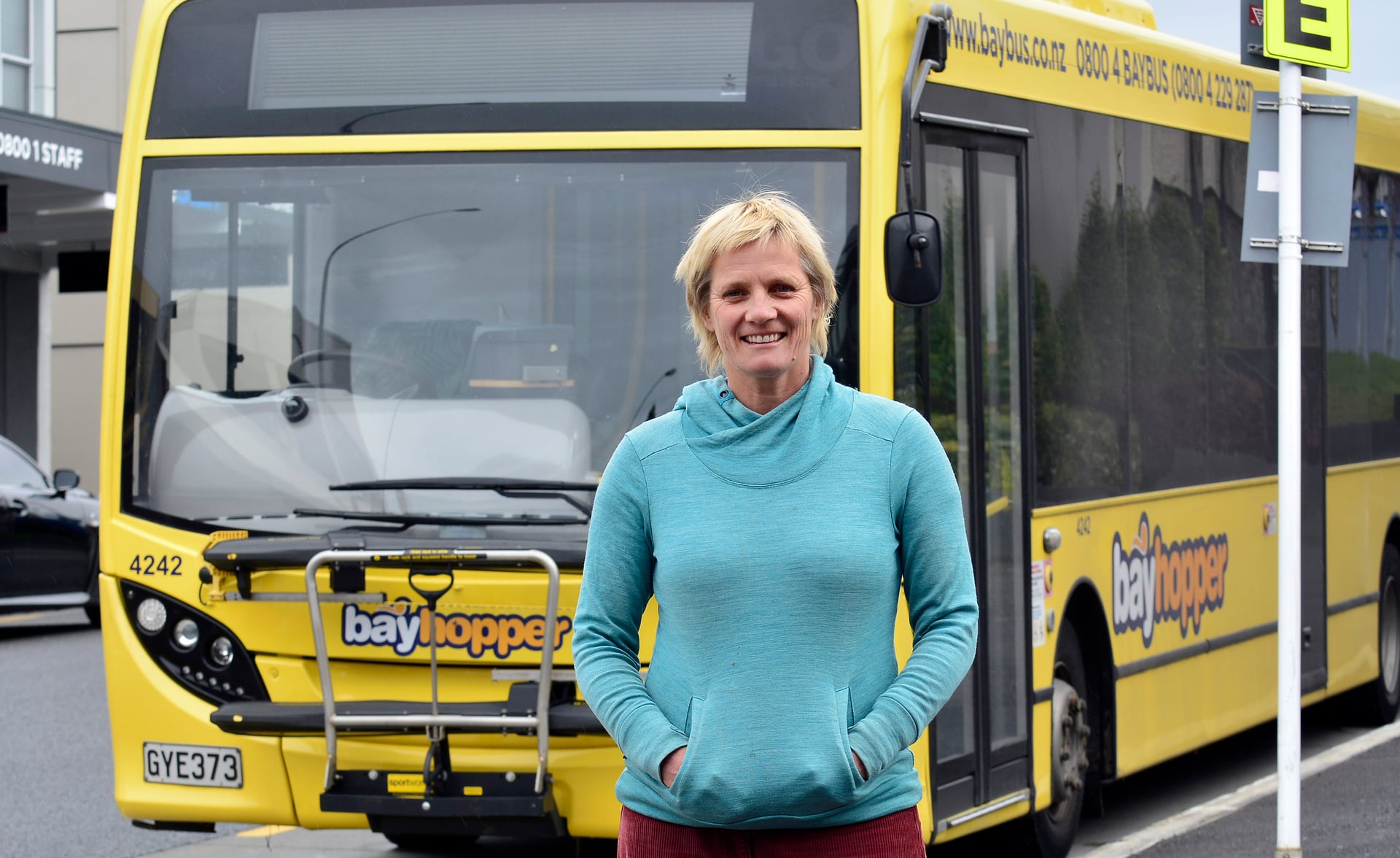
Wednesday Challenge national project co-ordinator Heidi Hughes said public transport budgets should grow with cities. Photo / George Novak
Wednesday Challenge national project co-ordinator Heidi Hughes said public transport budgets should be growing with an area.
This was difficult for councils because of the reduced government funding, she said.
“They wouldn’t have made such drastic cuts if it hadn’t been that the government policy statement completely changed the emphasis from public transport to allocating funding to roads.”
The Wednesday Challenge encourages people to not use cars for their Wednesday commutes.
Public transport funding needed to be prioritised, but the regional council needed support from the Government and city and district councils that managed the bus stops, Hughes said.
“Councils should be prioritising it, especially with a growing city.”
She said more greenfield development, combined with restricting public transport finance, would “end up creating more congestion and worse outcomes in the future”.
Denser development should be encouraged instead of urban sprawl, she said.
Traffic congestion was behind only crime in the top complaints of Tauranga residents polled in the 2024 Quality of Life Survey. It was a concern for 43% of respondents, higher than in the other eight areas surveyed.
Perceptions of public transport also generally ranked lower in Tauranga than other main centres.
LDR is local body journalism co-funded by RNZ and NZ On Air.


10 comments
This is just….
Posted on 27-08-2025 09:11 | By Shadow1
…what we didn’t need. Not only do we suddenly have another greedy over resourced council who recently more or less doubled their rates but now they are pretending to work hard to cut peanuts from their budget. Thank goodness they weren’t able to sell their POT shares to waste on more expensive projects. I suggest that they should reinvent themselves and become a lower profile and less expensive organisation before Central Government does it for them.
Shadow1
On demand cheaper?
Posted on 27-08-2025 09:55 | By bigted
The on demand service is questionable. It would be very interesting to see the 'per use' breakdown in dollar terms.
It may well be more cost effective to provide discounted coupons and use Uber or taxi services to provide transport to these people.
Think beyond the square!
Empty buses
Posted on 27-08-2025 11:01 | By an_alias
Come on show us how good it is with actual paying capacity counts ?
And please the congestion has been created by the poor council decisions on roading, deliberate destruction of flow.
At least someone is thinking about it...
Posted on 27-08-2025 12:04 | By morepork
Cllr. Von Dadelszen is right not to do more.
What we have currently are the wrong buses for the roads we have.
His idea that there could be a core shuttle of existing large buses down Cameron road, with a smaller service "hooked on" to the core, using smaller buses like the successful "On Demand" service, is a good one. It needs some work, but the fundamental idea is very good.
If the core shuttle was fairly frequent, people could be persuaded to use it. It would also lend itself to expansion with new "cores" to the Mount and Welcome Bay, possibly also Otumoetai and Matua.
Government focus has swung back to cars and it reflects the reality. We still need for parking to be included in new designs, as public transport won't replace private, but it could certainly support private traffic and give people an option.
Expensive Bus Rides.
Posted on 27-08-2025 13:40 | By Noel Silver
Would someone please advise the Public of the following:
How many Buses are in active service.?
When the cost per year is $56.6 million per year please explain how many passengers use the service, then we will know what each fare actually costs. What do the passengers actually pay.
One final point. If the Regional Council did not have its port of Tauranga profit related funding to spend how would this service be otherwise paid for??.
It seems long term this is unaffordable to the Ratepayers. $ 56.6 million a year would do wonders to permanently retire the flooding problems that exist in Tauranga for instance. Some answers please.??
The Master
Posted on 27-08-2025 14:35 | By Ian Stevenson
Last time I looked...
Bus revenue (paid bus fares) was <$2 million
Bus costs were around $40 million
Annual loss is then $38m or so, some $14m is paid by NZTA (wasted monies paid ex taxpayers)... the rest of the huge losses are added to rates one way or another.
The "cost" saving is minor.
The issue is that most buses, most of the day are running around empty.
The Master
Posted on 27-08-2025 14:39 | By Ian Stevenson
@ Noel Silver
The reality is that fare revenue (when they pay, many don't) is <5% of the full operational costs
Hmmm
Posted on 27-08-2025 16:54 | By Let's get real
Virtue signalling really. Less than 4 million savings, but aren't we great. We had 3.4 million trips last year, now was that passenger trips or scheduled bus route trips..? We won't tell you how many actually paid a fare, we won't tell you passenger numbers per trip, or whether the numbers are being boosted by using hoppers to transport school children.
As an additional level of incompetence in running and managing the Bay of Plenty, we won't be giving out information about the effectiveness of our spending, after all it's none of your business how we spend your money, as long as it's ALL spent by the end of the financial year.
We only have a national population of less than 5.4 million and it seems like many of those produce absolutely nothing other than poorly considered plans for the community.
But hey!!! NOT MY MONEY!!
Better Idea
Posted on 27-08-2025 21:32 | By Yadick
Cut 3.87mtrs from each bus would be a better start.
Better
Posted on 28-08-2025 15:00 | By Kancho
I understand the need for a bus service even though they don't work for my use. Seems smaller and more frequent would be good . The worst for me is interchanges that soak up time . Two buses to get to the hospital that used to be one bus and 15 mins now takes two or three times longer. Then of course waiting for buses and then traffic all make it slow
Doubt it is fixable but at least it's available for those that need it. One-day that may be me even though paying the regional Levy and TCC rates it would be great to get a rebate to get a taxi as it would be cheaper
Leave a Comment
You must be logged in to make a comment.