


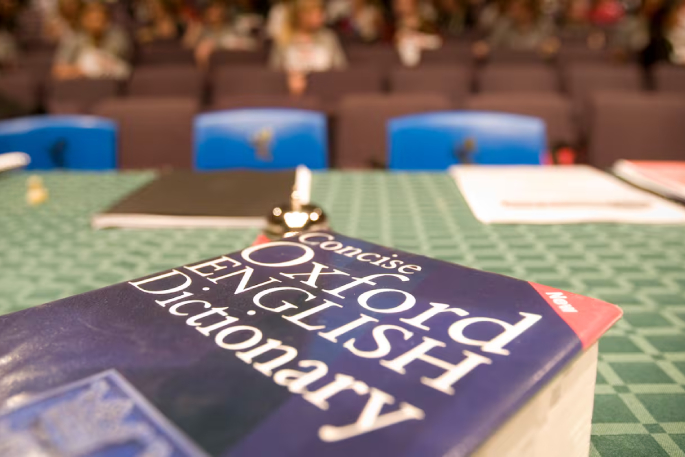
Kiwis have a fighting culture – if the Oxford English Dictionary is anything to go by.
“Rark up” and to “climb into” are just a few of the New Zealand terms being added in the latest World English update of the OED, joining a range of everyday slang and te reo Māori phrases.
Both expressions refer to verbal aggression, though “rark” is defined as being more of the wind-up kind.
This year’s te reo Māori additions are morning greeting mōrena and hapū, which, in adjective form, means pregnant.
The classic Kiwi colloquialism “sweet as” also made the list.
Defined as an expression “of approval: excellent, fantastic, great”, the term has now been formally inducted into the English language.
The list of 11 words was rounded out by local slang “cuzzy bro”, “lux”, “lifestyler” and “trundler”.
Words added from other cultures include “cry long water”, which means to cry insincerely in Caribbean English, and “poody”, which is Welsh for having a sulk.
The dictionary first launched quarterly World English updates last year, with New Zealand cultural terms among the first to be incorporated.
“Mahi”, “chilly bin” and “Aotearoan” were among last year’s additions, as was “waka jumper”, which refers to an MP who has switched political party.
At the time, OED World English executive editor Danica Salazar said the inclusion of te reo Māori reflected the language’s “profound and lasting impact on English”.

3 comments
What next?
Posted on 26-09-2025 14:05 | By NZoldkiwi
No longer an English dictionary. Have never seen an Aotearoan.
@NZoldkiwi (Part 1)
Posted on 27-09-2025 14:33 | By morepork
I understand your dismay. As someone who has made a living out of writing English over many decades, I used to feel as you do now.
I developed a deep love for the Language and I still get great pleasure from English literature. It saddens me that Shakespeare is being dropped and we will all be poorer for it.
But, we live in a world where change (especially in Language) is a certainty.
And you can argue that the primary purpose of language is communication and the transfer of ideas. The artistic merit of it has to be secondary. There can be delight in choosing exactly the right word to convey an idea, and English has around a million of them (if you include all the archaic and scientific terms.) The OED recognizes just under 200,000 in current use and, with the variations, it comes up to around 600,000.
@NZoldkiwi (Part 2)
Posted on 27-09-2025 14:47 | By morepork
The average University student has around 8000 and a professor has 25,000.
The average person has around 6000.
If you look at it in that context, we are hardly using our language anyway. So we shouldn't be upset if foreign phrases and words decide to "hitch a ride" on it.
The French are currently upset about English penetrating their language. Phrases like "le weekend", "le sandwich" and "le shopping", but we embrace "en route", "cul de sac" and many others. Every attempt by officialdom to stop it, meets with a shrug from the population. It simply works and there's no point getting upset about it.
As for "Aotearoan" I agree with you 100%. I is neither Polynesian nor English. And yet, people will know what you mean. (primary purpose=communicate)
I'm sorry to see the erosion of the English I love, but that is the nature of language. Sweet as..
Leave a Comment
You must be logged in to make a comment.