


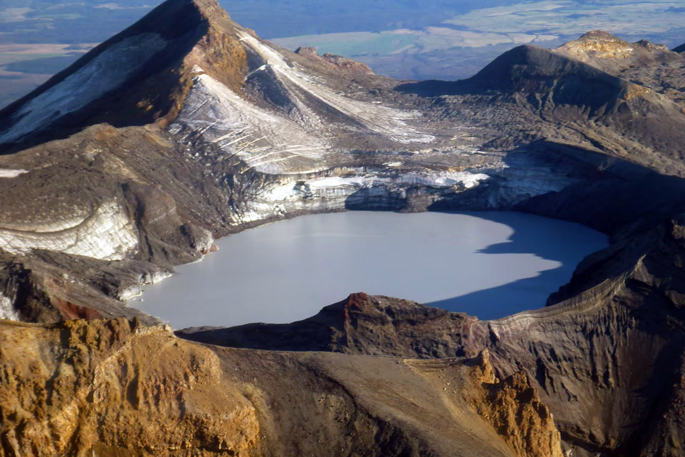
Mt Ruapehu’s crater lake is reheating with a 5C increase since early last month, GeoNet says.
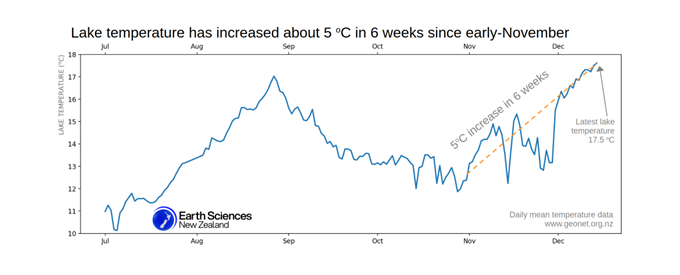
Te Wai ā-moe was in a cooling phase from late August to mid-October with the lake temperature dropping from about 17C to 12C.
During the cooling, the amount of sulphur dioxide gas emitted from the lake decreased, consistent with the cooling of the hydrothermal system beneath the lake, GeoNet said.
Duty volcanologist Oliver Lamb said today there were clear indications the lake was reheating, with an increase of about 5C since early November - a similar heating rate between July and September.
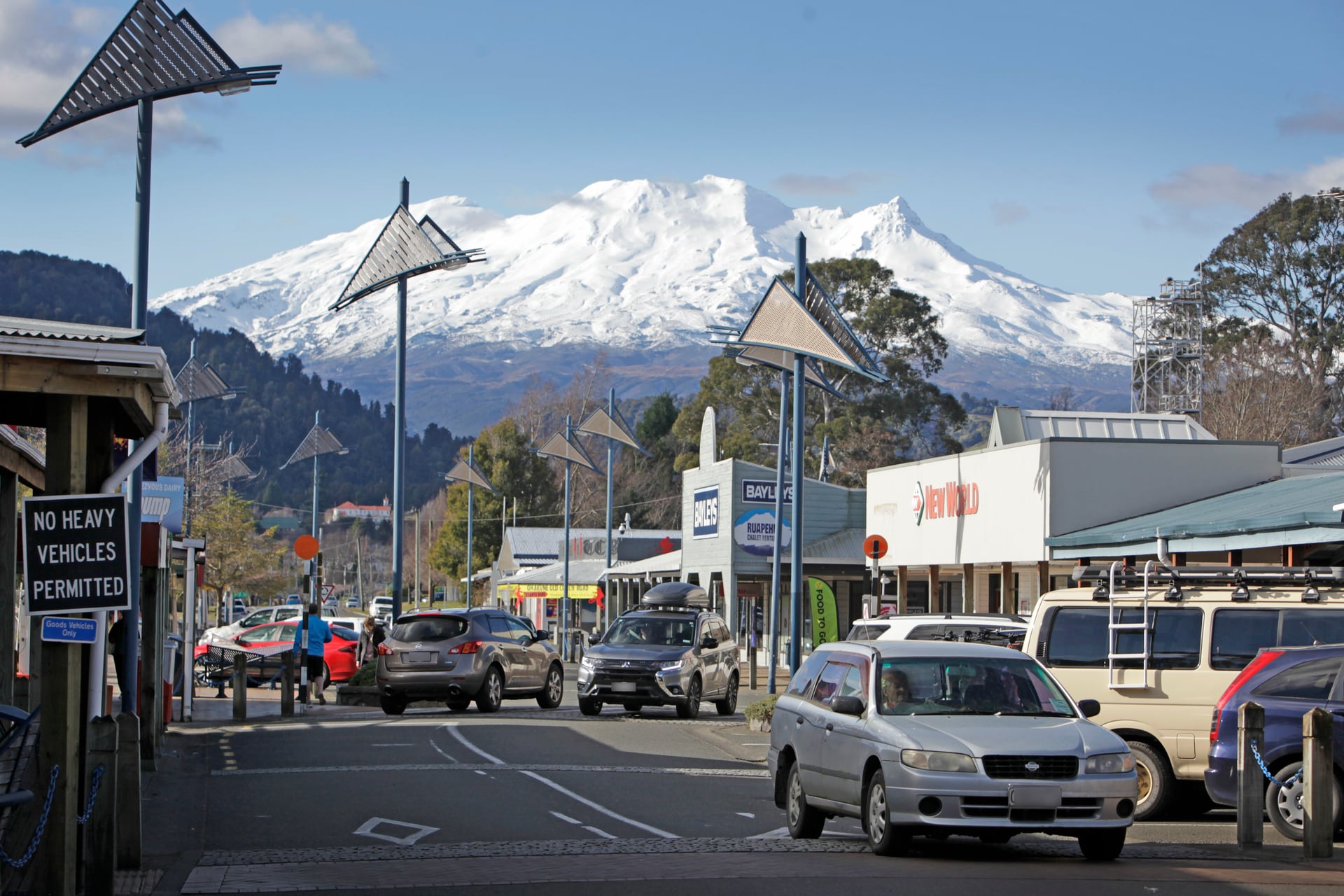
Mt Ruapehu from Ohakune.
“The daily average is currently around 17 to 18C. Both the increase and the current temperature are well within the expected norms.
“The amount of sulphur dioxide gas has remained low to moderate during the ongoing heating episode,” he said.
“Minor upwellings of hot water and yellow sulphur slicks were observed on the lake surface during a recent gas flight; the slicks are usually related to hot fluids entering the lake floor and melting sulphur.”
Lamb said the amount of gas passing through the lake was within the normal range and volcanic tremor remained low.
The Volcanic Alert Level remained at 1 and the Aviation Colour Code at Green.
Mt Ruapehu last erupted on September 25, 2007, which caused a seven-minute earthquake, two lahars and flying rocks - one that landed on Dome Shelter near the crater, crushing the leg of primary school teacher William Pike.
The volcano also exhibited noticeable activity in 1995 and 1996, most notably on June 17, 1996 when a large eruption produced giant clouds of smoke and ash.
Eruptions continued for weeks and damaged crops and killed livestock. The resulting ash cloud disrupted flights and caused delays across the country.

0 comments
Leave a Comment
You must be logged in to make a comment.