


City and district councillors are finding themselves under increasing pressure as they navigate the conflicting interests of the draft local alcohol policy that will shape Tauranga's nightlife.
The councils' guiding policy is to ‘reduce harm', which the police and the District Licensing Authority say can be achieved by measures including early closing and a one way door policy.
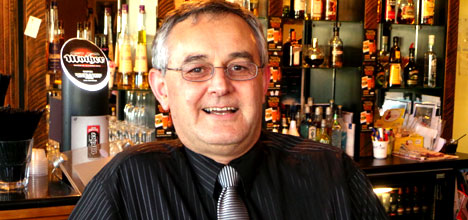
Hospitality NZ regional manager Alan Sciascia.
Hospitality NZ, the voluntary umbrella organisation for publicans, tavern owners and bottle store operators, says the country's territorial authorities are being asked to take up a political issue that central government has walked away from.
'Central government identified the problem but don't want to be a part of it because it will lose them votes, so it's ended up on our lap,” says Hospitality NZ regional manager Alan Sciascia.
The causes of the current alcohol concerns lie with two political changes that have overturned the industry in the 40 years that he has been involved in it, says Alan afterwards.
He says these are allowing supermarkets to sell alcohol, and removing the crime of drunk and disorderly from the Crimes Act – which happened about the same time.
Before 1981 people did most of their drinking on licensed premises. If people got drunk, it was considered their responsibility, and they faced being fined.
Today 60 per cent of the packaged beer in New Zealand is sold to two customers – supermarket operators Progressive Enterprises and Foodstuffs. Overall 75 per cent of the alcohol sold in New Zealand is through supermarkets and bottle stores for drinking at home.
'About the same time we had a quantum shift in personal responsibility. We have now got a situation where if I walk into a bar and get drunk, the licensee is in trouble, I'm not.”
If he then causes a problem with his drunken behaviour, the licensee is regarded as causing the problem for allowing him to get drunk. He can't be arrested because being drunk is not a crime. Police only have powers to arrest if he causes damage to something or somebody, says Alan.
'People don't see it as wrong to get trolleyed, that needs to change,” says Alan.
Wellington, as part of its local alcohol policy, is looking at introducing a law change similar to the Whanganui gang patch rule, which will make it illegal to be drunk in public in Wellington.
Alan says a similar law could be introduced on The Strand in Tauranga, where the CBD's entertainment precinct has become an attraction in its own right.
'People want to go there, be a part of it – some are already drunk when they arrive.”
As intoxicated people are prohibited from bars, they stay out on the streets, and then when the bars close the two groups meet and problems occur.
'If the police had their way we would have all bars closing at 2am, with a one-way door after 1am, which means the bars are effectively closing at 1am instead of 3am as they do now.
'That would mean unless you are in a bar by 1am you can't get in.”
According to a Hospitality NZ survey 35 per cent of people would hang around a bar outside if they are barred by a one-way door policy. Alan believes this is enough to cause problems.
The police point to a spike in arrest numbers after bars close, and say the remedy is to close earlier. Alan says the closing time will simply move the spike.
The one-way door policy is only being pursued in Tauranga, says Alan. Other centres including Hamilton and Christchurch have dropped it as a mandatory measure.
Success has been claimed for the policy working in Newcastle NSW, but that was accompanied with a drop in bar hours with closing moved back from 5am to 3am.
If a one-way door policy is to be imposed, Alan says it should be discretionary and only imposed where there is a serious problem.
His argument is supported by accident figures from Nelson that show 50 per cent of all alcohol related calls are to accidents at home, 20 per cent are in public places, 20 per cent are road accidents, and only six per cent on licensed premises.
In questions on the HANZ survey that accompanied submissions from HANZ members, Councillor Larry Baldock says at least some of the HNZ figures will have been provided by people who drink on The Strand.
If the one-way door makes some people go home, that is harm reduction.
'If we can achieve a nine per cent reduction in these people drinking, that's what our job is,” says Larry.
The proposed one-way door policy applying from 2am for all licenced premises still open is supported by 53 submissions, and opposed by 29.
While many people support the concept of a one-way door policy by ticking ‘support' in the submission form, but they didn't support the policy applying from 2am. The most frequent comment was to impose a midnight one-way door policy with a 1am closing time (45) followed by support for a 1am one way door policy with a 2am closing time (22).
Other comments from the public about the issue are that a one-way door policy will see more drinking at homes with police attention being scattered across the city from multiple calls to different localities.
Another prediction is that a one-way door policy will see more drunk and angry people on the streets waiting for friends still inside bars.
During the consultation period the draft Tauranga and Western Bay of Plenty District Local Alcohol Policy received 1044 submissions when the submission period closed on September 5.
Trading hours for bars, bottle stores groceries and dairies are also of concern to submitters with many alternatives being offered to the 9pm closing in the draft policy.
He says the hours should be the same for all off-licences, otherwise customers will travel to the advantage of the open business.
'If you allow supermarkets to open later than bottle stores you will simply be moving problem customers from one location to another, to the benefit of that business,” says Alan.
He says bottle shops and supermarkets should have the same liquor trading hours. If bottle stores had to close at 9pm, then supermarkets should stop selling beer, wine and cider at that time.
Other local alcohol policies in his region - Waipa, Waitomo - have settled on 10pm, Eastern Bay of Plenty and Ruapehu, 11pm.
'I have not yet seen 9pm. One Tauranga supermarket has a midnight liquor licence, but they still close at 10pm.”

1 comment
Drinkers
Posted on 19-09-2013 15:42 | By socantor01
Everyone of the Strand bars is a hot-bed of criminal associations. Everytime I go to any of them I recognise known crims. The only conclusion I can come to is that they are provided as meeting places for crims. Very few ordinary people go there. It would be a much better idea to change all of them into down-town apartments - both high end and low end, and get rid of the low trash inhabitants that frequent the places at the moment. Just watch the crime rate go down!
Leave a Comment
You must be logged in to make a comment.