


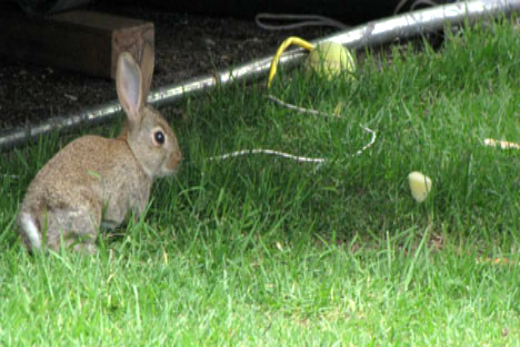
The Waikato Regional Council is reminding Coromandel locals and bach owners' properties that now is a good time to tackle the spread of wild rabbits.
With the summertime here and the weather getting warmer the regional council is warning locals that humans at the beach are not the only ones who proverbially go at it like bunnies.
They may look cute but if left unchecked wild rabbits can destroy building foundations, vegetation and urban landscapes. Photo: File
'Rabbits at the beach breed prolifically and if they get out of control they can undermine building foundations and sand dunes, destroy dune vegetation and garden plants, and create holes in lawns,” says biosecurity officer Chris Monk.
'Landowners are legally responsible for keeping numbers down on their properties and we're keen to work with them to manage the wild rabbit population to avoid these sorts of problems.”
Chris says many Coromandel seaside communities have a resident population of wild rabbits who 'appear to love the beach as much as people do.”
Areas rabbits like living most include under houses, decks and support buildings.
The best way to keep them out from under such structures is using steel mesh with gaps no larger than three centimetres.
The mesh should be placed around the base of buildings and either dug 20 centimetres into the ground or used to create an apron reaching 30 centimetres out from the structure.
Mesh can be covered with soil or small rocks and pebbles for a tidier look. Trellis material or plywood are other options for keeping rabbits out.
'This work can be done as either part of property maintenance or incorporated into any new design for a home,” says Chris.
Other control options include Pindone baits, cereal pellets and pellets of the fumigant Magtoxin for use down rabbit holes. Pindone also controls rats and mice.
These toxins can be bought at most farm supply stores. It is important to follow all safety procedures when using them.
For more information visit the Waikato Regional Council's website at www.waikatoregion.govt.nz/animalpests or call the Biosecurity Team on 0800 800 401.

0 comments
Leave a Comment
You must be logged in to make a comment.