


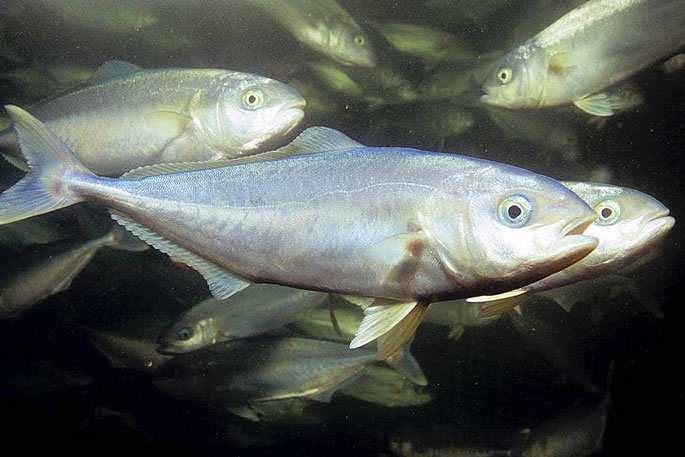
An iwi move to create the first fin fish farming operation off the Coromandel coast has the tick from the local council.
Thames-Coromandel District councillors are throwing their weight behind plans for the farm, which would be in a specially created marine farming zone.
It's estimated the zone, at full development, could support annual production of about 8000 tonnes of kingfish by live weight, potentially worth more than $100 million a year in exports and hundreds of extra jobs.
Behind the plans is Pare Hauraki Kaimoana, an asset holding company of the Hauraki Māori Trust Board and Pare Hauraki Fishing Trust, and the mandated iwi organisation and iwi aquaculture organisation for the 12 iwi of Hauraki. It already has established mussel farms in the wider area.
Last month, a resource consent application was lodged by Pare Hauraki Asset Holdings Limited with Waikato Regional Council to establish and operate a marine farm for fin fish and other marine species in the 300-hectare, Hauraki Gulf-based zone.
It's located about 13.5 kilometres from Coromandel Town and 11km from Waiheke Island.
The regional council confirmed that, if the application is granted, it will be the zone's first ever fin fish farming operation.
A 35-year resource consent has been sought and public submissions on the plan close on Friday.
The zone was previously established to provide for aquaculture such as the farming of kingfish and hāpuku.
The applicants intend to farm kingfish in large sea pens about 20 metres deep, and also mussels, sea cucumbers, sponges, kelp, algae, and seaweeds.
A report to Thames-Coromandel District councillors at their meeting on Tuesday highlighted benefits such as economic development and more use of the Te Ariki Tahi/Sugarloaf Wharf, which is being upgraded thanks to $20 million of provincial growth funding.
Council staff say the proposed farm will increase employment opportunities, and contribute positively to the well-being of Māori and other communities throughout the district.
Councillors on Tuesday approved without comment a submission supporting the application, subject to conditions which will ensure that any adverse environmental effects are appropriately avoided, remedied and mitigated.
Potential issues previously highlighted include the potential to release nutrients, including nitrogen, to the marine environment, according to a Pare Hauraki Kaimoana assessment of environmental effects and a Ministerial Advisory Panel.
The panel also understood that fin fish farming causes uneaten food and faecal material to deposit on the seabed under pens, and this could affect the environment.
However, the panel had emphasised that the impacts depended on how fish farms are managed and that effects are generally restricted to the local area of the farms, the AEE said. Impacts could be mitigated and reduced by appropriate controls over the amount of fish feed used and good farming practices.
It's possible that, depending on whether it accepts the Pare Hauraki Kaimoana AEE, the regional council may do further environmental assessment work.
The AEE added economic assessments indicated farming of about 8000 tonnes of kingfish, live weight, per year could generate annual export revenues of around $110 million and result in the employment of more than 230 full-time equivalent positions, and create the equivalent of 120 full-time downstream jobs as well.
'Most of these benefits are most likely to fall within the Waikato Region but there is also the potential for other regions to benefit through the provision of supporting services,” the AEE says.
Once submissions are closed, it appears likely a public hearing into the application will follow given that at least Thames-Coromandel District Council wants to be heard over its submission.

0 comments
Leave a Comment
You must be logged in to make a comment.