


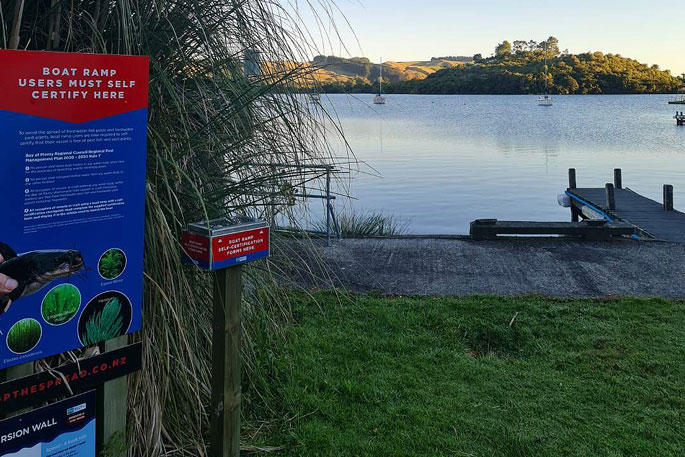
Te Arawa Lakes Trust biosecurity officers have been out in force at lakes and boat ramps this summer collecting surveys and carrying out boat inspections to stop the spread of invasive aquatic pests.
The Te Arawa hunga tiaki have also been educating boat users about the risk involved with moving between the lakes while carrying out 900 boat ramp inspections.
The boat ramps have signs and forms that boat users should fill out and place on their dashboard before heading out on Te Arawa lakes.
Te Arawa Lakes Trust Biosecurity Manager, William Anaru, says the response from the public has been extremely positive and self-certification compliance is currently at 33 per cent.
'So far it's going well, and people have been compliant. The officers are always met by positive people and they have been having some awesome kōrero with lake users from all across the motu.”
He says most boat users have taken their responsibility seriously, keeping their boats and trailers clean.
'It's important we remain vigilant and continue the good mahi because one small pest can have devastating consequences - our officers are here to educate and are always happy to help.”
This is the second year Te Arawa Lakes Trust has carried out the Check, Clean, Dry (CCD) surveys and the team has collected 400 surveys so far this summer.
The surveys are collected to study the behaviours of water users and collect information about where people go, what they know about CCD, and if they clean their boats.
It also gives the team more visibility among the public and a chance to remind people of the aquatic threats to our waterways.
'Our team works to ensure both locals and manuhiri are aware of what's required of them before they head out on the water.”
The team will be collecting surveys until April.
If you're moving between waterways, ‘Check, Clean, Dry' to reduce the spread of freshwater pests:
- Check all equipment, your vessel and trailer, and remove any weed fragments before leaving the boat ramp.
- Clean all equipment that has come in contact with the water using a decontamination solution as soon as practical.
- Drain all water by removing bungs or sponging out any water in your vessel when you exit the lake.
- Dry equipment thoroughly before using it another in or on any other water.

0 comments
Leave a Comment
You must be logged in to make a comment.