


New targets will force farmers to reduce their emissions in order to sell to export markets in a bid to future-proof the sector, the government has announced.
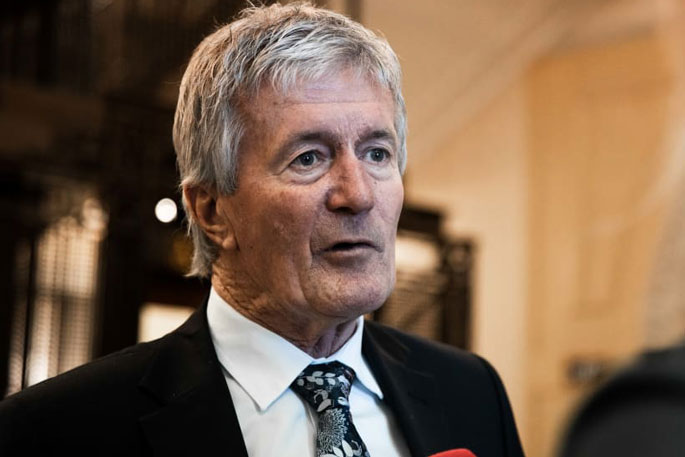
Agriculture Minister Damien O'Connor announced the government's final plan to reduce agricultural emissions on Friday, after a five-year process that involved working with farming leaders.
It will see a system introduced to measure and price emissions at a farm level - with mandatory reporting to begin next year.
O'Connor says the decisions announced set out a path to give farmers certainty and addresses the ever-strengthening market signals from overseas on climate.
He says future export growth of food and fibre products will depend on farmers demonstrating their sustainability credentials.
"Nestle, the single biggest customer of our biggest company Fonterra, has committed to a 50 percent reduction of scopes 1, 2 and 3 emissions by 2030. Many more companies have similar targets. This is a tectonic shift in our export markets, meaning our farmers will have to reduce their emissions in order to sell to them."
O'Connor says many other companies have similar targets.
"The reality is, government-required or not, our agriculture sector will have to adapt over the coming years and reduce emissions.
"It's a fact of business in the 21st Century, but with the support of government, we can make that transition in a pragmatic way with the sector."
Work is also underway to allow scientifically validated forms of on-farm sequestration into the Emissions Trading Scheme to help reduce the cost to farmers.
O'Connor says the plan supports farmers' transition, helps secure their future export growth, and works alongside other climate policies to continue reducing emissions.
Timeline
Farm-level emissions reporting requirements will come into effect in the last quarter of 2024, with emissions pricing to begin two years from now in the last quarter of 2025.
The government is also proposing deferring the legislated farm level reporting requirements in the Climate Change Response Act (2022) CCRA.
"Currently farmers would be required to register in the NZ ETS and monitor emissions from January 1, 2024, unless the law is changed," says O'Connor.
"We're proposing an Order in Council be approved, prior to January 1, 2024, to defer those provisions and public feedback is being sought on the proposal over the next few weeks.
"We believe it's crucial that work continues with the sector and Māori on the development and implementation of an alternative pricing system that's fit for purpose."
Public consultation is now open and ends on 6 September 6, 2023.
Funding
- $300 million over four years through Budget 2022 to go towards new tools and technology to reduce on-farm emissions to farmers quicker and provide on-the-ground support to adapt.
- $54m into the first projects through the Centre for Climate Action on Agricultural Emissions to bring down emissions.
- $15.4m from Budget 2023 to develop a system to enable farmers and their advisers to calculate and report agricultural emissions.
Announcement 'falls short' - Green Party
The Green Party says the government's announcement for pricing agriculture emissions "falls short" and only it has a plan to "reduce agricultural emissions at the scale and pace needed".
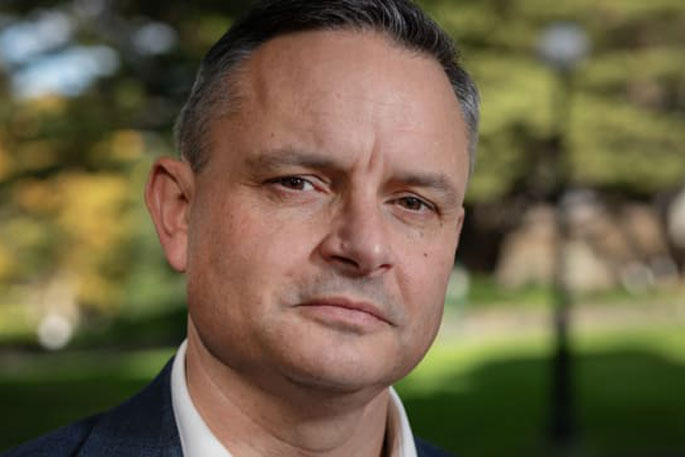 Green Party co-leader James Shaw. Photo: RNZ / Cole Eastham-Farrelly.
Green Party co-leader James Shaw says: "The Labour Cabinet's emissions pricing plan leaves too much to chance. People deserve a plan that will work - and with a strong hand in the next government, the Green Party will make it happen.
"We need an enduring cap on total emissions that reduces over time. That is the only way we will be able to cut pollution in line with what science tells us. We can start immediately by reducing reliance on the things that fuel emissions-intensive farming, like nitrogen fertiliser and imported supplementary feed."
In his role as Minister of Climate Change, Shaw says he had made it clear to the government why he did not support its plan.

2 comments
The Master
Posted on 19-08-2023 14:14 | By Ian Stevenson
Sadly the real science is that CO2 is an essential part of the life of plants. More CO2 means plants grow a lot better, growers already pump CO2 into glasshouses etc to ensure better/faster growth of food grown etc.
Current world CO2 levels are at almost record low levels compared to actual worldwide data over the last 500 million years and longer... all this nonsense will in time be revealed for what it all really is, hopefully sooner than later.
Overit
Posted on 20-08-2023 17:06 | By overit
CO2 is life gas, a good gas.
Leave a Comment
You must be logged in to make a comment.