


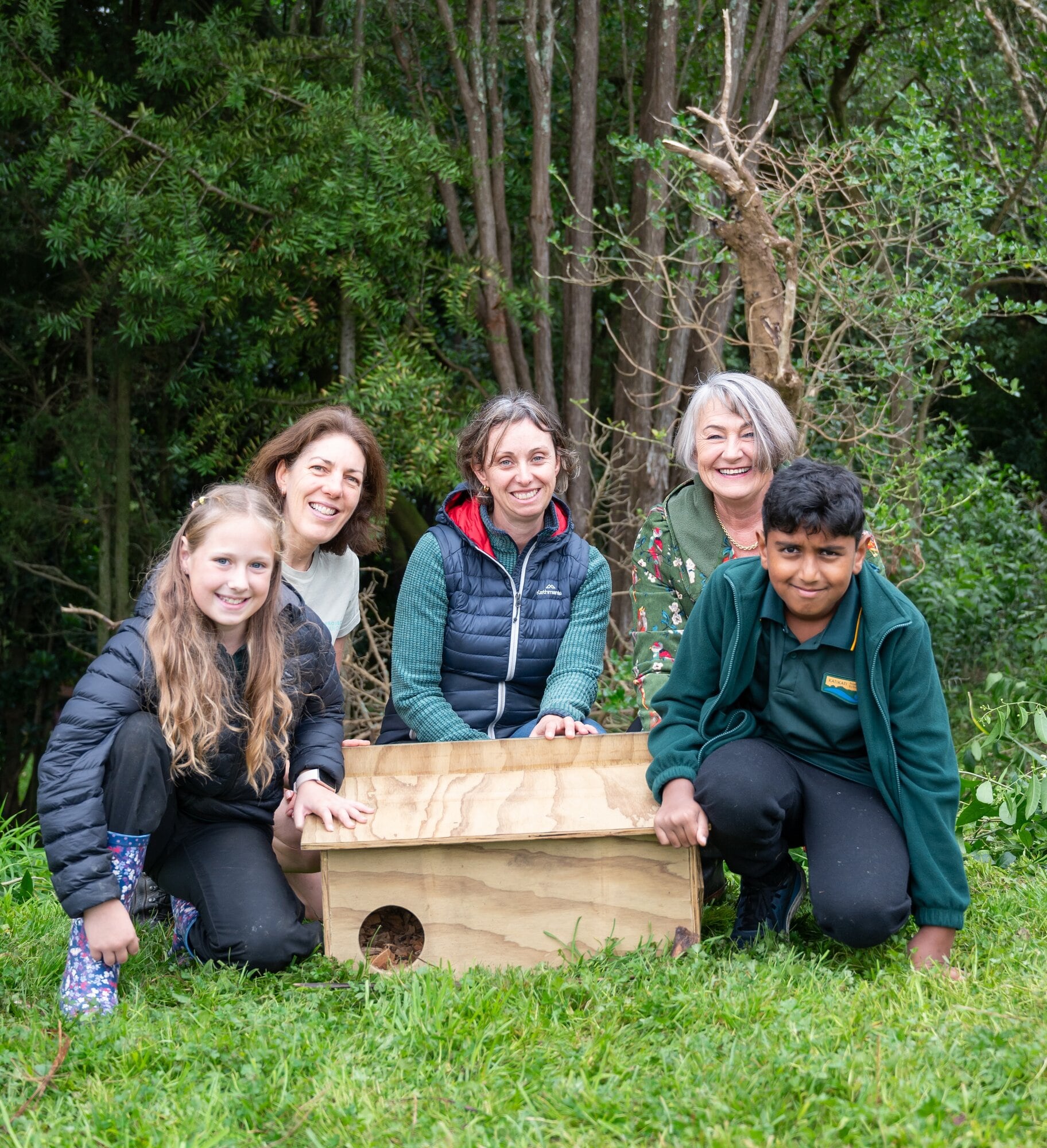
More than 40 Katikati primary students will be keeping an eye on a ruru nesting box in their school’s Te Awaawa gully come spring after it was installed this week in what was a collaborative community effort.
The Year 5-6 students are becoming kaitiaki (guardians) of their school gully by participating in a nature-based programme called Treasuring Our Place / Taonga o te Taiao (TOP).
The programme is administered by Western Bay Museum, which gathers funding for it, employs environmental educator Tammy Bruce to go into the school regularly to teach senior students the importance of environmental protection and ‘bugs, bush and birds’.
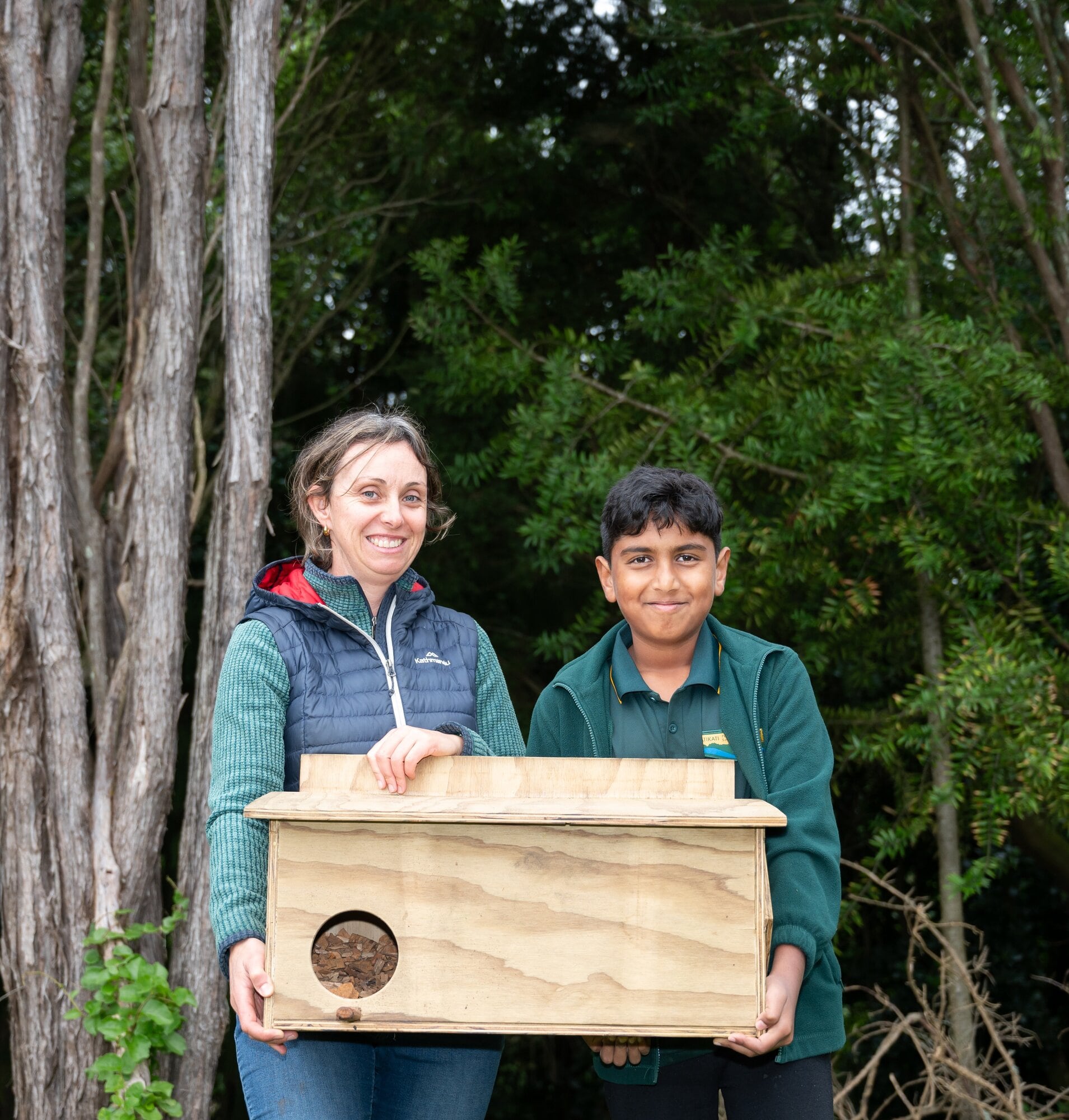
Tammy Bruce Treasuring Our Place environmental educator (funded through the museum) Myansh Patel 9 Pictured at Tuesday’s mucking-in lesson, and the installation of the ruru nesting box, is Treasuring Our Place environmental educator Tammy Bruce and Katikati Primary School Year 5 student Myansh Patel, 9 at Te Awaawa gully. Photo / Brydie Thompson
Bruce said the programme’s theme for 2025 is healthy forests, and stream studies. “We did a bioblitz [survey] earlier this year, where students looked at how many types of native trees, weeds, insects, birds, pest animals so they’ve got a good idea of what’s in here. We hope to do that yearly to see the progress. In between they’re doing bits of weeding and getting rid of pest plants by collecting seeds and tubers, to prevent them from spreading.”
Hands-on understanding
Western Bay Museum manager Paula Gaelic said TOP has been running with the school for six years, and includes in-class and outdoors learning.
“The bush gully at the back of the school [is ideal] because it’s on school property – and the kids have worked really hard in this space over the last couple of years. Honestly, [a few years ago] you couldn’t see down there, there was heaps of rubbish and it wasn’t attractive or inviting. Now, with ongoing weed control, it looks amazing and the kids get a much better understanding of pest weeds when they get hands-on in the gully.”
Gaelic said some children don’t always excel in the classroom “but put them in the environment and new leaders emerge or they get empowered by being able to do something and be really good at it”.
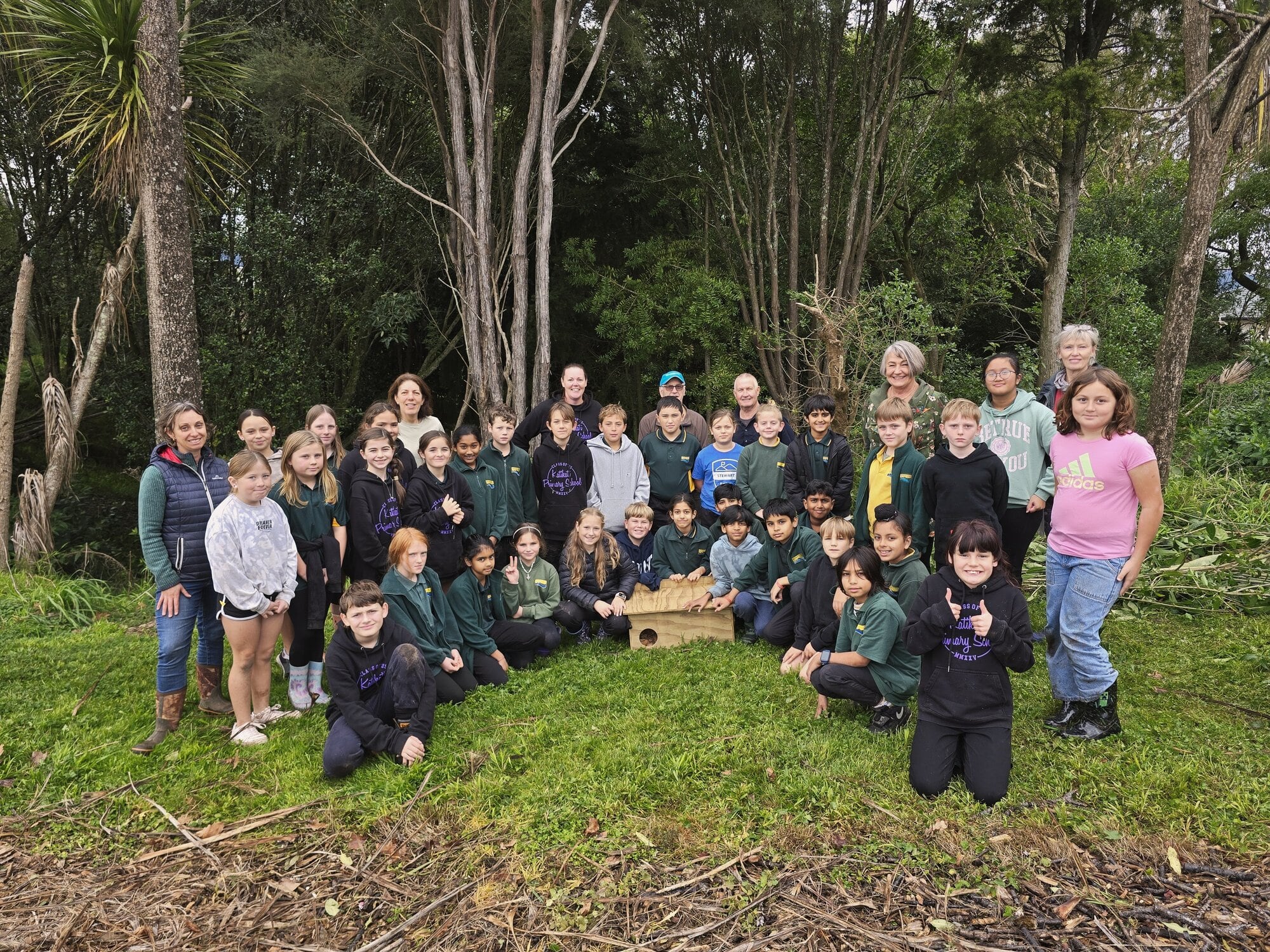
Katikati Primary School students with their teachers, TOP environmental educator Tammy Bruce, Renaturing Katikati’s Sharon Strong, Western Bay Museum’s Paula Gaelic and helpers Dave Smith and Barry Pethybridge with the rur box at Te Awaawa gully. Photo / Supplied.
“We hope that in time, the kids are able to come and go down here because it’s really good for people’s wellbeing and mental health. Sometimes if it’s getting a bit too heavy in the classroom, they can just have a little bit of quiet time out in the environment, so we’ve got big plans for the future.”
Renaturing partner
A collaborative partner is Renaturing Katikati, the urban arm of project Parore, which empowers volunteers to restore native habitat and wildlife in the township by removing invasive weeds and predators. Coordinator Sharon Strong said her group supports TOP at the school by attending student lessons to help with weed and pest removal.
“Yesterday Tammy Bruce taught the students in class how to identify four main pest plants – woolly nightshade, privet, mignonette and queen of the night (night jasmine) – today [June 10] they’re putting their learning into action, weeding out these pest plants in the gully.”
Bruce said it’s hugely important for youngsters to know how forests work, and how to regenerate areas like the school’s precious gully.
“Just the learning they get here to understand what is a weed, what is a plant, how they grow and what happens to our native plants if we don’t do anything about pests, is so important.
“After yesterday, today they’re pulling out their target weeds and all those connections are happening. They know to collect the berries and tubers and it’s putting all their learning into action.”
Becoming kaitiaki
Katikati Primary School’s TOP lead teacher Kristy Graveson said for her students, the outdoor experience of hands-on learning shows them how they can make a difference.
“We can learn about this in class, but then out here being able to see the impact that these weeds do have, how we can clear it, how we can help, and every little bit is making a difference is huge … they are focusing on our local area, the connection, and ultimately they’re becoming kaitiaki, being guardians of this gully, and learning how they can then go out and help others.”
After the mucking-in, the students got to witness another development in their Te Awaawa gully.
Paula Gaelic’s husband Merv built nine native ruru (morepork) nesting boxes and donated four to Renaturing Katikati to install within the township.
The first was recently placed in Middlebrook Drive – the second was installed Tuesday at the school gully by Renaturing Katikati volunteers Dave Smith and Barry Pethybridge as students watched on.
Gaelic said the boxes – designed specifically for ruru – was her husband’s “labour of love for the environment” – and she’s pleased to see one in the school gully.
“It’s really great because the students know all about the ruru; now they’re going to be able to watch the nesting box come springtime.”
Strong hopes ruru may start using the boxes in spring – which is nesting time. “We can’t guarantee, but hopefully....” And while the boxes don’t offer full protection to ruru nesting, Strong said that introducing some predator control by trapping for rats, stoats and possums in the area, will help reduce the risk of the bird getting preyed on.
“This is what we’re initiating at Middlebrook. Tammy Bruce has done some pest animal monitoring with the students and wants to introduce traps as well. All these actions are working towards helping the native plants and birds thrive in our town.”

0 comments
Leave a Comment
You must be logged in to make a comment.