


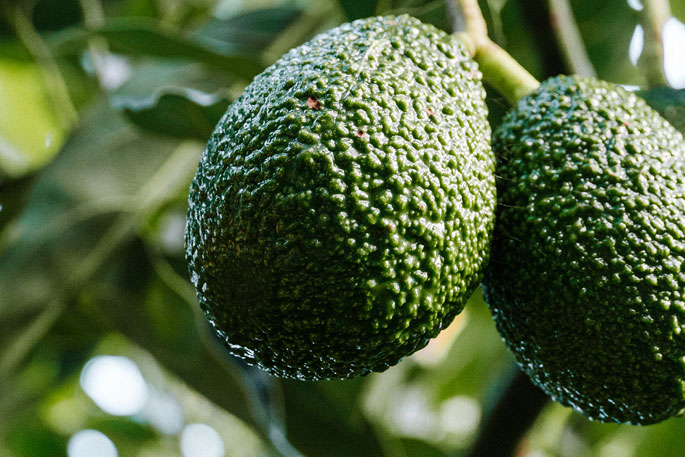
After a couple of tough seasons, the avocado industry is predicting better times ahead.
Picking began last month and NZ Avocado CEO Brad Siebert expects exports to be “well under way” by now.
“Early estimates have overall industry volumes slightly down from last season.
“However, the better growing conditions experienced are expected to improve export pack-outs and fruit quality, pointing to the potential of similar or even improved export volumes from past seasons.”
He said the crop for the season ahead has had strong flowering and fruit set across key growing regions through spring.
“While ex-Cyclone Tam will likely have some impact in Northland and Whangārei, crop estimates are expected to be similar to what was last harvested.”
Siebert said export revenue was forecast to decrease marginally (0.3%) to $107 million in the year to June 2026.
He said growers would currently be testing their fruit maturity, ensuring export compliance steps were undertaken, and beginning discussions with their packhouse and exporter as harvest approaches.
“Global demand for avocados is increasing as consumers seek healthy fats and plant-based nutrition, with New Zealand uniquely positioned to supply avocados during off-peak seasons.”
With New Zealand’s seasonal competitor Western Australia expecting a large crop for the 2025-26 season, Siebert said the industry was prepared to direct increasing volumes to North America, with reduced volumes to the east coast of Australia.
Diverse markets
“Exporters continuing to grow relationships in a diverse range of markets will support the long-term growth of the sector.”
This year New Zealand supplied the most diverse set of countries yet, said Siebert.
Export revenue from Australia increased 320% to $63m in the year ending March 31, 2025, when compared with the previous season, because of a higher number of export fruit being available.
The North American markets delivered strong growth in New Zealand’s second season exporting to the region.
Export revenue from Canada increased 619% to $3.8m, and from the United States it was up 596% to $500,000 in the year to March 2025.
Siebert doesn’t believe proposed tariffs will greatly affect the American market.
“Mexico is the dominant supplier of avocados to the US and they, along with Canada, have exemptions from the 10% baseline tariff for goods [like fresh produce] that meet the US-Mexico-Canada Agreement (USMCA).”
He said the new 10% tariff is an “ad valorem” rate – a percentage of the total value – calculated on the free on board sale price of New Zealand avocados entering the US and will be in addition to the US11.2c/kg import duty that has been in place for several years.
 NZ Avocado CEO Brad Siebert. Photo / Supplied
Siebert said, excluding Mexico, avocados from New Zealand were on a “reasonably equal playing field” with most other origins entering the US for the season ahead.
Asian markets continue to grow in importance, with export revenue up 96% to $40m in the year ending March 2025.
Domestic sales
New Zealand’s avocado industry was shaped by a balance between export demand and domestic consumption.
“The ratio of export versus domestic volumes varies over time based on a number of factors. Often this is dominated by two main factors, export pack-out rates influenced by storm events and seasonal growing conditions and, secondly, whether the industry as a whole is having a high or lower fruit production season, a predisposition that avocados (and mangos) experience worldwide due to the natural phenology of trees influenced by environmental factors, tree management practices and cultivar characteristics.
“Over the last two decades, we have seen around 70% exported but with a growing consumption in the local market this can be close to 50% in more recent seasons.
“Fruit entering the domestic market, primarily as a result of export packing, goes through retail, e-commerce and local sales, with lower grade fruit being sent for processing to produce avocado cooking oil and other value-added products.”
Siebert said the past two seasons (2023-24) resulted in export volumes falling because of weather events.
“Cyclones Dovi [2022] and Gabrielle [2023] both hit avocado growing regions, damaging fruit and causing major impacts on export volumes.
“The challenges of the past season’s La Nina weather patterns are now in the rear-view mirror and more favourable conditions have returned.”
Siebert said optimal conditions have led to a large, high-quality crop for the current season.
As a result, export volumes increased 190% to 3.9 million trays in the season ending June 30, 2025.
Half of New Zealand’s avocado hectares in production are in the Bay of Plenty, with around 45% in Northland.

0 comments
Leave a Comment
You must be logged in to make a comment.