


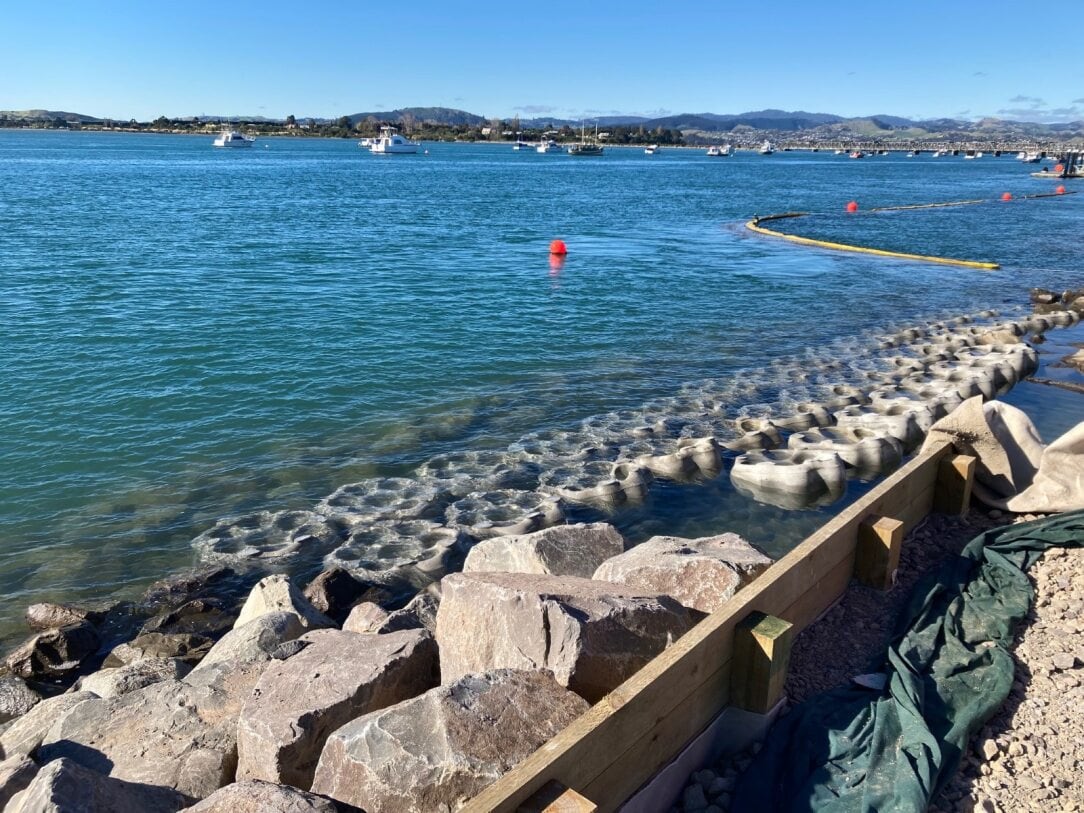
Coastal critters have new habitat options along the Tauranga waterfront, thanks to the installation of 100 “sea pods” or “living boulders” in May 2024.
Weighing up to 1.2 tonnes each, the sea pods are indented with holes and crevices that mimic rocky tide pools, providing space for tiny organisms from shrimp to anemones to find a home.
One year on, researchers are monitoring the manmade rockpools to find out what species have moved in.

Marine scientist David Culliford and students Tiff Cooper and Taylor Rabbitt are monitoring the marine life found in the sea pods over time. Photo / Justine Murray, RNZ
Reclaiming the waterfront real estate
Constructed as part of Tauranga City Council’s long-term strategy to redevelop the harbour, the sea pods aim to bring back biodiversity often lost in urban coastal areas.
David Culliford, marine scientist at Toi Ohomai Institute of Technology, said urban modification over time has impacted marine life.
“There’s a tapas bar over there and if you look next to that there’s some old piles which were part of the original harbour structure, and they’re probably about 150 metres back from where we are right now."
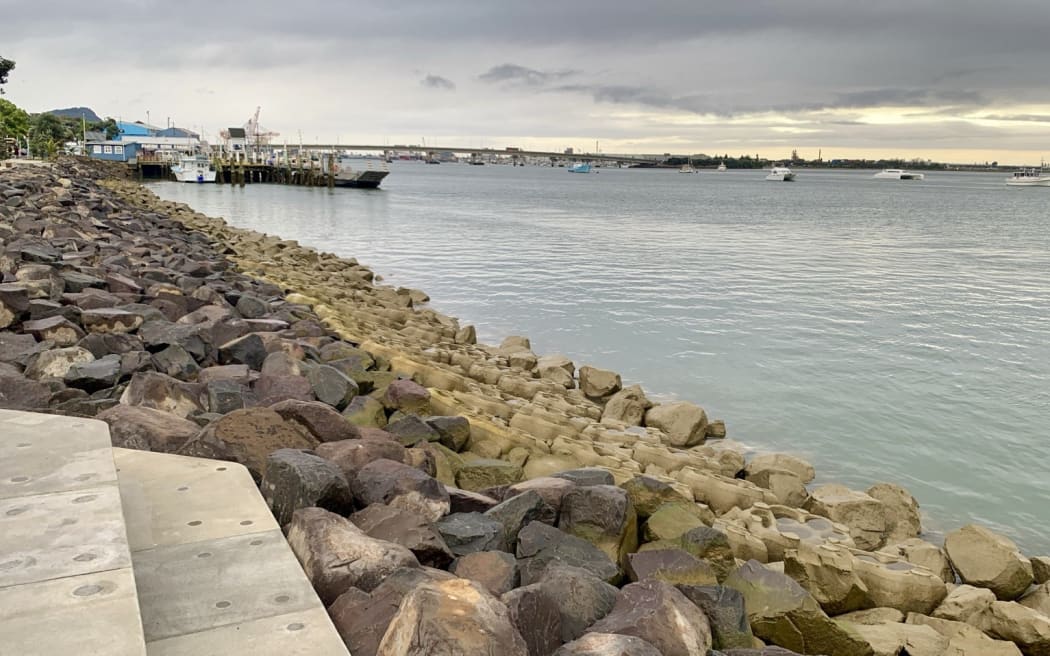
The 'sea pods' are designed to encourage marine life back into highly modified urban shorelines. Photo / Tauranga City Council
Tauranga Harbour, like many other city harbours, sits on reclaimed land. Rockpools and other coastal microhabitats have been covered up to make way for manmade constructions like sea walls or wharves.
A “living sea wall” provides ideal real estate for many shoreline-dwelling species, encouraging biodiversity to recolonise the urban waterfront.
Sydney’s pioneering sea walls
The idea of a living seawall was developed in Sydney, Australia, through 30 years of research. The approach combines engineering and ecological concepts to create designs for pilings, panels and other modules that meet both human construction requirements, and wildlife habitat needs.
Specially designed panels were installed on a North Sydney seawall in 2018. Monitoring the biodiversity over time, researchers found a 36% increase in the number of different species living on the seawall, compared to a seawall with no modifications.
“So we’re re-introducing habitat, we’re re-introducing habitat variety and so we can increase biodiversity,” said Dr Aria Lee, marine ecologist at Living Seawalls, a programme of the Sydney Institute of Marine Science.
There are now 20 Living Seawall installations across Sydney Harbour, and around 1000 around the world in the UK, USA, Europe, Asia, Peru and, of course, Tauranga.
Tauranga’s ‘sea pods’ were designed by Living Seawalls in Sydney. But rather than ship tonnes of concrete across the ocean, silicone moulds were cast and sent to New Zealand for local manufacturing with concrete and recycled materials.
One year of ‘sea pod’ science
Ongoing monitoring is tracking the changing biodiversity as the seasons, weather and tides shift.
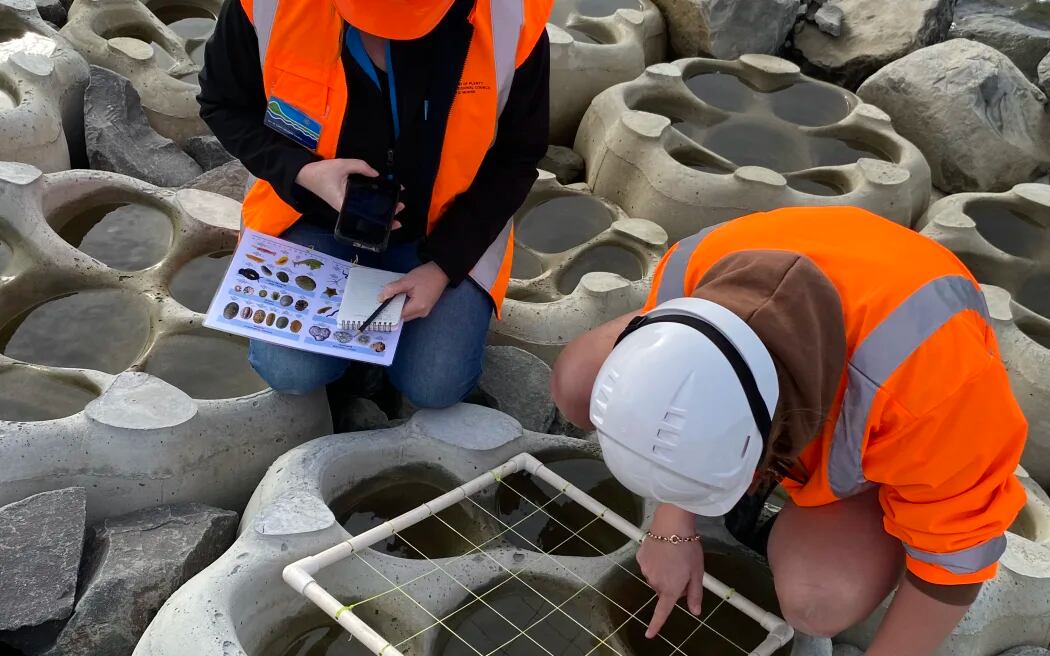
Monitoring work of the seapods along the Tauranga harbour. Photo / Tauranga City Council
Tiff Cooper and Taylor Rabbitt, marine science students from Toi Ohomai Institute of Technology, conduct surveys to record the abundance of different organisms and measure algae cover and growth.
Together with Culliford and collaborators from the University of Waikato, they have documented branching algae, colourful sea slugs, and dancing flatworms, as well as “heaps of shrimp”, said Culliford. “They seem to be like little shrimp hotels, we find loads of them in here.”
They even found possible signs of the harbour’s unique sneezing sponge colonising the sea pods.
Culliford plans to install GoPro cameras to see what marine organisms take up refuge in the sea pods when they’re covered with water at high tide.
Plus, the eye-catching structures often elicit questions from curious members of the public.
“We always get lots of enthusiasm while we’re down here, it’s cool,” said Culliford.

0 comments
Leave a Comment
You must be logged in to make a comment.