


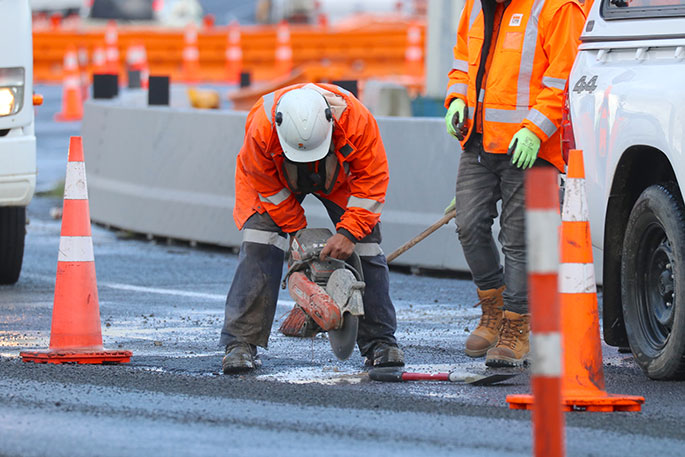
Motorists are being encouraged to keep their driving speed at 30km/h through roading work sites where crews are working with fresh chip seal.
“With maintenance season upon us, you’ll probably come across more work sites on your journey and a bit more disruption on our roads,” NZ Transport Agency Waka Kotahi (NZTA) Waikato System Manager Andy Oakley said.
Oakley said these works are to keep the state highway network safe and in good shape, but they also mean more crews working just metres away from live traffic.
“That’s why speed limits through work sites are so important,” Oakley said.
“Our roading crews are out there fixing potholes, resealing surfaces and upgrading infrastructure so we can all travel more safely.
“When you ease off the accelerator, you’re giving them the space and security they need to get their job done and get home safely to their whānau.”
Oakley said speed is a factor every driver can control.
“When drivers slow down, it makes a huge difference to the safety of our crews and the quality of work we can deliver.”
He said lower speeds are also safer for motorists too.
“Work sites often bring lane changes, heavy machinery and uneven road surfaces. Sticking to the posted limit gives you more time to react and keeps everyone – including your passengers safer," Oakley said.
“So next time you come across a site and see our traffic management and temporary speed limits, remember they’re there for a good reason - to protect the people working hard on the roads and to keep you moving safely.
“By slowing down through work sites, you’re reducing the risk of something going wrong – for our crews and for yourself."
Chip seal and aftercare
Oakley said one of the most common types of roadworks motorists will come across this maintenance season is chip sealing.
“While it might look simple, it’s actually a pretty sensitive process,” Oakley said.
“Chip sealing relies heavily on the right environment and careful aftercare. One of the biggest factors? How we drive over it.”
Oakley said when a fresh chipseal is laid, traffic is directed over it at 30km/h.
“And that’s not just a suggestion. That speed helps the stone chips compact and interlock properly, which is key to creating a strong, long-lasting surface.”
He said when motorists don’t stick to the speed limit, one of two things can happen.
If a motorist is driving too fast, loose chips will be flicked off the road, leaving gaps behind. If driving too slowly, the surface can overheat and stick to the vehicle’s tyres, pulling up chips and damaging the seal.
“Once the seal has settled, the excess chip gets swept away and road markings are added, but until then, it’s a delicate balance,” Oakley said.
“So next time you’re traveling through a chipseal site, do your part: stick to 30km/h. It’s a small action that makes a big difference to the quality and lifespan of our roads.”

2 comments
Chip seal in Katikati
Posted on 22-09-2025 17:35 | By Rosieterry
Chip seal is hopeless. Complete waste of time and money. It leaves roads worse than before the sealing is done. Just drive along Fairview road in Katikati and you will how bad it is. I just hope that the Western Bay of Plenty District Council didn't actually pay for this appalling seal.
Says It All
Posted on 22-09-2025 21:12 | By Yadick
The last paragraph is so true.
“So next time you’re traveling through a chipseal site, do your part: stick to 30km/h. It’s a small action that makes a big difference to the quality and lifespan of our roads.”
Leave a Comment
You must be logged in to make a comment.