


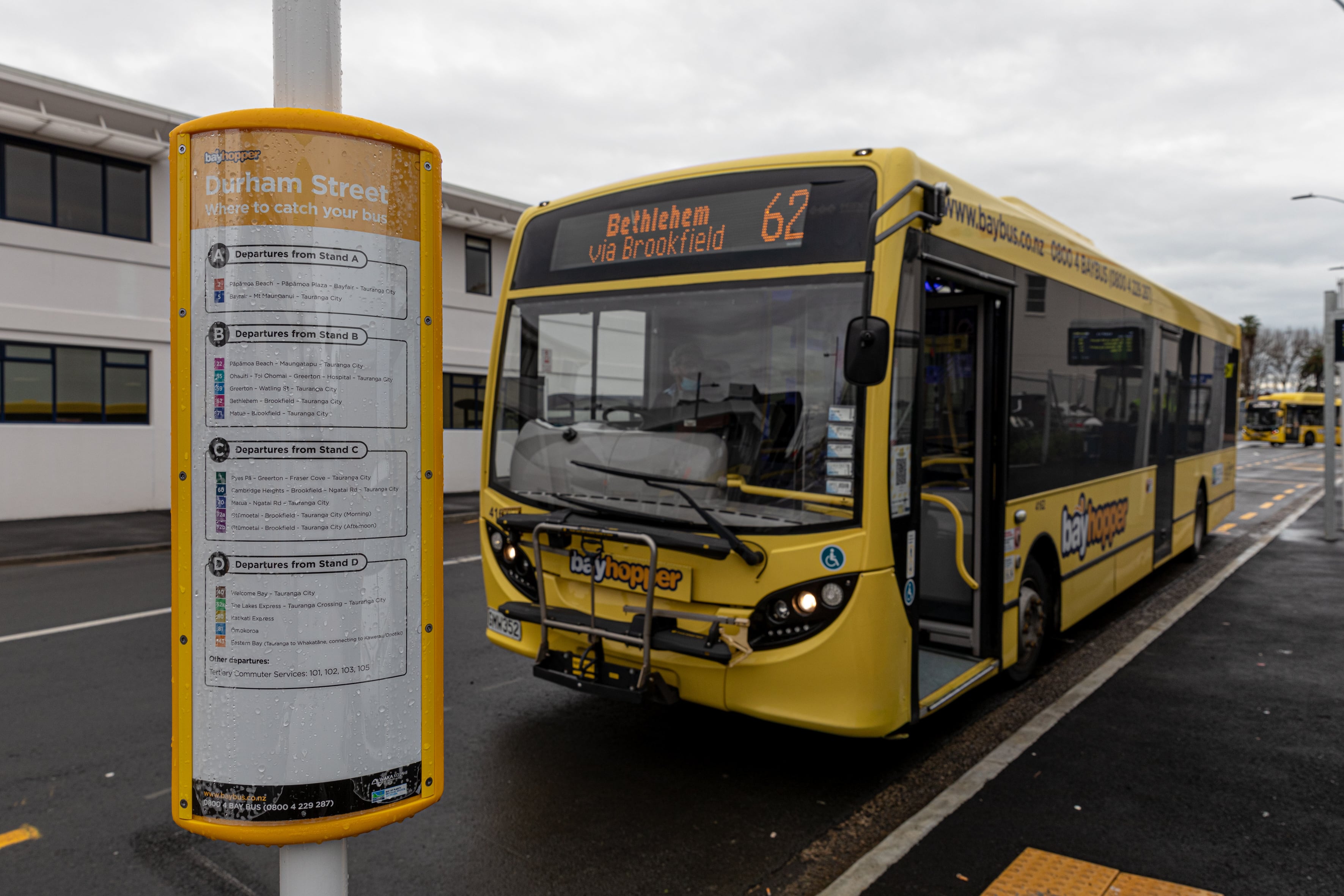
Bay of Plenty urban bus fares will increase for the first time in seven years from January.
The decision to hike the fares by 10% was made at the Bay of Plenty Regional Council’s last meeting of the triennium on Thursday.
Urban fares will increase for all services across the region except for long-distance routes.
Affected passengers will pay up to 40c more per trip.
The council’s public transport committee recommended increasing the fares by 25% to get closer to the Government’s cost recovery targets.
Councillor Kat Macmillan said a 25% increase risked losing passengers and she suggested making it 10%.
The council and ratepayers invested millions of dollars in public transport, and council data showed there could be a 9% reduction in patronage if the 25% fare increase went ahead, she said.
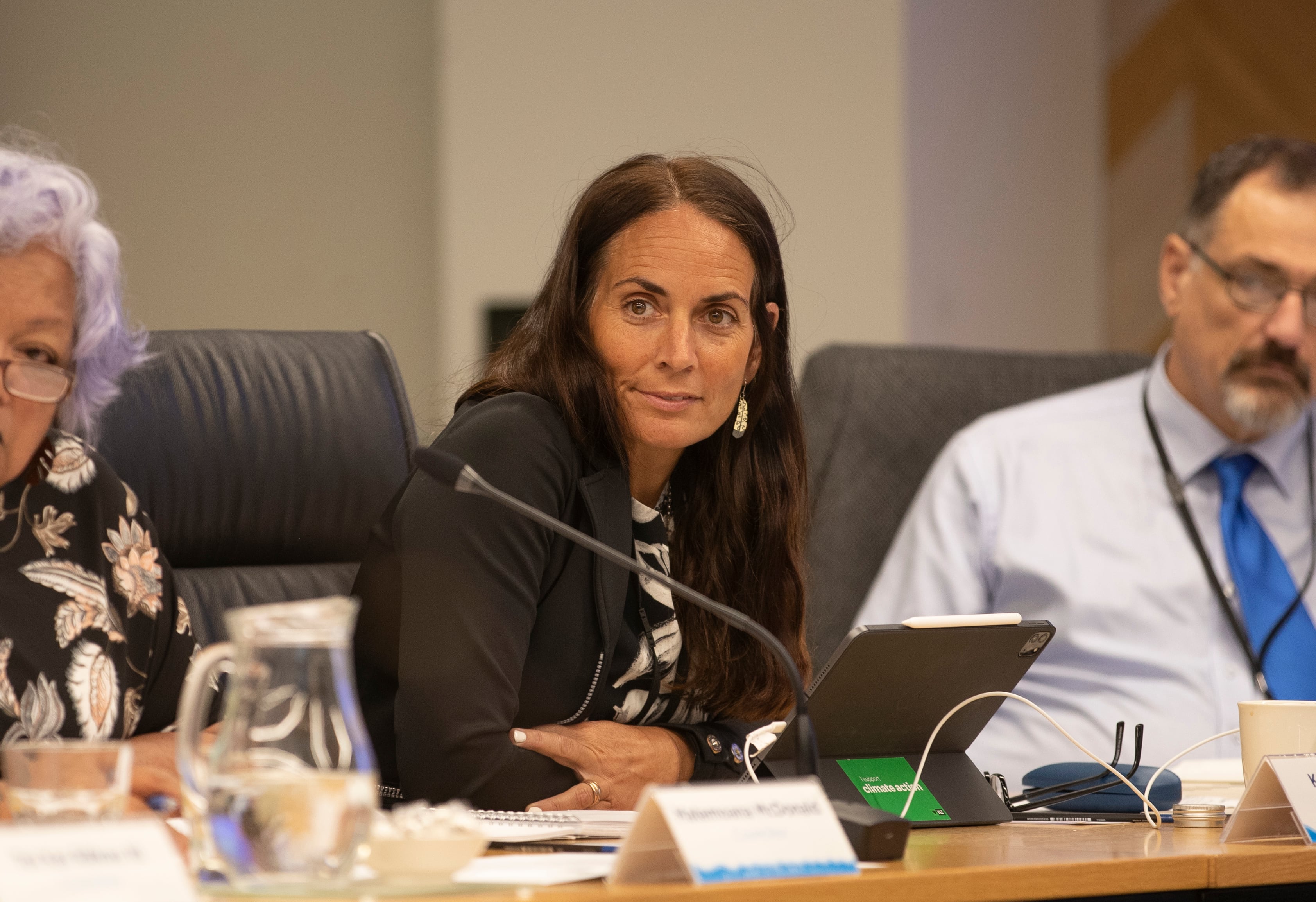
Councillor Kat Macmillan said the 25% fare increase was too big a jump. Photo / John Borren
“It’s too big a jump. I think people will notice the difference in their bus fare, and we will lose patronage.
“If we’re investing tens of millions, why do we want to lose 9% of our customers?”
Once people stopped using public transport, it was really difficult to get them using it again, Macmillan said.
Councillor Jane Nees said congestion was a real issue in Tauranga and she did not like the predicted patronage drop for the 25% fare increase.
Especially when many people were not really sure the council’s investment in public transport was a good one, she said.
Public transport committee chairman Andrew von Dadelszen said a fare increase was urgently needed because there hadn’t been one since 2018.
This made it very hard to get a balanced farebox recovery, he said. This is the amount of public transport operating costs covered by passenger fares.
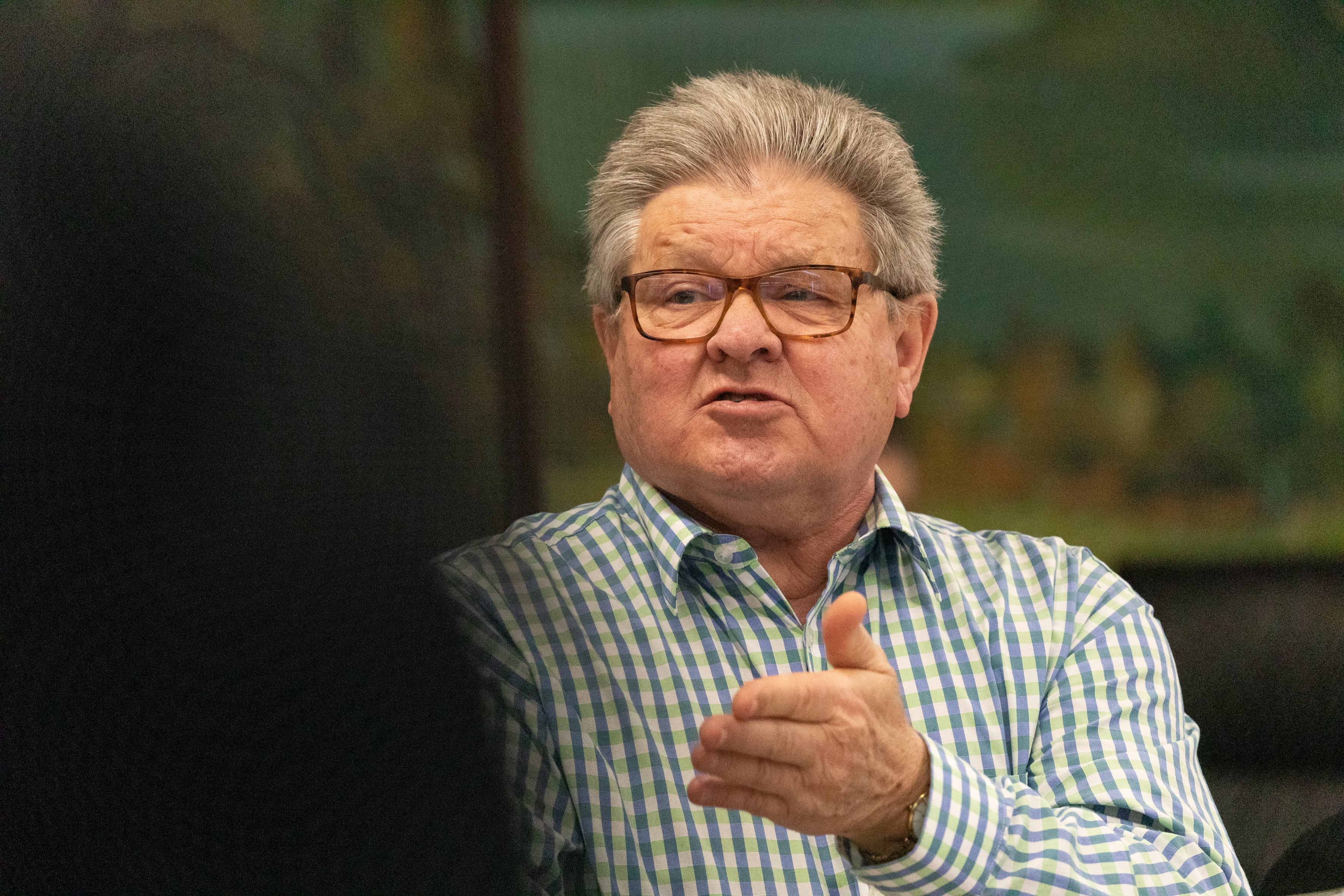
Councillor Andrew von Dadelszen said a bus fare increase was urgently needed. Photo / Alex Cairns
The farebox recovery for the Bay of Plenty was 60c per trip, the second lowest in the country, von Dadelszen said.
The national average was $1.87 per trip.
If the council wanted continued public transport funding from the Government, it was important it showed “genuine action” to increase farebox recovery, he said.
“We have to show that we are committed to getting our finances right in public transport.”
The Government’s farebox recovery goal for the Bay of Plenty was 14.4% by April 1 next year. It was sitting at 10.85%.
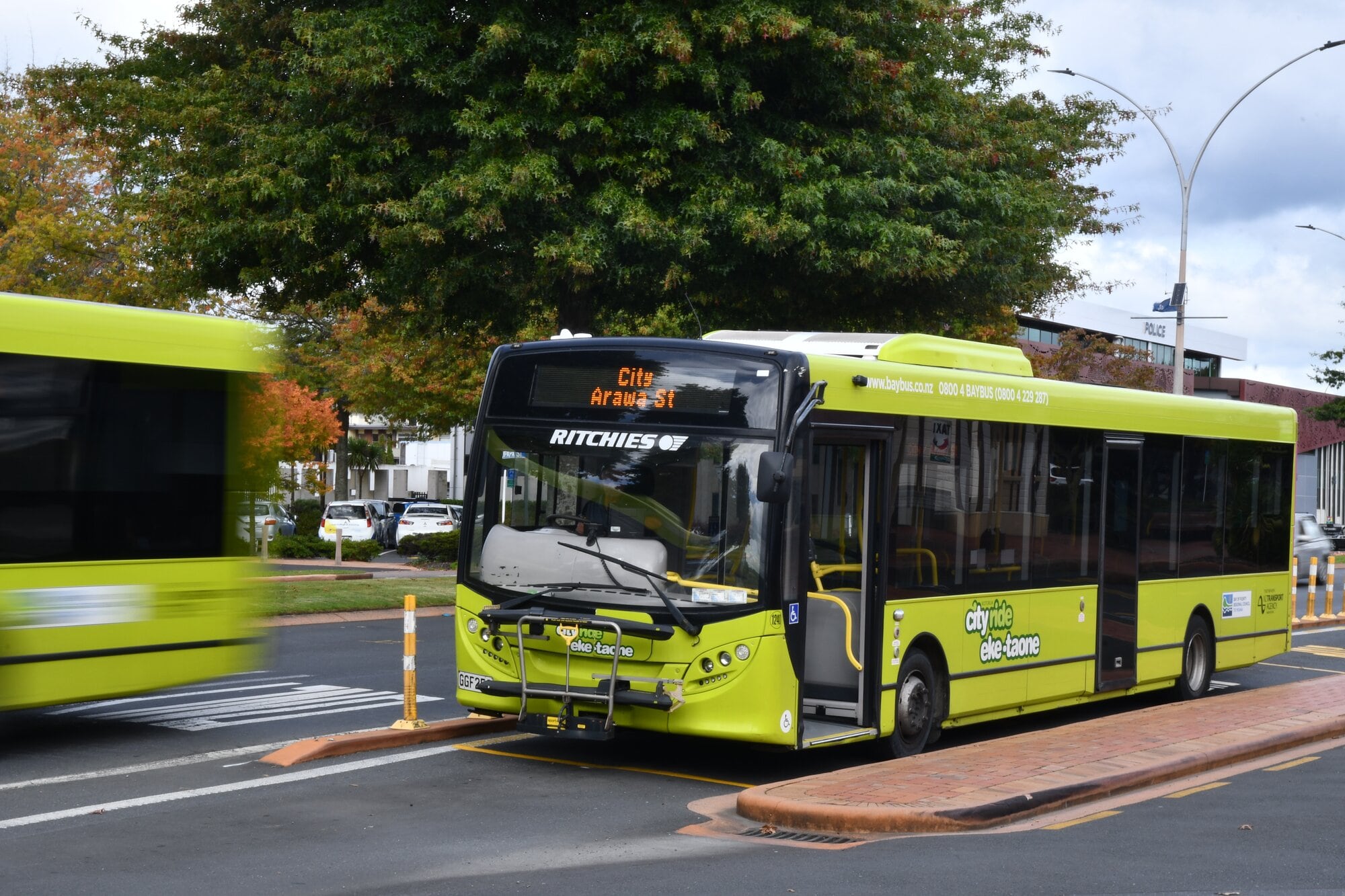
Rotorua's urban adult bus fares will increase by up to 30c. Photo / Laura Smith
The council had increased fees for the On Demand bus service and the patronage dropped initially but had recovered, von Dadelszen said.
Councillor Ken Shirley said 25% was not a “great increase” when put into dollars and cents.
The 25% was needed because fares hadn’t changed since 2018, and costs had escalated “massively,” he said.
“We’re right out of kilter.”
There was a very clear message from the Government to increase farebox recovery, so the council was going backwards if it didn’t implement at least a 25% increase, Shirley said.
Council chairman Doug Leeder said emphasising the percentage was “dangerous” and the increase should be highlighted by dollar terms because that was what hit people in the pocket.
Rotorua councillor Lyall Thurston said he represented a marginalised community.
“It’s all well and good for us to sit around here and say that a dollar is not a lot of money, but it’s one hell of a lot of money when you haven’t got it.”
Macmillan’s motion for a 10% fare increase passed by seven votes to six.
The new fares will come into effect from January 22, 2026.
Fare increases
Rotorua urban adult fare: $2.50 with Bee Card, $3.10 cash (up 26c and 30c).
Tauranga urban and Te Puke adult fare: $3 with Bee Card, $3.80 cash (up 28c and 40c).
Whakatāne-Ōhope adult fare: $3 with Bee Card, $3.80 cash (up 28c and 40c).
Long-distance services are unchanged: Katikati-Tauranga, Murupara-Rotorua, Ōpōtiki-Potaka, Tauranga-Te Puke, Waihī Beach, Whakatane-Ōpōtiki and Whakatane-Tauranga.
Last meeting
Councillors Toi Kai Rākau Iti, Kevin Winters, Jane Nees and Doug Leeder are not running for re-election.
There were no speeches from the outgoing councillors at Thursday’s meeting.
After the meeting, Leeder, who has chaired the council for all of his 12-year tenure, said he worked with some great people.
Leeder had “mixed emotions” about leaving, but it was time to pass the reins on to someone else, he told Local Democracy Reporting.
He would continue to run his dairy farm in Waiotahe but had no plans beyond that.
LDR is local body journalism co-funded by RNZ and NZ On Air.


8 comments
Get the app, get an Uber
Posted on 26-09-2025 21:05 | By First Responder
So bus fares are going up for the first time since 2018. Here’s a radical idea: let’s just scrap the whole bus network. It’s 2025 – everyone has a smartphone. If you need a ride, open an app and grab an Uber. No need for giant, half-empty buses clogging up the streets, running on timetables no one can ever remember, and costing the council (and us ratepayers) a fortune.
Imagine the savings: no more fleets of buses to maintain, no more drivers to employ, no more endless “public transport strategies” and ratepayer-funded studies. You’d only pay for what you actually use, when you need it.
We already subsidise buses heavily just to keep them running — and now we’re being asked to pay even more to ride them. Scrap them, free up the roads, and let competition do its job.
Wouldn't mind
Posted on 27-09-2025 07:37 | By Kancho
Wouldn't mind if the previous route 1 was operating as it was far more useable to bet to the hospital town and the mount all on one route. Now bus changes just make it time consuming and inconvenient . If course we already pay a Regional council Levy for the bus system , just another tax . Of course buses are never nor will ever pay for themselves
So who pays?
Posted on 27-09-2025 08:24 | By FRANKS
I know the answer.............the ratepayers who in the vast majority, do not use the services.
Do not vote for those that did not support the larger increase.
$$$
Posted on 27-09-2025 15:16 | By Yadick
Surely the get enough from the exorbitant money we are forced to pay them through our BOPRC rates?
Can't be much of a farebox return on about 7 passengers a day.
Time to get them off the roads and start using mini buses/vans.
Haha
Posted on 27-09-2025 21:14 | By nerak
so funny, like another 40c from the very rare passenger is going to change/do anything.
From the odd one passenger I see on a bus, it will be well into next century to gain a few dollars.
Ken Shirley, you're right “We’re right out of kilter.” That applies across the whole of the BOPRC. Sooner the lot of you move on out, the better.
Hmmm
Posted on 29-09-2025 10:36 | By Let's get real
Bloody ridiculous.
We probably have the majority of bus patronage paying absolutely nothing for their travel, through the use of the goldcard system or being a student at school. So how is raising the fees going to raise patronage..?
Of course the charges must go up, because the cost of fuel has increased over the years since Labour closed our sole oil refinery through lack of financial support, road user charges, the introduction of the living wage, and the introduction of overseas workers at even higher employment rates.
If we ran services at peak hours only, we wouldn't need the excessive staffing numbers, we would save on fuel costs and road user charges and we could probably provide free travel at set times for the same cost to ratepayers.
Hmmm
Posted on 29-09-2025 13:23 | By Howbradseesit
Guessing all those in favour of scrapping busses don't have kids that use it to get to schools... Surely Boomers then. That makes sense.
Cancel it
Posted on 29-09-2025 13:45 | By an_alias
We all pay $300 plus for a service NO ONE USES. Zero to 1 person on the bus is mostly all I see.
Leave a Comment
You must be logged in to make a comment.