


Voter turnout for the Western Bay of Plenty election increased slightly despite the council spending $70,000 less on election promotion.
The council spent $20,283 for this year’s election and $94,227 for the 2022 election.
The 2025 voter turnout was 38.06% of eligible voters, compared to 37.60% in 2022.
Council governance manager Robyn Garrett said the council deliberately reduced spending this year.
“Recognising the current economic climate, we aimed to deliver an effective campaign while being financially conservative.”
The council also wanted “smarter” use of its established platforms.
“Over the past three years, we’ve built strong digital channels that allow us to reach people at very little cost.
“This meant we could scale back paid advertising while still getting key information in front of voters.”
Platforms included the council’s online engagement hub, Your Place Tō wāhi, its Facebook and Instagram pages, the Antenno app and community Facebook groups.
Candidates were also given the chance to film a 90-second video. Producing these cost the council $10,522.
In 2022 the council ran a “Generation Change” campaign to attract more candidates and increase voter participation.
The council’s $94,227 spend on the campaign included $57,743 for advertising and $29,688 on candidate debates.

Western Bay of Plenty Mayor James Denyer says postal voting is on its last legs. Photo / David Hall
Re-elected Mayor James Denyer said elected members were not involved in designing election campaigns.
It was worth the council trying different things because everyone wanted higher voter turnout, he said.
The 2022 campaign “did okay” but the slightly higher turnout this time showed it did not make an “especial difference”, Denyer said.
This election was the first time the council used voting bins at local supermarkets and stores.
Denyer said the bins increased visibility, made it easier for people to vote and were “pretty popular”.
“Postal voting is on its last legs. A lot of people scarcely use the post these days.”
About 10% of all voting papers came through the bins on the last voting day, he said.
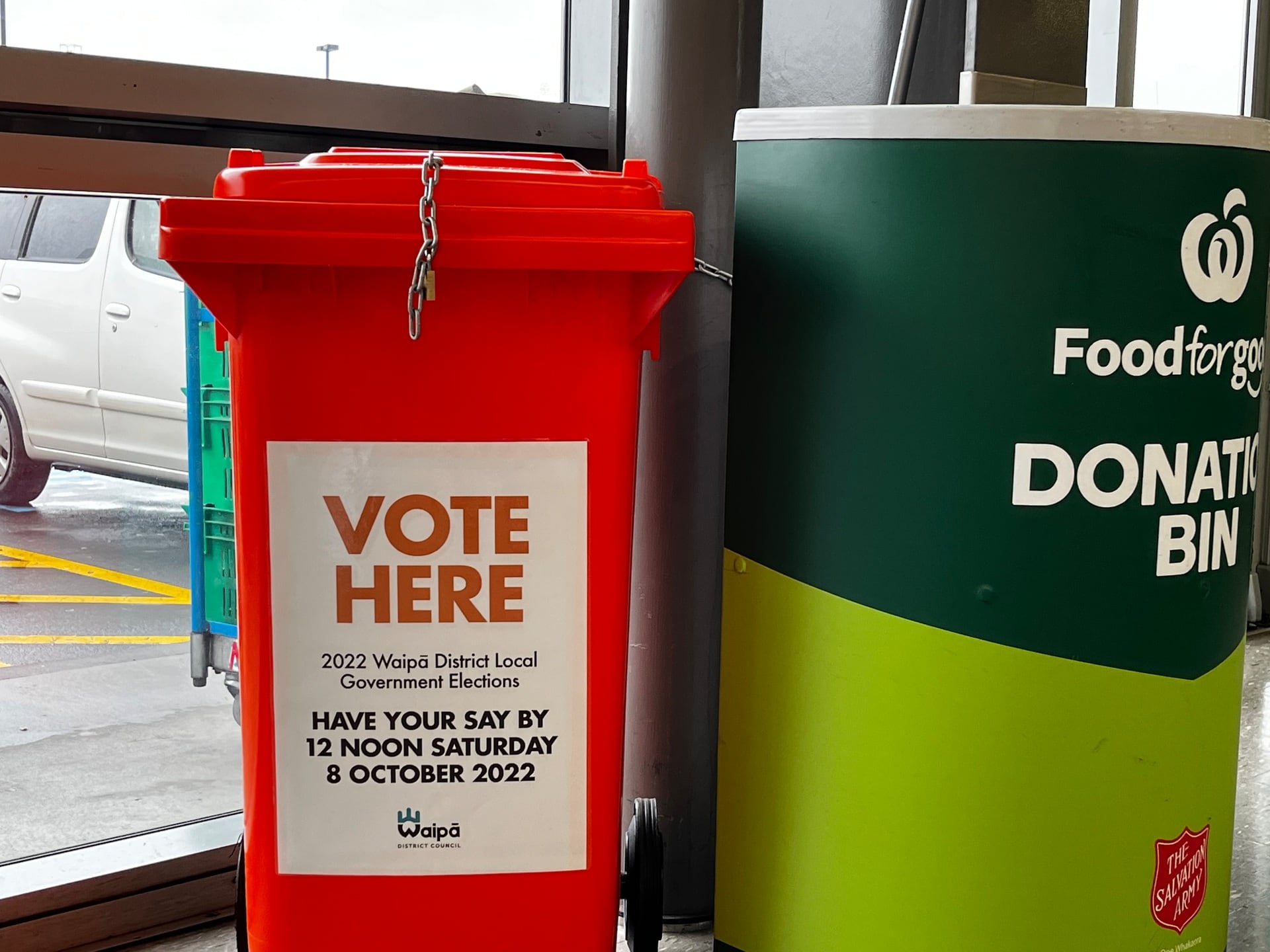
Voting bins, like this one from Waipā, were located at supermarkets, libraries and council offices to make voting easier. Photo / Kate Dutrie
This showed there could be an appetite for an in-person voting day like the general elections, Denyer said.
This was one of the recommendations of the Local Government New Zealand (LGNZ) Electoral Reform Working Group.
The group released its final paper in July with 20 recommendations aimed at increasing participation in local elections.
LGNZ interim chief executive Scott Necklen said voting habits were shifting, and the system needed to change.
National figures showed almost 15% of all voting papers were cast into the orange bins on election day, he said in a statement.
In-person polling booths and a two-week voting period would ensure the future of the voting system, Necklen said.
Bay of Plenty Regional Council
Voter turnout for the Bay of Plenty Regional Council Tauranga constituency was 24.79%; in 2022 it was 27.4%.
Tauranga City Council did not have elections in either year.
The regional council’s votes are normally collected by city and district councils.
Regional Council governance manager Steve Groom said the city council not having an election meant voter engagement was always going to be a challenge.
There was less public awareness and fewer opportunities to leverage off the city council’s work, he said.
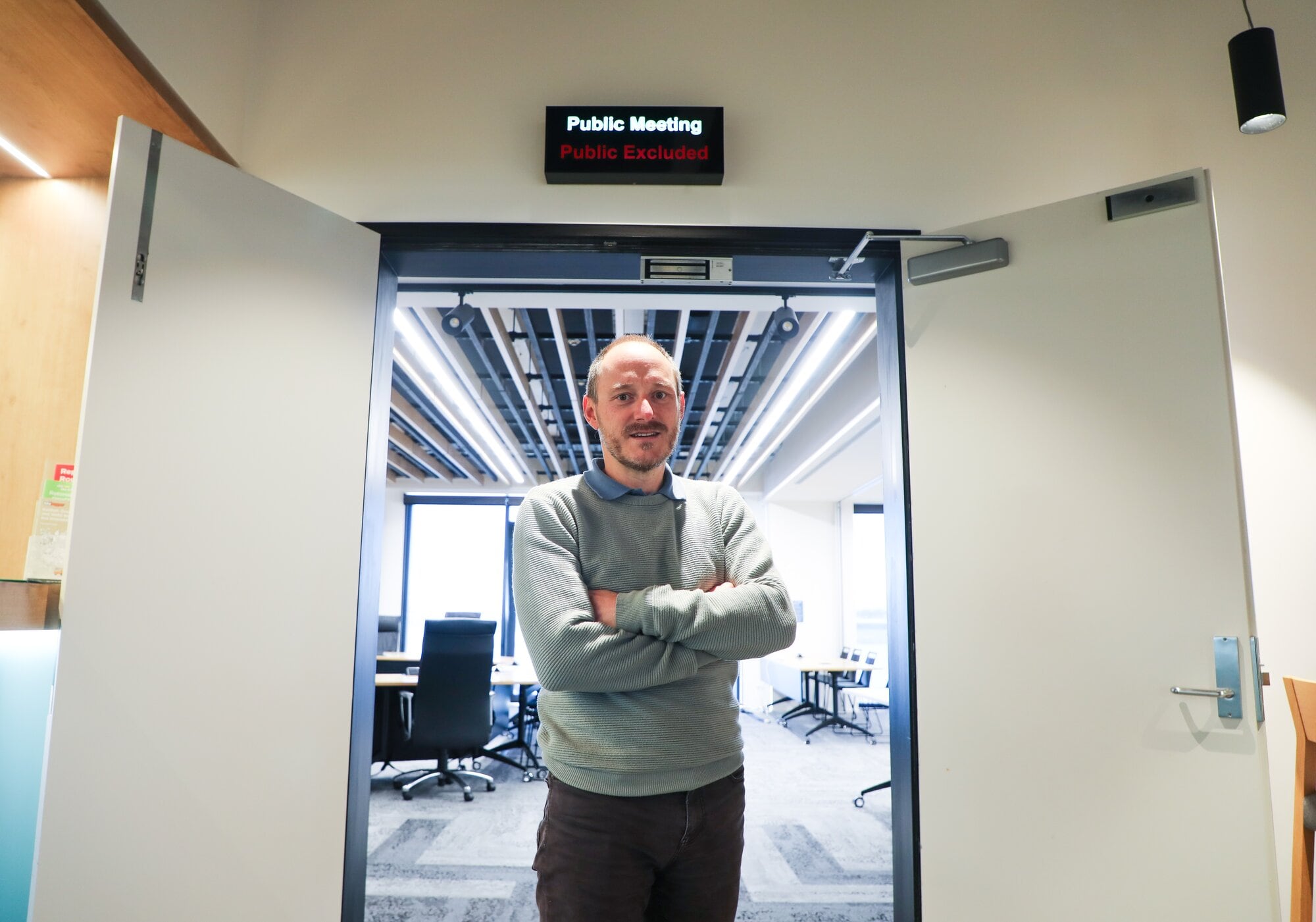
Bay of Plenty Regional Council governance manager Steve Groom.
The regional council raised awareness through staff going to malls, libraries and events to encourage people to vote.
It gave enrolment information to Tauranga colleges for Year 13 students.
The council supported 11 meet-the-candidate events across the region and recorded video profiles of candidates for the first time, which got 12,000 total views, Groom said.
The number of people who voted was similar to 2022, but population growth meant the turnout rate was lower, he said.
The council’s region-wide advertising spend was $18,550 for this election.
Why the decline?
Bay of Plenty regional councillor and former Tauranga Mayor Stuart Crosby believed councils becoming “disconnected from their communities” contributed to low voter turnout.
Crosby was an LGNZ president for three years and has been an elected member on councils since 1986.
He believed councils started to lose their brand after the 1989 local government reform when councils amalgamated and were “forced” to contract out services.
Over time, councils lost their connection with communities because people saw contractors doing work once done by the council, Crosby said.
As part of that reform, councillors “were stuck in a box” and there was a separation of governance and council staff, which created further disconnection from the community, he said.
Councillors made decisions around policies but were less involved in the everyday workings of councils, Crosby said.
In his view, the current local election voting process was also “not user-friendly”, which had a lot to do with low voter turnout, he said.
The 150-word bios in election books did not provide enough information for voters and younger people weren’t used to postal voting, Crosby said.
There needed to be more “user-friendly tools” to increase participation.
LDR is local body journalism co-funded by RNZ and NZ On Air.


1 comment
Election Questions
Posted on 24-10-2025 15:00 | By FreddyN
WBOPDC claims voter turnout for the 2025 election increased slightly despite the council spending $70,000 less on election promotion. The increase was negligible, but instead of bragging about how much they saved Council should be apologising for the $70,000 they wasted in 2022 trying to encourage the youth vote.
We contend that Council's "campaign" was ineffectual. What drove the improved turnout was the work done by ratepayer groups in Kaimai and Katikati - Waihi Beach wards.
But there are more important issues for council to front on: Why does Maketu - Te Puke Ward with 10,718 enrolled voters have three councillors when Katikati - Waihi Beach Ward with more enrolled voters (10,846), have only two councillors?
Why did council deploy mobile ballot boxes for limited durations when there were sites available at those locations throughout the whole voting period? Were they harvesting votes?
Leave a Comment
You must be logged in to make a comment.