


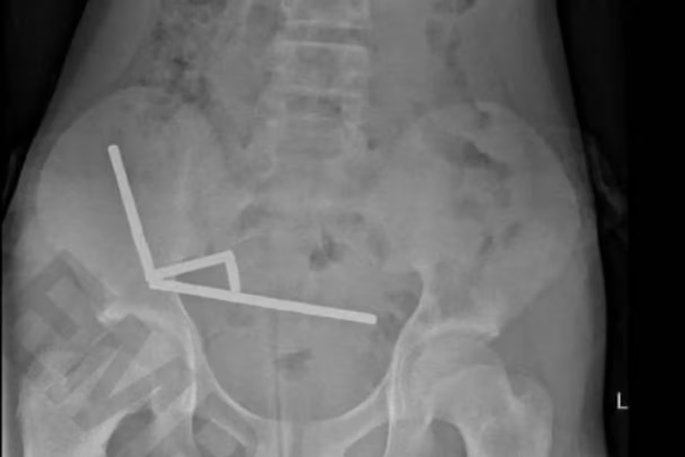
A 13-year-old boy has undergone major surgery after swallowing 80-100 small magnets reportedly purchased on Temu.
Neodymium magnets have been banned since 2014 but are still available through online marketplaces.
Surgeons at Tauranga Hospital had to remove part of the boy’s bowel after he ate up to 100 of the small magnets, according to a case study in the New Zealand Medical Journal.
They said it was “alarming” how difficult it was to enforce the long-standing ban when easily-accessible online marketplaces existed.
The Pasifika Medical Association Group said it highlighted the dangers of online marketplaces in the paediatric population.
“While product safety laws exist in New Zealand that prohibit the sale of high-powered magnets, there is significant challenge in enforcing these laws on products sold on online marketplaces.
“This is especially concerning for our tamariki as these platforms are easily accessible,” a spokesperson said.
University of Auckland professor Alex Sims said small, high-powered magnets were being advertised as fun toys when they could be life-threatening.
“Small high-power magnets have been marketed and sold as fun toys for adults and children when they are sold in sets as they can be used to make different shapes and also be used as fidget toys.
“Unfortunately, they often come as brightly coloured small balls, making them attractive for children to swallow.”
Sims said enforcing the ban on these small magnets was difficult when they were cheap and easy to get through online marketplaces.
“Parents should not be allowing their children to purchase items unsupervised on any online marketplaces, all purchases must be done or at least overseen by parents.”
Temu response
In a written statement, Temu said the company had launched an internal review after becoming aware of the case from media inquiries.
“We are sorry to learn about the reported incident and wish the boy a full and speedy recovery,” a spokesperson said.
“We take product safety very seriously and continuously monitor our platform to ensure sellers are complying with the safety regulations of the markets they are doing business in.”
The platform had contacted the author of The New Zealand Medical Journal article to obtain more details about the case.
"According to the editors, the 13-year-old teenager reported that the magnets were purchased from Temu, but we have not been able to independently verify this.
"As a precaution, we reviewed the photo of the magnets published in the Journal and checked listings of similar products on our platform. The magnets currently available are compliant with New Zealand regulations, and such products are also sold through other major online and physical retailers."
A Temu spokesperson said while these products are lawful to sell, they can be dangerous if swallowed and we support efforts to raise public awareness about magnet safety.
As a third-party marketplace, Temu requires all sellers to comply with applicable laws and safety standards.
"We act promptly to remove any listings found to be non-compliant."
- RNZ

1 comment
It's quite sad...
Posted on 25-10-2025 10:08 | By groutby
...that a popular online, (or any seller really) is automatically berated for providing these items to someone who ordered them without even a proof of sale?..
I can understand the issue if the items were ingested by a say, 3 or 4 year old, but 13?...what possible reason would a 13 year old be eating magnets?..certainly a youth but hardly a 'child'...
The situation is sad, but not (in my opinion) primarily the fault as noted in the article, of the seller....personal responsibility, parental control and not getting coerced into 'dares' by peers come to mind.
Either way, hope the youth recovers as best as expected thanks to the skills of staff at the hospital...but look, the online marketplace is not a 'dangerous place' ...we are not forced to purchase anything...it rather suggests to me that the purchaser and end user need to take most of the responsibility...
Leave a Comment
You must be logged in to make a comment.