


Nathan Pye’s garden is a haven for all sorts of birds but an unusual visitor has recently made itself at home.
A rarely-sighted white tūī has been hanging around his Waiotahe neighbourhood in the Eastern Bay of Plenty for the past month.
Pye said one of his neighbours had posted a photo of it on social media.
“I thought ‘oh, okay.. that’s pretty cool, it’s only a matter of time before we start seeing it as well, hopefully.’
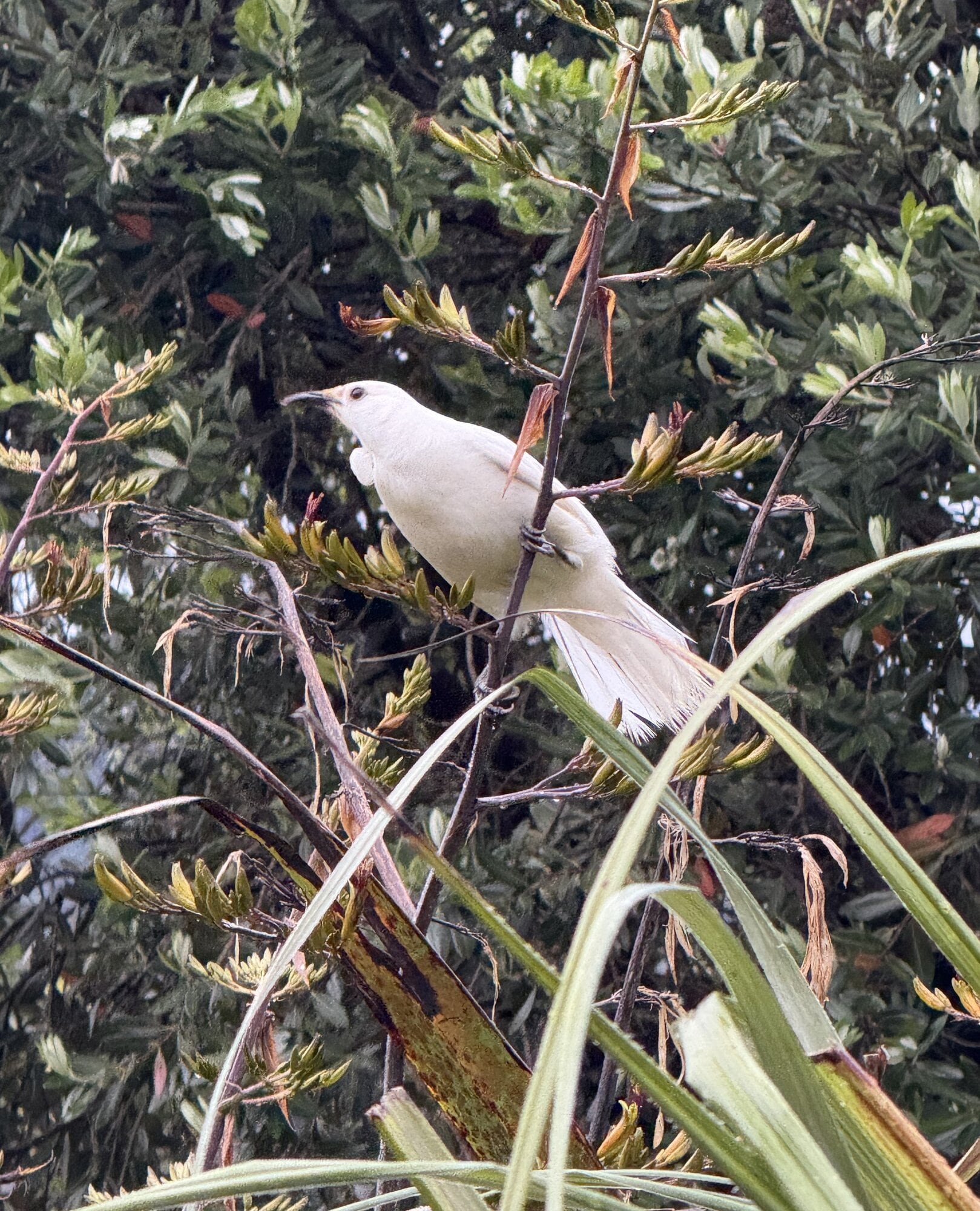
This rarely-sighted white tui has made Nathan Pye's Bay of Plenty garden its home recently. Photo / Nathan Pye
“I saw it one day flying around and in our avocado tree. Then it started becoming a daily thing. It would come to our house, in our trees.
“We definitely had to have a close-up double-take, but as soon we saw the tufts of feathers, we knew [it was a tūī] and the beak also was a giveaway.”
Pye said he tried to get some decent photos of the bird, but anytime he got close, it would “gap it”.
“I got up for the rugby the other morning and looked out the window after the game, and it was in the kōwhai tree.
“I quickly shot out and got some photos, and throughout the day got a couple more.”
Pye said it was an amazing sight.
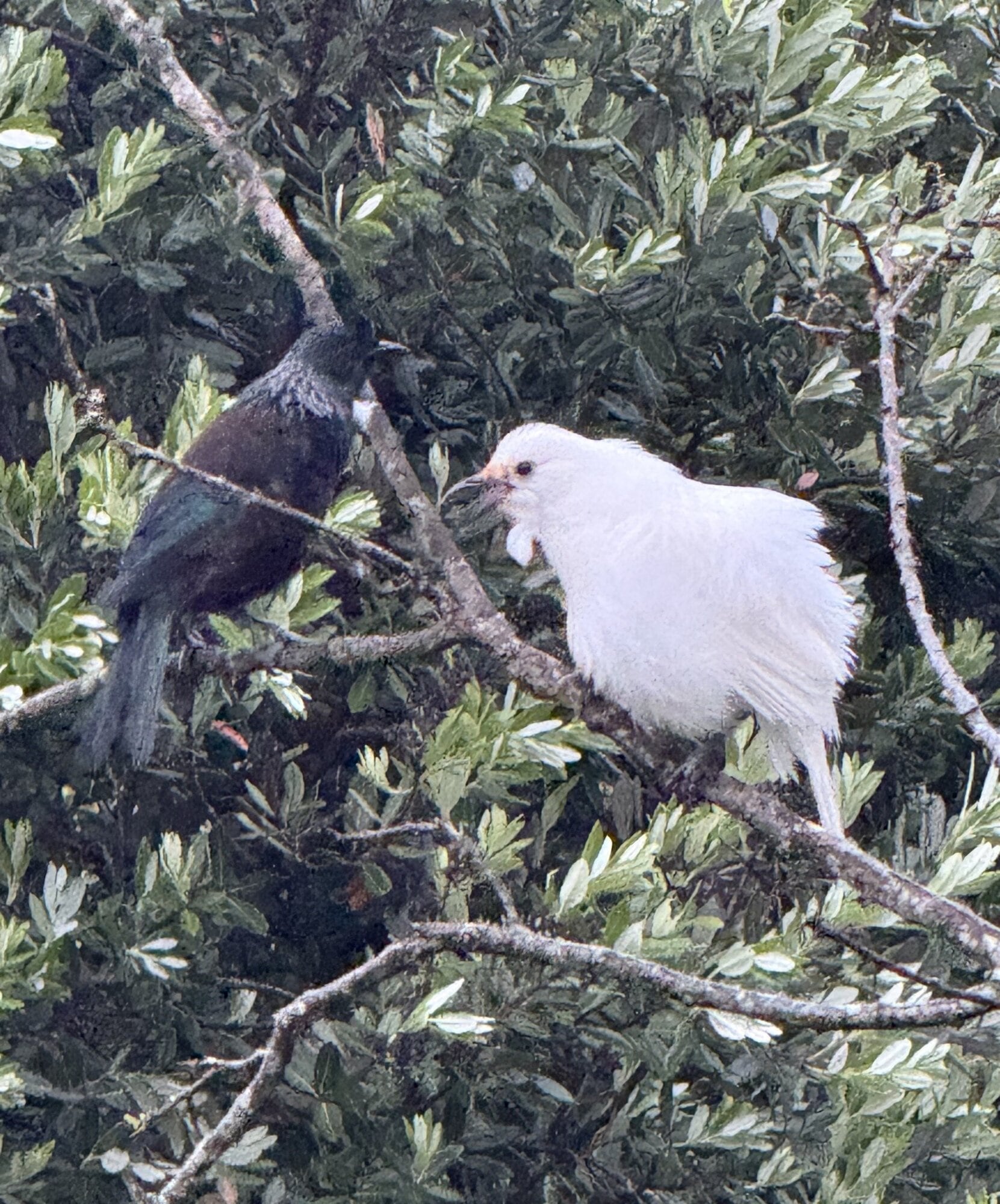
This rarely-sighted white tui, and friend, has made Nathan Pye's Bay of Plenty garden its home recently. Photo / Nathan Pye
“It’s really cool seeing it. It’s so white and so different than the other birds flying around.”
He said the white tūī had also made a mate in the neighbourhood - a more common blue, black and green tūī.
“They fly around together.”
Pye said someone in the area had commented on social media that a white tūī had been seen around their property a couple of years ago.
“It definitely doesn’t look like a young bird.”
Pye said he felt lucky to see the rare bird.
“We get kerurū and weka, all of them around here. There’s a reason our kōwhai tree has no leaves on it.”
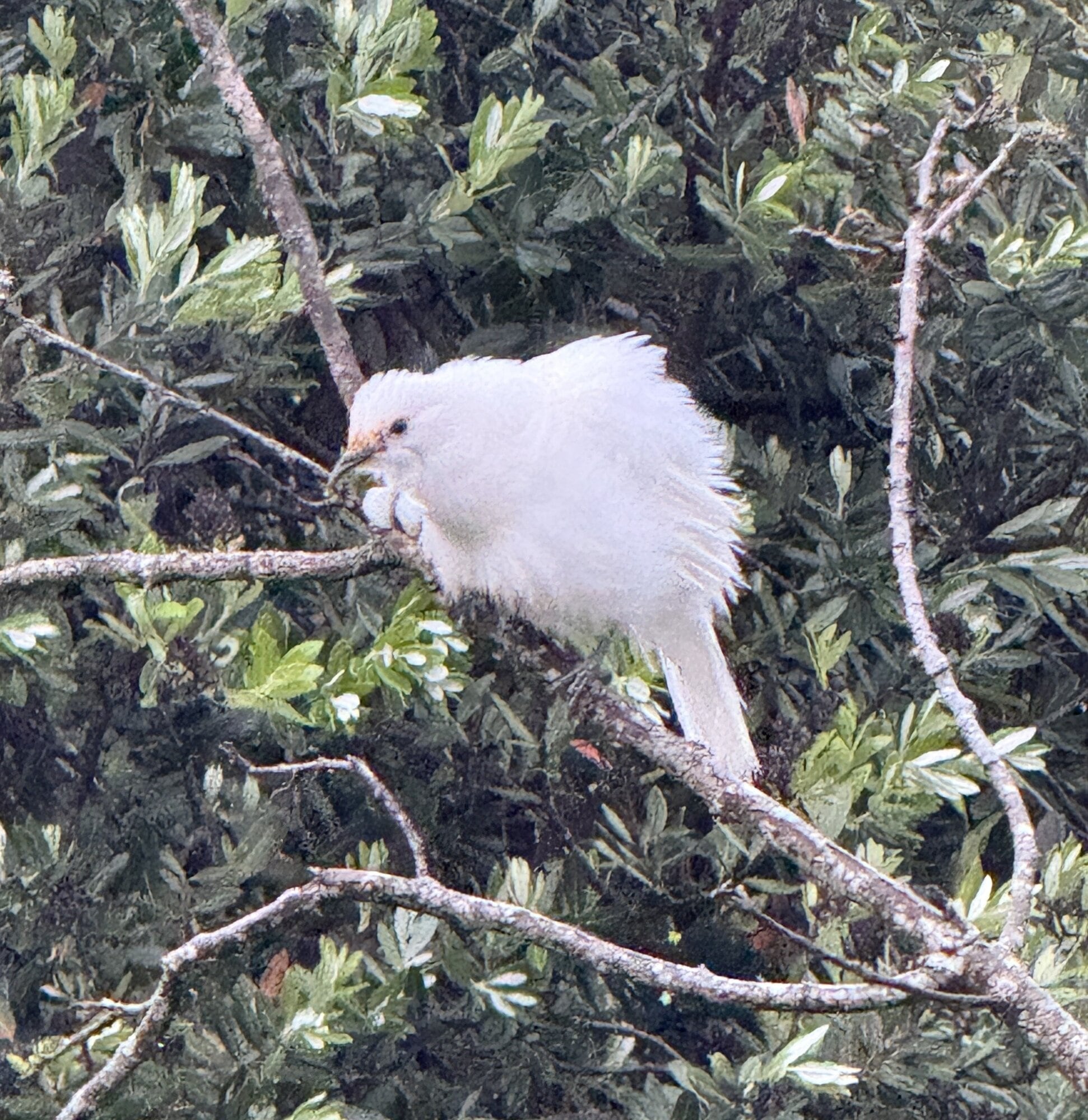
This rarely-sighted white tui has made Nathan Pye's Bay of Plenty garden its home recently. Photo / Nathan Pye
Te Papa curator of vertebrates Dr Colin Miskelly said white tūī likely arose through genetic mutation.
He said this particular white tūī was leucistic, which referred to the look of the bird without identifying how it came to be white.
“Most white tūī are not albinos,” Miskelly said.
“They do not have pink eyes, and typically have slightly grey or brown feathers, rather than the pure white of an albino.”
He said it was likely that most leucistic birds had a heritable genetic condition, but it may be caused by non-heritable environmental effects, including ontogenetic (occurring during development), diet-related or an interaction of genetics, ontogeny and environment.
Miskelly said he heard of two or three white tūī sightings a year.

2 comments
White Tui
Posted on 14-11-2025 09:02 | By PUDZ
You are blessed 🙏, hope we see more around, wonder if it's friendly with our black tui 😊
White Tui
Posted on 14-11-2025 19:11 | By glass1/2 full
Thanks for sharing your pics. You are so lucky
Leave a Comment
You must be logged in to make a comment.