


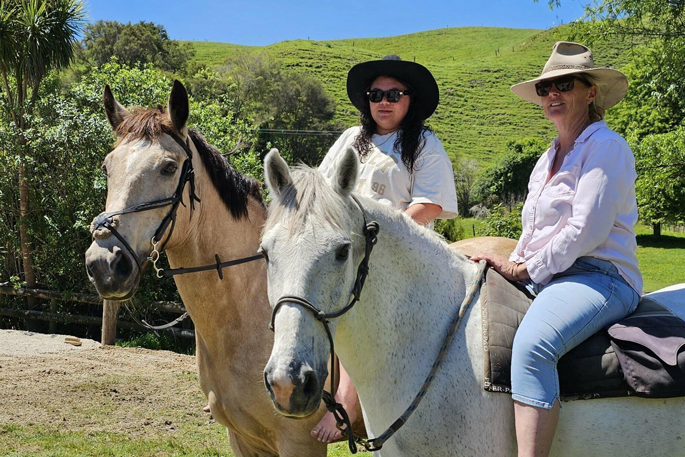
The healing power of horses is behind a pilot programme aiming to engage teenagers who are disconnected from the education system.
Natural Mystic is based in rural Paengaroa and has come about thanks to the marrying of the minds of two women with vastly different backgrounds.Tracy Rampton has more than 26 years’ experience of competing, being a horse instructor and taking riding lessons.
Te Arahiora Farrell has seven years of experience in mental health and youth justice, and a deep knowledge of mahi wairua (spiritual work) and rongoā Māori (traditional Māori medicine). They met in January and together they started Natural Mystic at Rampton’s property. They say their ideas revolve around reconnecting with nature, slowing down and unlearning to relearn using equine therapy and a holistic approach.
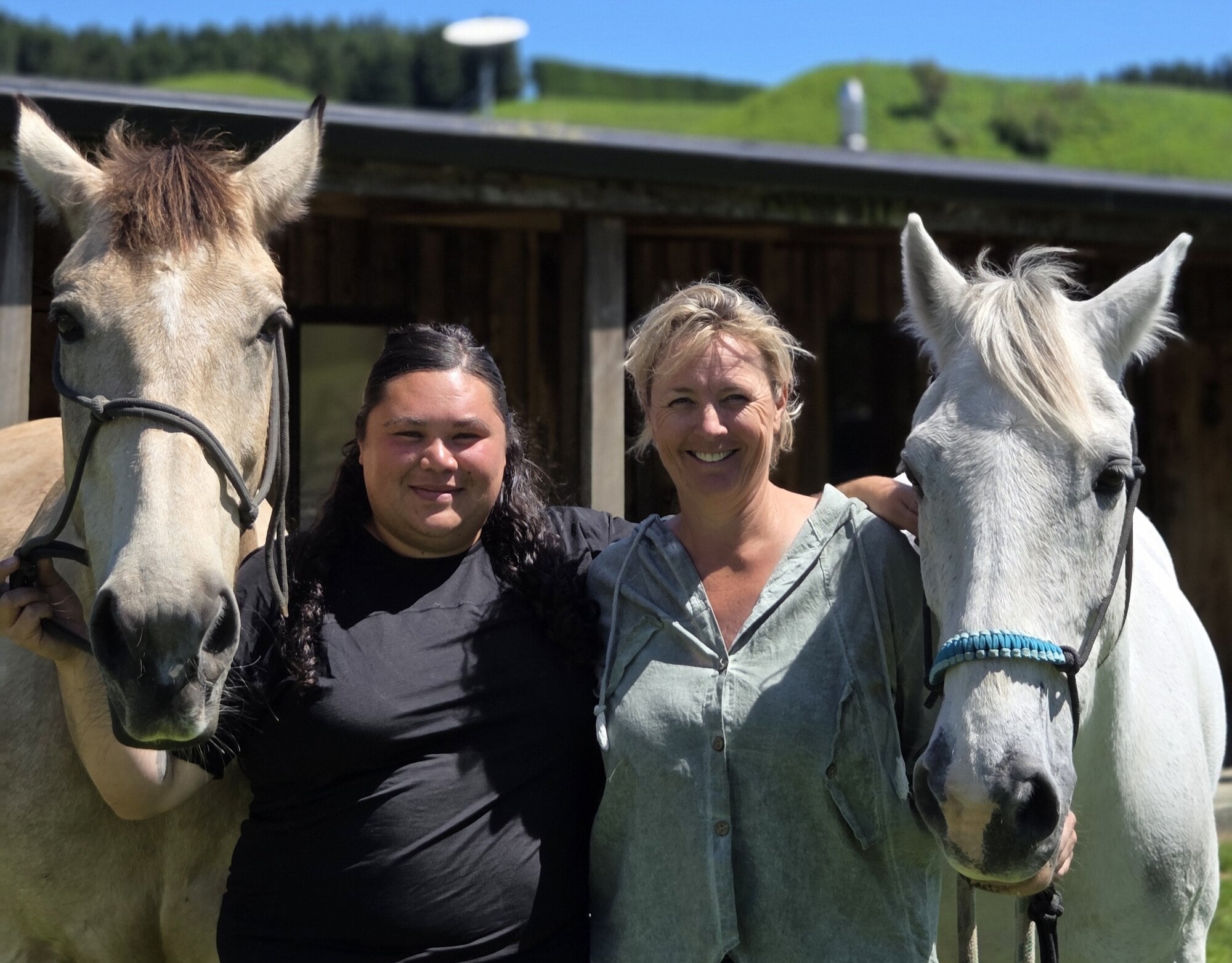
Te Arahiora Farrell and Tracy Rampton are behind Natural Mystic. Photo / Supplied
Rampton has spent a lifetime with horses.
“I moved here [to New Zealand] 29 years ago. I’ve had a lot of experience training different people competitively in show jumping and eventing – and I wanted to change that role and be more hands-on with people that didn’t have the same opportunities.”
Only one
She said she had told many people about her ideas, but Farrell was “the only one who actually heard me and went: ‘I’m on board with you’.”
“It’s amazing what we have created together in the last three or four months.”
Natural Mystic hosts a women’s group and individual children with autism for equine experiences, but the main focus has been giving an outlet to teens who are not engaged by school.
They hosted eight students on a 12-week pilot programme, which was aimed at teens between the ages of 14 and 16.
“They knew nothing about horses, had never even touched a horse, never mind sat on a horse,” said Rampton.
“They are learning as well as riding – learning the points of the horse, the saddle and then learning care of the land. We harrow and put back what we take from the soil and we’re aware of how we look after it, so they are learning all aspects.”
Farrell said while working with the horses was a major element, mirimiri (traditional Maori healing) and rongoā practices that align with the seasons also shaped the activities and ensured kaupapa flows in harmony with nature and the natural rhythms of life.
“That also fits with Tracy’s lessons around energy transfer between us and the horses. The horses react to the way we come into the space – if we are coming in overwhelmed, stressed, scared, Tracy shows us the behaviour of horses is a reflection of us.”
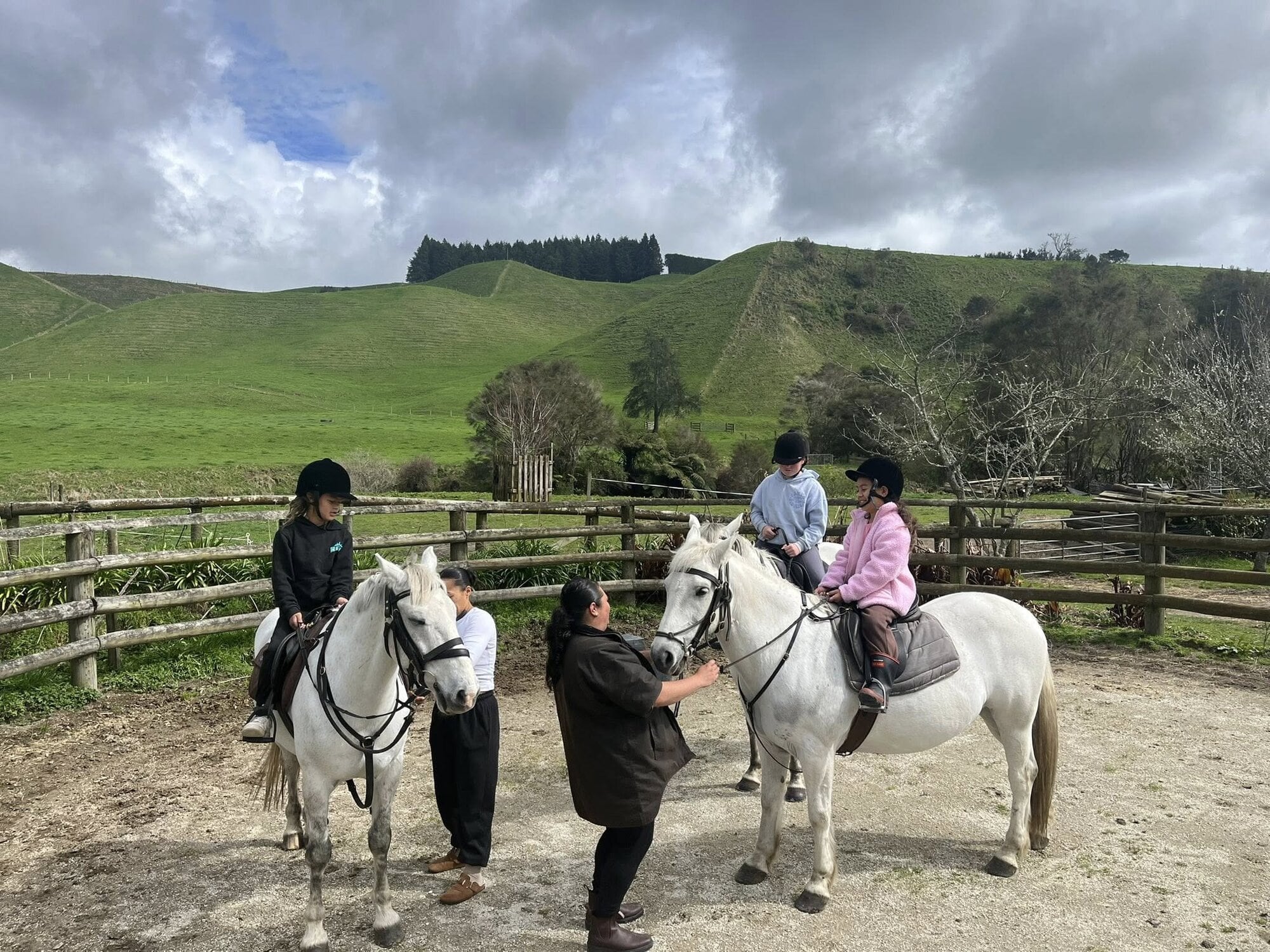
Getting ready for a ride at Natural Mystic. Photo / Supplied
Farrell said there are lessons that come from those energy transfers.
The results
They both say they have been amazed by the results.
“We’ve seen two students that came to us with very bad attendance with school – not going to school, wagging every day and the schools didn’t know what else,” said Farrell.
“They tried to engage them in other activities and that didn’t really didn’t last long – but they graduated with us with 100% attendance.”
Some of the boys had shown great leadership, the pair said.
“They respect the boundaries and were taking criticism calmly compared to them first starting.
“They learned how to communicate their feelings instead of swearing, would have conversations about it and tell us in open forums that they were scared – and that’s huge for these boys.”
Farrell said she believed the programme had engaged students in a way they couldn’t be at school: “They are also learning do their journals, do their writing, do maths with us where in school they’d do anything they can [to not do] the work.”
Change in attitudes
Rampton said she noticed a big change in attitudes: “These were all kids who don’t know where they are going in life, where they want to go in life and I think what we have done is given them direction, whether it’s back into school or wherever; they are working out who they are as people through not just being treated as children.
“We’ve given them a bit of responsibility and they’ve stepped up to that responsibility as well as their learning new things every week for themselves and about themselves with the horses.
“None of them wanted to go to school because of either bullying or peer pressure and we’ve got them thinking they can do things,” said Farrell.
The women want to run another programme but would also like to set up a two-year cadetship.
“We want to show them there are avenues in life, not just milling around, getting into trouble – that they’ve got somewhere to go.”
They admit there were times when the route to getting the pilot off the ground seemed to have many obstacles.
Their own doing
“I came out of a fair few meetings and thought: ‘Okay, we need to regroup’, but I always knew it was going to happen,” said Rampton.
“And we just kept plugging on and it’s succeeded and the proof of the pudding’s in the kids when you see the difference.”
Farrell said the programme had all been their own doing: “We haven’t got any big funders or anything like that behind us backing us up. We are hoping to get there one day, but at the moment it’s all off our own bats.”

1 comment
Horse Therapy
Posted on 30-11-2025 14:24 | By LyricalSoul
Good on you ladies!
Other countries have this sort of program, so why not NZ?
Keep up the good work!
Leave a Comment
You must be logged in to make a comment.