


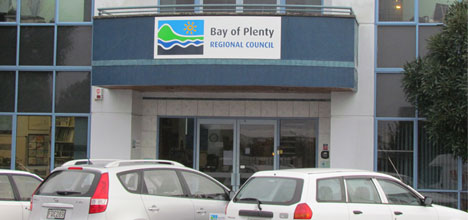
An annual report, featuring less spending and more income than expected, has been accepted by the Bay of Plenty Regional Council.
The total operating spend for the council, during the first year of its Ten Year Plan (2012-2022) was $78.6 million, says BOPRC chief executive Mary-Anne MacLeod, who says this is $14.1 million less than planned, with most of the reduction due to grants and subsidies budgeted for, but not required in this year.
'Savings in operational activities also contributed to this reduction,” says Mary-Anne. 'Revenue exceeded budget principally due to a downgrade of the liability held in relation to the perpetual preference shares. Council received revenue of $95.8 million rather than the $85.1 million planned for.”
Mary-Anne says progress was made on major projects – Tauranga Harbour, Rotorua Te Arawa Lakes Programme, River Scheme Sustainability project – and undertaking of the first round of the new Regional Infrastructure Fund.
It also made good progress on preparing for remediation of the Kopeopeo Canal, managing technical investigations and consultation for the Kaituna River re-diversion; and Wetland Creation project and repairs to major river schemes from previous flood damage.
For Rotorua Te Arawa Lakes, short-term measures enhanced water quality while other long-term solutions, such as land use and land management changes, were developed further says Mary-Anne.
'Because policy for rules and incentives was being developed, no agreements have yet been signed to reduce nitrogen loss to Lake Rotorua's catchment. The lake's nutrient reduction target has not been met.”
Lake Rotoiti did meet its water quality target for the first time, and both Rotorua and Rotoehu were very close to their targets.
Protection of lake, harbour and stream margins in the targeted catchments of Tauranga Harbour and Ohiwa Harbour and Rotorua lakes progressed, and stock exclusion fencing work increased in the Kaituna and Whakatane River catchments. Tauranga Harbour's Coastal Margins project got underway to protect and enhance biodiversity, as well as address sedimentation issues.
The River Scheme Sustainability Project was begun in response to concerns the schemes are becoming unaffordable for some ratepayers, says Mary-Anne. Recent work focused on scoping four work streams, with initial projects targeted in December 2013.
The Regional Infrastructure Programme was a council priority. Seven projects were direct funded, with the Hamurana/Awahou sewerage scheme and sealing of 2km of Oropi Rd, near Tauranga, receiving funding. Funding for the remaining five projects has been carried forward to future years.
Meanwhile, bus passengers fell short of the targeted 10 per cent increase. Tauranga's bus service showed a 1.5 per cent increase, with more than 1.8 million trips. Several factors slowed growth, including a 15 per cent fare increase in Tauranga. Fare recovery – a key measure for central government funds – exceeded the target by 3.6 per cent.
The council's efficiency and effectiveness programme aims to achieve savings, with an increased target of $500,000 being set for the current financial year, says Mary-Anne.
The full Annual Report and a summary are available on the Bay of Plenty Regional Council's website: www.boprc.govt.nz. A hard copy can be ordered at 0800 884 880.

0 comments
Leave a Comment
You must be logged in to make a comment.