


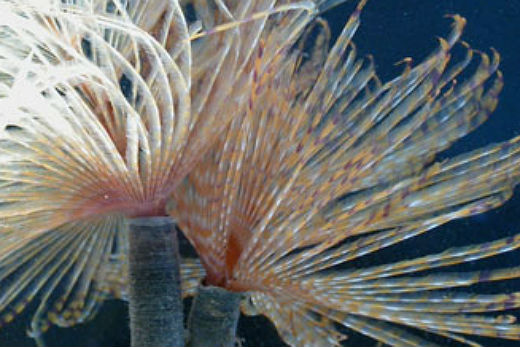
The Waikato Regional Council has endorsed a new plan to tackle the spread of a dangerous marine pest in Coromandel harbours and the Firth of Thames.
The Mediterranean fanworm or sabella is an unwanted organism in New Zealand and typically found in harbours and estuaries, living in depths of anywhere between one to 30 metres.
The Waikato Regional Council has endorsed a new management plan to stop the spread of Mediterranean fanworms which are a nasty marine pest. Photo: File
A small-scale management programme is being developed under the Biosecurity Act to encourage boaties coming into Waikato waters to clean their hulls regularly as is the primary way they spread.
By having boaties regularly clean their hulls any fanworm on them should not be able to grow to breeding size.
WRC animal pest team leader Dave Hodges says Mediterranean fanworms are a nasty pest which have been detected in Coromandel harbour twice in recent years.
'Given fanworm's ability to crowd out shellfish in harbours and in mussel farms, we want to keep it from getting well-established in Waikato waters.
'Particularly the Coromandel coast and the Firth of Thames, so as to protect our $50 million a year mussel and oyster farming industry in the region.”
A management programme will help the WRC encourage boaties to make sure they undertake usual routine maintenance on their hulls.
It will also gives them the basis to recover costs if they have to step in and clear up any fanworm outbreaks which boaties are responsible for.
The WRC intends to have the new measures in place by February next year while education about the new rule will be undertaken before then.
Today's agreement to the programme follows an incursion of the fanworm into the Coromandel Harbour last year, which to date has cost about $100,000 to clear up.
The council was unable to recover costs from the owner of two barges from Auckland which are believed to have brought in the fanworm to the harbour.
Currently there is a $70,000 a year fanworm monitoring and control programme is in place, co-funded by the council and the Ministry for Primary Industries.
A report at today's meeting said the risk of another incursion being detected was 'extremely high” due to the high number of vessels moored in the harbour with varying states of hull fouling.
The proximity of Waitemata Harbour, where the fanworm is well-established, and the popularity of the Coromandel Peninsula for recreational boat users also increased the risk.
Dave says vessel owners can easily comply with this rule if they adhere to reasonable maintenance regimes for their vessel which include regular hull antifouling treatments.
'For most recreational vessels costs varied between $500 and $2000 depending on who carried out the work. Mr Hodges said it was likely cleaning would be required once every one to two years.”
Owners of structures such as moorings and wharves will also be required to keep them clear of sabella under the new rules.
It was expected these costs would be relatively low as fanworm in the Waikato region has only been detected in Coromandel harbour to date and numbers are very low.
Voluntary compliance with the rules is anticipated in the majority of cases but the new plan would give the council power to enforce rules when this is not the case.

0 comments
Leave a Comment
You must be logged in to make a comment.