


Council's Parks Team will be going over reserves throughout the Coromandel with a fine tooth comb looking for any potential serious hazards.
While it's not possible to eliminate all hazards the Thames Coromandel District Council is asking locals to use common sense and take personal responsibility wherever possible.
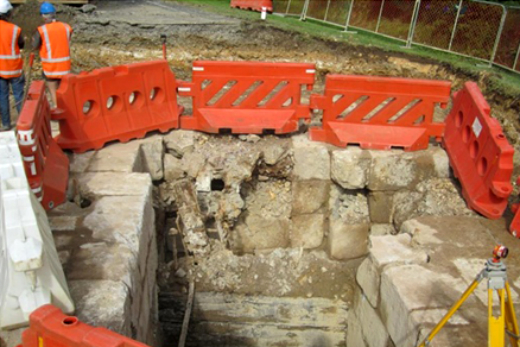
This shaft, believed to be close to 200m deep, was part of the first big pump was used to drain mines on the Thames goldfield constructed in 1872. Photo: TCDC
Hazards include areas that drop off elevated paths onto beaches, or trees on which locals have tied rope swings.
The TCDC says many locals feel council is being a 'spoilsport” when removing rope swings and soon as one is taken down it is replaced by another rope shortly after.
'In the case of rope swings tied to trees, in other parts of the country, people have been injured when swinging because a weakened rope breaks, causing injury for the swinger.”
A recent area of concern has been holes in the ground caused by buried tree stumps which rot over time.
Sites in Matarangi and Pauanui are regularly inspected for this because early development of original farmland saw stumps buried before current town plans were developed.
Areas which may now be grassed parks can develop cavities not obvious above ground until an event such as a storm causes them to open.
'It's challenging for our team, because there is often no evidence until the surface falls in, which may not be seen until someone trips or falls.
'Even our current inspection has limitations because we may have found an area clear of hazards only for one to appear a few days later, when the team are in another part of the vast Coromandel parks territory.”
The TCDC says Thames is especially vulnerable to old mine shafts collapsing, like what happened in the middle of State Highway 25, just north of Thames, during April in 2012.
The ‘she'll be right' mentality of the early townsfolk 'eventually came home to roost” when the roof of an old pump shaft collapsed, says council.
'Locals were not overly endowed with long term planning ability when they put wooden boards over the shaft and built a road on top of the boards before it became a state highway in the 1960s.
'Over time, the timber decayed.”
While council contractors carry out a regular maintenance and inspection regime they cannot be everywhere at all times.
If you see any holes or other hazards, don't assume the TCDC knows about them and call 07-868-0200 urgently.
Your call will be logged into the system and registered as a ‘Request For Service' so the job can be tracked.

0 comments
Leave a Comment
You must be logged in to make a comment.