


Carrying out the role of the Whenuakite Kiwi Care Group's operation manager is hugely rewarding but also a very full-on job, says chairman Arthur Hinds.
Not only does the group's manager coordinate the army of volunteers but also ensures 540 traps spread across 100km of trap line are serviced monthly – as well as having to service 250 traps themselves.
The Whenuakite Kiwi Care Group are thankful for the $48,000 funding it will receive under the Government's Community Conservation Partnerships Fund. Photo: File
Last week, Conservation Minister Maggie Barry announced the Whenuakite group would receive $48,000 under the Government's Community Conservation Partnerships Fund.
Arthur says they are very grateful for the funding as the amount will be used by the group to fund a fulltime operations manager.
'We struggle to get funding for this role and it's is one that is crucial to the existence of this group,” says Arthur. 'This is not a new role, we have always had a paid, part-time employee to co- ordinate the trapping and provide volunteer support.
'The present operations manager is in his eighth year with us, is our most industrious volunteer and puts in about 80 hours per month – yet we are still well short of realistic funding for this role.”
The $48k in funding includes GST and will be spread over three years, equating to $13,913 per annum.
The group is hugely grateful for the Department of Conservation's support ever since they started trapping in 2001.
But they are concerned that they're having to rely 'more and more” on funding from Kiwis for Kiwi, with Arthur saying DOC's funding is being reduced almost on an annual basis.
'I think it was former DOC director general Al Morrison who said that volunteers add $4 to $5 of value to every dollar put into conservation.
'So the $41,740 put into our group is worth at least $165,000 to the country which is a pretty good investment in my opinion.”
BY THE NUMBERS
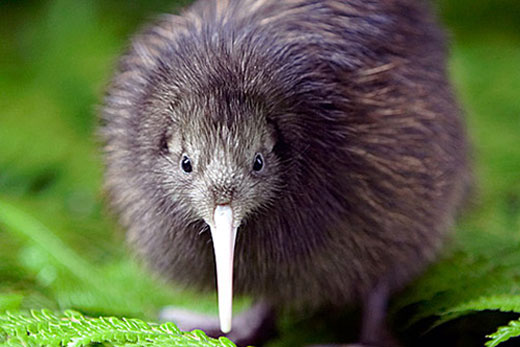
Whenuakite kiwi numbers have been increasing by 13 per cent annually since 2001. Photo: File
An independent contractor who undertook a kiwi call count in the group's area in April/May of this year identified 150 kiwi – 93 males and 57 females – with an estimated population of 112 pairs.
This follows surveys by the same contractor in 2001 (29 kiwi), 2005 (68 kiwi), 2010 (98 kiwi), which shows a 13 per cent annualised increase.
This is a massively pleasing result as national kiwi numbers have been declining at a rate of 2 per cent per annum.
Arthur says added to this the group have noticed a large increase in all native birds like tui, kaka and in particular kereru.
'I counted 210 kereru last year driving round the farm, they seem to be dispersing over a wider area each year but two days ago saw 163 grazing on pasture in two paddocks,” says Arthur.
'We are fortunate to live in a place where we can see this around us on a daily basis and hear kiwi calling at night, a real credit to our team of dedicated volunteers who do the hard yards out in the bush.
Jokingly, Arthur adds: 'Diane, my wife, could do without the kereru stripping her magnolia trees but has come to realise that it is part of living where we do!”
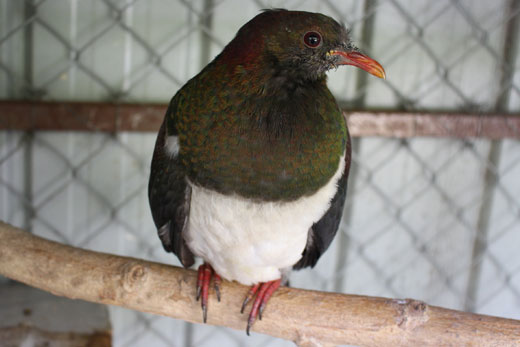
Along with kiwi, the number of other native birds like kereru also appear to be increasing. Photo: File

0 comments
Leave a Comment
You must be logged in to make a comment.