


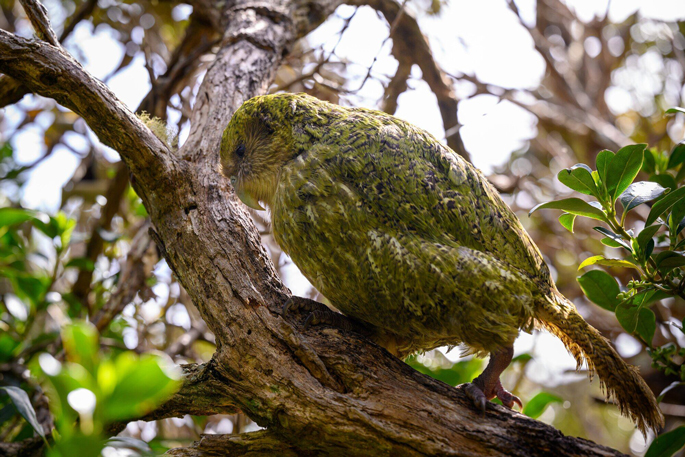
The first kākāpō breeding season in four years is officially underway, the Department of Conservation and Ngāi Tahu announced this week.
Remote monitoring technology used to track the critically threatened taonga has detected mating activity started on December 29.
Department of Conservation kākāpō recovery operations manager Deidre Vercoe said the milestone felt particularly significant for the species this year.
“It’s always exciting when the breeding season officially begins, but this year it feels especially long-awaited after such a big gap since the last season in 2022.
“Now it’s underway, we expect more mating over the next month, and we are preparing for what might be the biggest breeding season since the programme began 30 years ago.
The flightless, nocturnal parrots only breed once every two to four years, when the rimu trees mast (mass fruiting).
They were among the most intensively managed species in the world.
The total population sits at 236 ahead of the breeding season, including 83 breeding-age females.
With most kākāpō mothers typically raising one chick per season, 2026 could bring the most chicks since records began.
Vercoe said success could no longer be measured by numbers alone, Deidre says.
“Kākāpō are still critically endangered, so we’ll keep working hard to increase numbers, but looking ahead, chick numbers are not our only measure of success.
“We want to create healthy, self-sustaining populations of kākāpō that are thriving, not just surviving.
“This means with each successful breeding season, we’re aiming to reduce the level of intensive, hands-on management to return to a more natural state.
“We’re working towards the goal of returning them to their former range around New Zealand so that one day, hearing a kākāpō boom might be a normal part of naturing.”
This season, a range of lower-intervention strategies would be applied to varying degrees across the three remote southern breeding islands.
These included prioritising checks for genetically valuable eggs and chicks, leaving more eggs to hatch in nests rather than incubators, reducing nest interference for mothers raising multiple chicks, and reducing supplementary feeding.
Te Rūnanga o Ngāi Tahu representative on the Kākāpō Recovery Group, Tāne Davis, has been involved with the programme for 20 years and said growth brought its own advantages and challenges.
“Every breeding season marks a significant step toward restoring the mauri of kākāpō and our aim for them to one day thrive on their own throughout the Ngāi Tahu takiwā o Te Waipounamu.
“As part of the more hands-off approach to enhance the mauri of the species, a Ngāi Tahu aspiration is also for a percentage of the chicks hatched this year to remain nameless, acknowledging the beginning of returning the manu to their own natural ways.
“The predicted scale of this season also reminds us of the need for more safe homes, like a predator-free Rakiura, for this taonga species.”
Vercoe said the support of partners, volunteers and supporters all play a critical part in saving kākāpō from the edge of extinction.
“It takes a collective effort to turn the tide and bring kākāpō back from the brink. We’re grateful for all the support shown over the years from people keen to do their bit for nature.”
The first chicks were expected to start hatching from mid-February.

0 comments
Leave a Comment
You must be logged in to make a comment.