


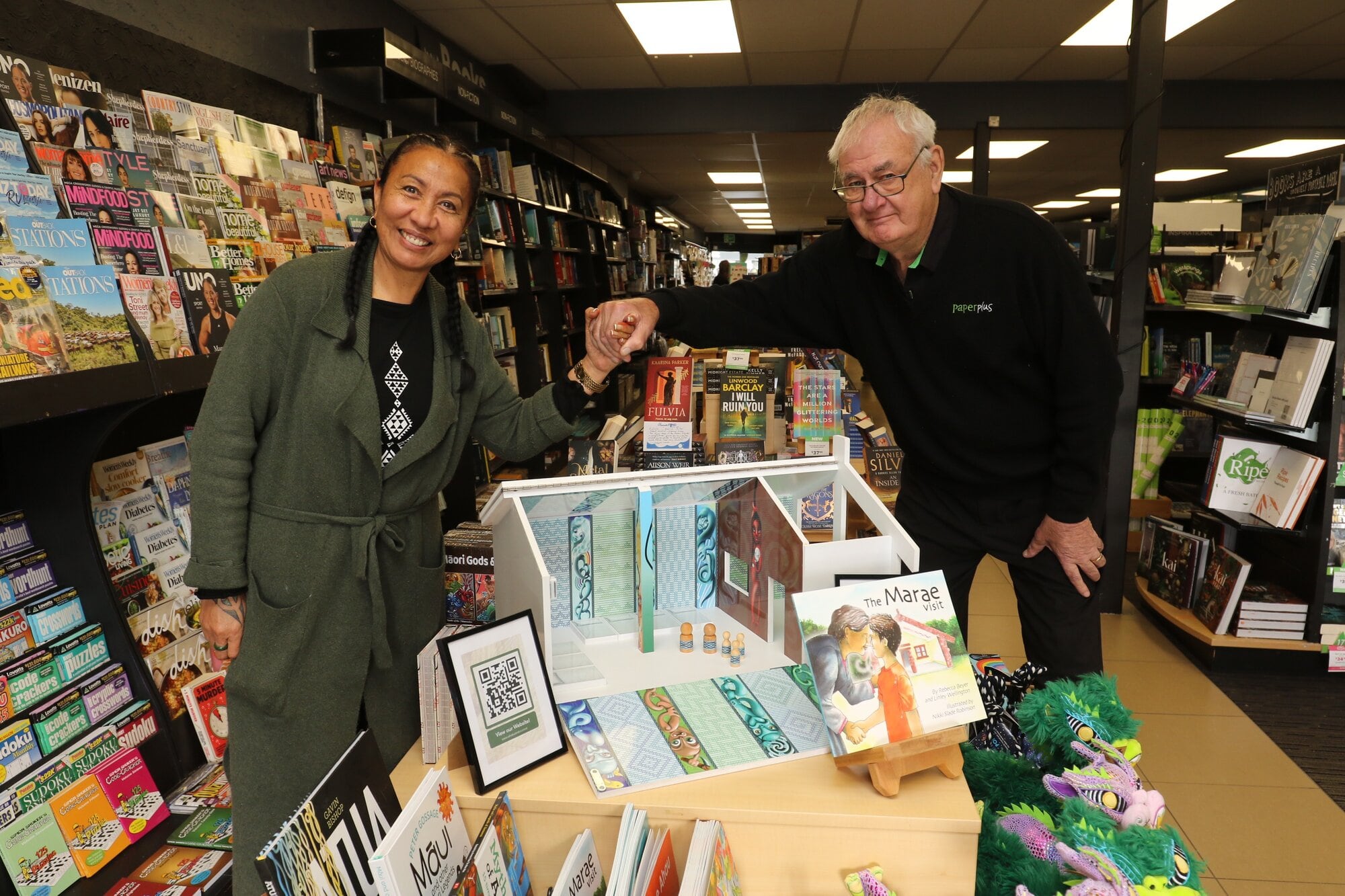
A Te Puke educator has created hands-on resources to teach tikanga and kawa, and they are now helping families and teachers across the region and even Australia.
Shona Ua-Marsh, who owns Giggles Te Puke Early Learning Centre, began making her own learning resource after taking a group of about 50 children on a marae visit.
When they first arrived, more than 20 children didn’t want to continue the visit after seeing the Māori carvings and how they made them feel. Another 23 weren’t sure about going further once the karanga began.
“I had only seven children ready to go through the waharoa and venture in. I realised in that moment that I had to normalise the idea of a marae and a wharenui – that I needed that in my classroom,” she said.
Two years ago, Ua-Marsh created a doll’s-house–sized model wharenui to help tamariki/children learn through play.
“Now children are excited to go, and I’ve never had one child actually want to leave the trip since.
“That’s through having that resource in our learning space to be able to give them prior knowledge before they go there.”
The model includes tukutuku panels, atua carvings and images— made to be engaging, not overwhelming for young learners.
Ua-Marsh has also created a paraikete, or learning blanket, so tamariki can learn te reo Māori, waiata (songs) and purakau (stories) in a simple, approachable way.
She said it’s not just for kaiako (teachers); it’s for first-time learners who don’t know much about te ao Māori.
“This resource helps learners thread the connection between their ancestors and themselves, deciphering their own whakapapa.”
Te reo Māori is described as a language of identity, and the paraikete helps children communicate deeply and authentically.
On the other side of the paraikete is a kakahu — “its intention is you can wrap that knowledge around the child”.
Ua-Marsh is working on a new resource called Te Whare o te Auahatanga, a replica of a wharenui that allows artistic tamariki to paint, draw or interpret how they see a wharenui, helping them feel connected in their own way.
Importantly, Ua-Marsh emphasised that these resources are for everyone.
“They are not just for Māori, it’s an understanding, it’s a space where everyone can find some goodness of understanding of how the world works and how our system of tikanga and kawa is about caring for others.”
She’s seen demand grow as families in New Zealand and beyond are using the resources to teach in classrooms and families.
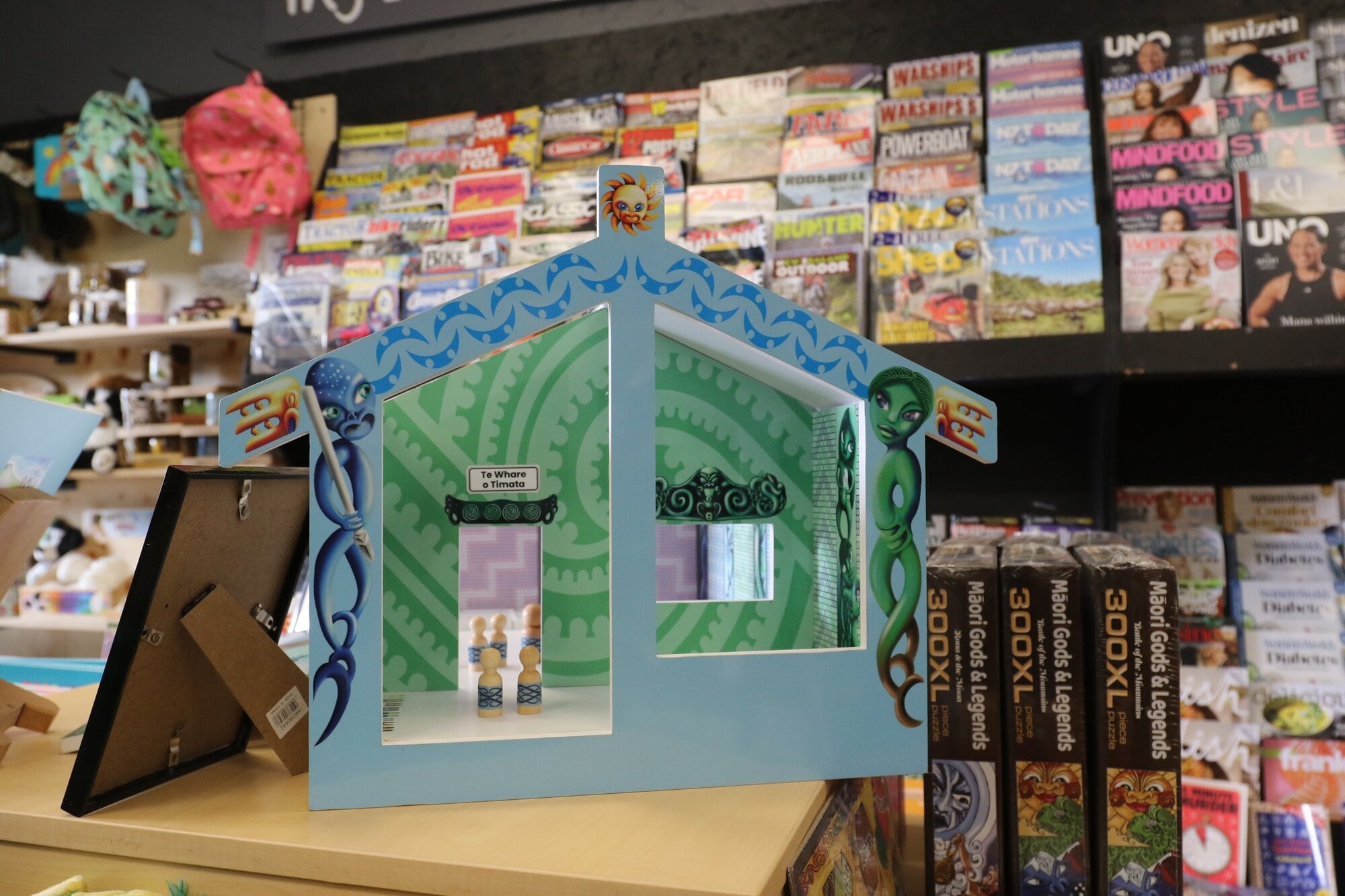
Shona’s model wharenui that is a key element for learning about tikanga and kawa in the early learning centre. Photos / Stuart Whitaker
Ua-Marsh is also collaborating with Paper Plus Te Puke owners Stuart and Gloria Gunn.
She said much of the learning started in her centre is now reaching the wider community.
“A lot of our parents and whānau were going, ‘I want to learn’ or ‘I’m learning through my child,’ and Paper Plus is supporting by providing books and resources that support te ao Māori, what’s going on beyond the classrooms to home and our community.
Te ao Māori is part of the curriculum at early learning, primary, intermediate and high school levels.
Paper Plus is supporting families beyond the classroom, with more te reo Māori titles and learning aids.
Some of Ua-Marsh’s resources will be displayed in Paper Plus Te Puke ahead of Māori Language Week, September 15–21, alongside Māori language books, jigsaws and games that help with te reo Māori learning. Or they can be viewed at whatuandco.co.nz
Gunn said the shop is part of a multi-cultural community and that they are proud to support resources that reflect te ao Māori.
“We are part of the community, and this is part of the community so we support anything that’s part of the community. It’s so important to us. We are a very multi-cultural town and people want to know about this.”
He said the number of books available in te reo Māori is growing massively.
“I think that’s really important.”
For families and teachers, the message is clear, said Ua-Marsh: Te ao Māori is woven into everyday learning inside classrooms, in shops and across the wider community.

0 comments
Leave a Comment
You must be logged in to make a comment.