


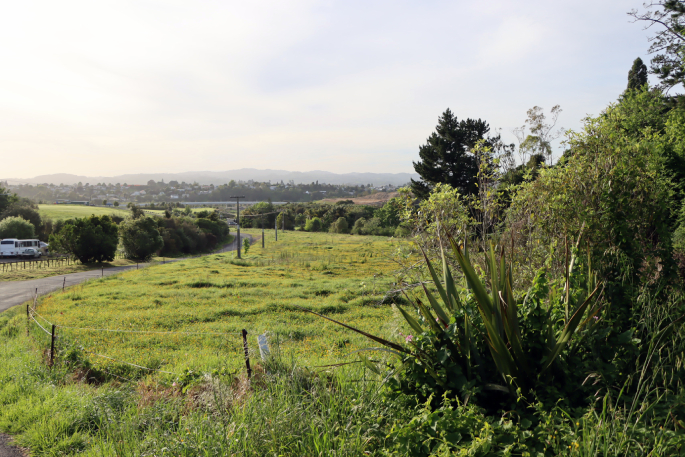
Stopping leachate from an old dump site entering a Tauranga stream will cost the council nearly $1.5m to fix.
Tauranga City Council must carry out infrastructure upgrades to an old Cambridge Rd landfill site to comply with an abatement notice issued in July 2024 by the Bay of Plenty Regional Council.
The notice relates to unauthorised discharges of leachate and stormwater from a historic overflow landfill area at 278 Cambridge Rd into the Kopurererua Stream.
The stream runs through the Kopurererua Valley, one of Australasia’s largest urban wetlands home to native birds and fish.
The leachate has likely been entering the stream since the 1990s, the council told Local Democracy Reporting.
The council approved $1.49m for the upgrades at a meeting on Wednesday.
The money was not budgeted for as part of the council’s Annual Plan.
Council head of city operations Greg Steele said there was a “limited seasonal window” to complete the works to comply with the May 1 deadline.
 Kopurererua Valley is one of Australasia’s largest urban wetlands. Photo / Alex Cairns
The work included leachate and stormwater infrastructure, asbestos sampling and monitoring, project management, and contingency.
The work was essential to avoid legal penalties, reputational damage, and environmental harm, Steele’s report to the council said.
If the council did not comply, it could be fined up to $600,000, there could be daily penalties for ongoing breaches and enforcement orders from the Environment Court.
The Cambridge Rd landfill, which was once Tauranga’s main refuse site, operated from the mid-1960s until it closed in 1998.
In 2020, the council bought nearby site at 278 Cambridge Rd because it was identified as an overflow landfill during the 1980s.
The purchase enabled the council to bring it under its existing discharge consents and prepare the entire site for resource consent renewal.
The 2024 abatement notice required the council to address the stormwater and leachate discharges.
Councillor Glen Crowther said the councillors had not seen the abatement notice.
 Tauranga City Councillor Glen Crowther. Photo / David Hall
He asked how serious the issue was, because any leachate going into a stream was not good, and the council needed to stop it happening.
“With some abatement notices, there are major environmental repercussions. With others, it is a minor thing.
“Do we [the council] have some kind of understanding of what the impact of this has been and could be?”
Steele said staff could come back to the council with details of the environmental seriousness.
If the council did not proceed, there was the potential for prosecution and reputational damage, and the council needed to manage its closed landfills, he said.
Steele confirmed infrastructure around the wider site was working fine.
 Mayor Mahé Drysdale. Photo / David Hall
Mayor Mahé Drysdale asked why the full site investigation planned for this year had not been done earlier, because it seemed there was a “very large” risk costs could escalate.
Steele said the investigation related to the future works needed as part of the resource consent renewal process, because the current consent expired in 2030.
There was a risk of additional costs, but there was a budget to “keep things under control”, he said.
The council was not working in a “greenfield situation”, he said.
Councillor Marten Rozeboom said the council “missed a step” because the notice was issued in 2024, so the funds should have been budgeted in the Annual Plan.
Chief executive Marty Grenfell said it was originally budgeted for, but “mistakenly taken out” during a reset because of a “belief” other funds would be available.
“In hindsight, we actually should have kept the money in there and asked for some further money for this specific project through the Annual Plan process.”
The council asked staff to find savings for the 2025/26 Annual Plan to reduce rates.
There was $29m in operational expenditure savings, including cutting the employee budget by $12.3 million, resulting in 98 job losses.
 Tauranga City councillor Rod Taylor. Photo / David Hall
Councillor Rod Taylor said the council had identified a “slip up” that “dropped out of the system” and the council needed to get it done.
Crowther said the council had to do the work, whatever it cost, but staff would try to keep that as low as possible.
He wanted regular updates about the works and wider site.
“This is something which I think is incredibly serious to have leachate going into that stream. I can see we will not be off the hook for this amount [of [$1.49m].”
With the budget approved, the council would finalise contracts and begin works, expected to take 14 weeks.
The discharge came from a part of the old landfill not included in the original leachate capture system when the main landfill closed in 1998, council operations and infrastructure general manager Reneke van Soest said in statement after the meeting.
“While the exact start date is unknown, signs like iron staining and bacterial growth in the nearby tributary suggest the leachate has likely been entering the stream since the 1990s.”
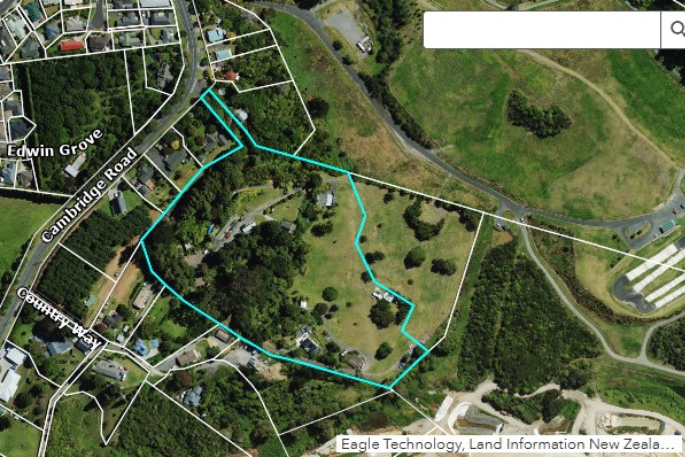 The land at 278 Cambridge Rd Tauranga, outlined in blue, was bought by the council in 2020 after it was discovered as an overflow landfill. Photo / Tauranga City Council
The discharge was from groundwater seepage rather than a single point source, so flow volumes were difficult to quantify, she said.
Sampling indicated the presence of leachate in the waterway, which connected to a tributary of the Kopurererua Stream, van Soest said.
Testing showed high levels of ammoniacal nitrogen and aluminium, which could harm aquatic life, she said.
“There was a likely risk to aquatic life in the nearby tributary, though no visible effects have been seen yet.”
Further downstream there was potential for nutrient build-up and metal accumulation in the Kopurererua Stream and Waikareao Estuary, but dilution from clean waters there lowered the risk, she said.
To address this, the council would install a leachate capture system and stormwater diversion to stop further discharge, van Soest said.
– LDR is local body journalism co-funded by RNZ and NZ On Air.
Update
This story has been updated to include further information from Tauranga City Council about the site and leachate discharge.


4 comments
Good
Posted on 30-10-2025 09:21 | By Kancho
Well at least something as a ratepayer I'm happy it's going to be fixed . No contingency funding so hope they can save money from spending on nice to haves and keep focus on the infrastructure upgrades
Barrier
Posted on 30-10-2025 09:52 | By Considered
I would have thought the SH29-Takitimu Drive (route K - opened 2003) expressway would have formed a sort of barrier/dam separating the ex-dump from the wetland - given the dump site closed 1998 - suspect this comes down to redirected targeted essential infrastructure funding siphoned off to those higher priority unneeded/unwarranted pet projects ? ?
As to the cost.....
Posted on 30-10-2025 20:07 | By groutby
.......$1.49mill....and not a penny more....so let's see where the final figures go then along with the 'skills'...of TCC and doubtless consultants land.....we will see if the self indulgent councillor evaluations are close to the mark...
Reginal council ?
Posted on 30-10-2025 21:15 | By NZoldkiwi
Biggest waste of money that ratepayers have to pay especially for buses that drive around empty and now this b.s.
Leave a Comment
You must be logged in to make a comment.